Let's cut to the chase. You've felt it. That gorgeous silk charmeuse you bought online arrives, and instead of cascading off your dress form, it just... sits there. Or the "structured" linen you chose for a blazer feels more like cardboard than cloth. That's fabric drape in action—or inaction. It's not just a technical term; it's the soul of your garment. Fabric drape is how a textile behaves under its own weight. Does it fall in soft, fluid folds? Does it hold a sharp, angular shape? Or does it do something awkwardly in between? Understanding this single property is the difference between a design that moves with the wearer and one that wears the wearer.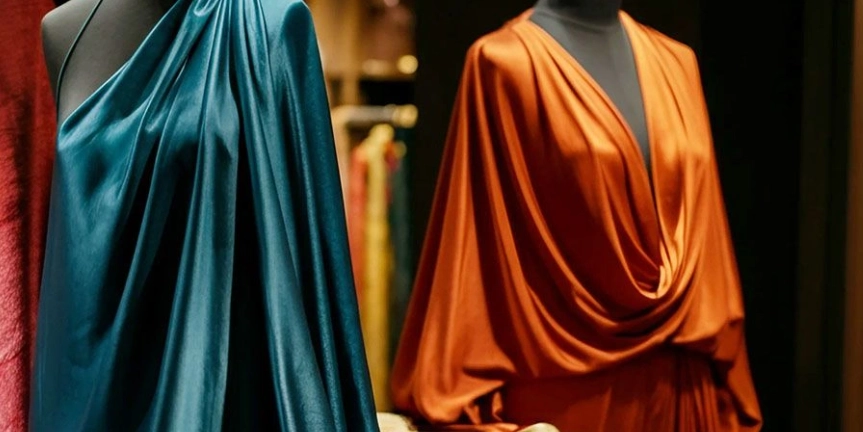
What's Inside This Guide?
- The Science Behind the Fall: More Than Just a Pretty Fold
- How Drape is Actually Measured (The Numbers Behind the Feel)
- The Fabric Drape Spectrum: From Rigid to Fluid
- How to Choose the Right Drape for Your Project
- The Drape Dilemma: Common Mistakes & Expert Fixes
- Your Fabric Drape Questions, Answered
The Science Behind the Fall: More Than Just a Pretty Fold
Most guides tell you drape is about "how fabric falls." That's like saying cooking is about "making food hot." It misses the mechanics. Drape is a dance between three core fabric properties: bending stiffness, shear rigidity, and weight.
Bending stiffness is how easily the fabric folds. Think of a crisp cotton poplin versus a soft rayon jersey. Shear rigidity is how the fabric distorts when pulled diagonally—critical for how it molds over curves like shoulders and hips. Weight, or fabric mass, provides the gravitational pull that creates the folds in the first place.
Here's the part many beginners miss: the fiber content doesn't dictate drape. It influences it, but the construction is king. A tightly woven 100% cotton sateen can have a beautiful, heavy fluid drape, while a loosely knitted wool can be stiff and boxy. I learned this the hard way early on, assuming all silks would drape perfectly. A silk organza proved me very wrong—it's meant to stand away from the body.
How Drape is Actually Measured (The Numbers Behind the Feel)
In industry and textile science, drape isn't left to opinion. It's quantified using a drape coefficient. The test, standardized by bodies like ASTM International, involves placing a circular fabric sample over a smaller, flat disc. The fabric drapes down around the edges. A light is shone from above, casting a shadow.
The drape coefficient is the ratio of the shadow's area to the area of the original flat fabric sample. A low coefficient (like 0.2 or 20%) means a very fluid fabric—most of it hangs down, creating a small shadow. A high coefficient (like 0.8 or 80%) indicates a stiff fabric that projects outward, casting a large shadow.
Why should you care if you're not a lab tech? Because it explains why your intuition sometimes fails. That lightweight chiffon feels fluid, but if it has high shear rigidity from a tight twist, it might not cling and flow over the body as you expect—its drape coefficient might be higher than a heavier, more pliable crepe.
The Fabric Drape Spectrum: From Rigid to Fluid
Let's get practical. Here’s how common fabrics typically land on the drape spectrum. Remember, variations within each category exist!
| Fabric Type | Typical Drape Character | Best For | Watch Out For |
|---|---|---|---|
| Organza, Tulle, Crisp Linen | Rigid / Structural. Holds shape away from the body, creates volume. | Ballgown skirts, peplums, structured sleeves, lampshades. | Can feel scratchy or restrictive if used near the skin; seams can add unwanted bulk. |
| Denim, Canvas, Wool Felt | Stiff / Tailored. Holds creases and sharp lines, minimal folding. | Jeans, blazers, coats, bags, upholstery. | Requires precise patterning; doesn't forgive fitting errors. Can be heavy. |
| Poplin, Broadcloth, Flannel | Medium / Balanced. Some fold, some structure. The "workhorse" drape. | Shirts, dresses, pajamas, casual skirts. | Can look sloppy if the design is too loose; may not be dramatic enough for high-fashion looks. |
| Jersey, Viscose Twill, Challis | Soft / Fluid. Forms gentle, rounded folds, follows body contours. | Wrap dresses, flowing trousers, soft blouses, scarves. | Can cling to areas you might not want it to; may require lining for opacity. |
| Charmeuse, Silk Satin, Rayon Crepe | Very Fluid / Liquid. Drapes in deep, cascading folds, moves dynamically. | Evening gowns, lingerie, luxury blouses, drapery. | Slippery and challenging to sew; shows every pin mark and fitting flaw. |
I keep a physical "drape swatch book" in my studio. It's just a binder with rings, and I clip small samples (about 8"x8") of every fabric I use. I let them hang over the edge of a table. After a while, you start to see and feel the differences instantly. It's more useful than any online description.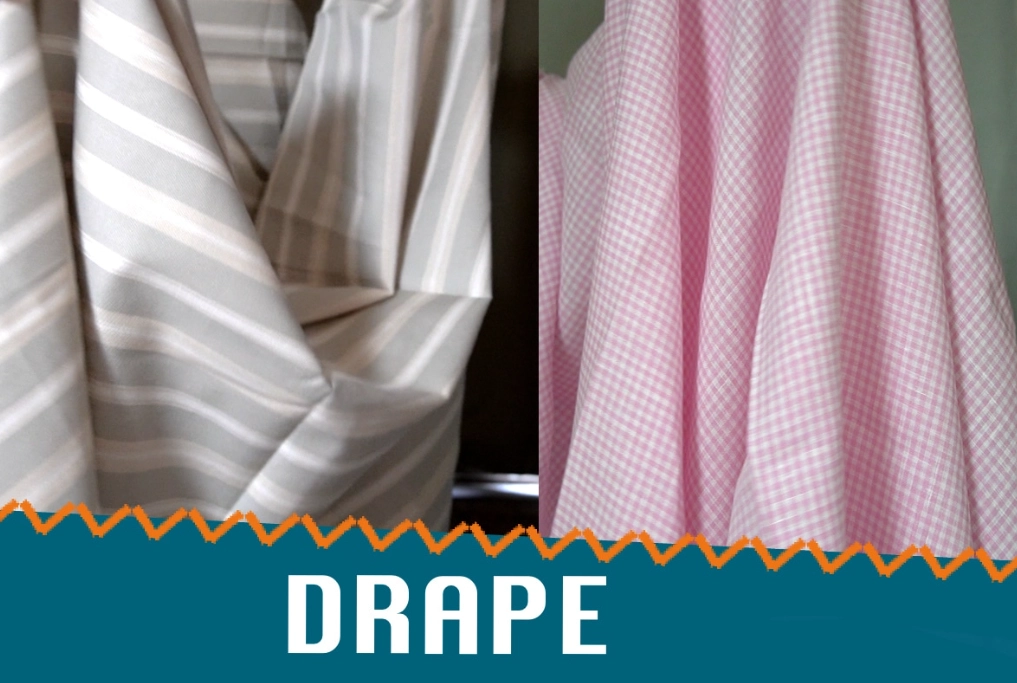
How to Choose the Right Drape for Your Project
This is where theory meets the sewing machine. Your pattern envelope often suggests fabrics, but it's the drape that makes or breaks the translation.
Matching Drape to Silhouette
A pencil skirt craves a medium-to-stiff drape. A fluid drape here will ripple and bulge over the hips and seat, looking messy. Conversely, a circle skirt or a bias-cut slip dress demands a fluid drape. A stiff fabric in a circle skirt will look like a lampshade—it has volume but no graceful movement.
I once tried to make a relaxed, drape-front cardigan from a medium-drape cotton ponte. It looked like I was wearing a small, unhappy fortress. The design needed the slouch of a soft jersey. Lesson learned: the design lines in the pattern are a plea for a specific drape.
The Hands-On Test (No Lab Required)
You're in a store, physical or online. How do you test?
For in-store fabric: Don't just feel it between your fingers. Pull out a length from the bolt (ask first!). Drape it over your hand or forearm. Watch how it folds. Does it collapse into many small wrinkles or a few large, soft arcs? Gently push it—does it spring back or stay put? This mimics how it will behave on the body.
For online fabric: This is trickier. Read descriptions for keywords: "crisp," "structured," "holds its shape" point to stiff drape. "Fluid," "drapey," "flowy," "slinky" point to soft drape. "Medium drape" or "good for tailored styles" is the middle ground. Always order a swatch. The $2 cost saves a $50 disaster.
The Drape Dilemma: Common Mistakes & Expert Fixes
Even experienced makers get tripped up. Here are two subtle errors I see all the time.
Mistake 1: Ignoring the Drape of Interfacing and Lining. You choose a beautiful, fluid wool crepe but fuse it with a heavy, rigid interfacing on the entire front. You've just murdered the drape. The interfacing should match or be lighter than the fashion fabric's hand. For fluid fabrics, consider sew-in interfacings like silk organza or lightweight weft-insertion fusibles.
Mistake 2: Assuming a Stiff Fabric Hides Fitting Flaws. It's the opposite. A stiff fabric like denim or brocade acts like architectural cardboard. Every slightly-off seam or uneven hem is on display because the fabric doesn't relax or flow to disguise it. Your pattern matching and seam precision need to be impeccable.
What if you've already cut into the wrong fabric? All is not lost. For a fabric that's too stiff, try washing it multiple times (if fiber content allows) with fabric softener. Sometimes this relaxes the finish. For a fabric that's too fluid and limp for your structured design, consider underlining it with a lightweight cotton batiste or organdy to add body from within.
Your Fabric Drape Questions, Answered
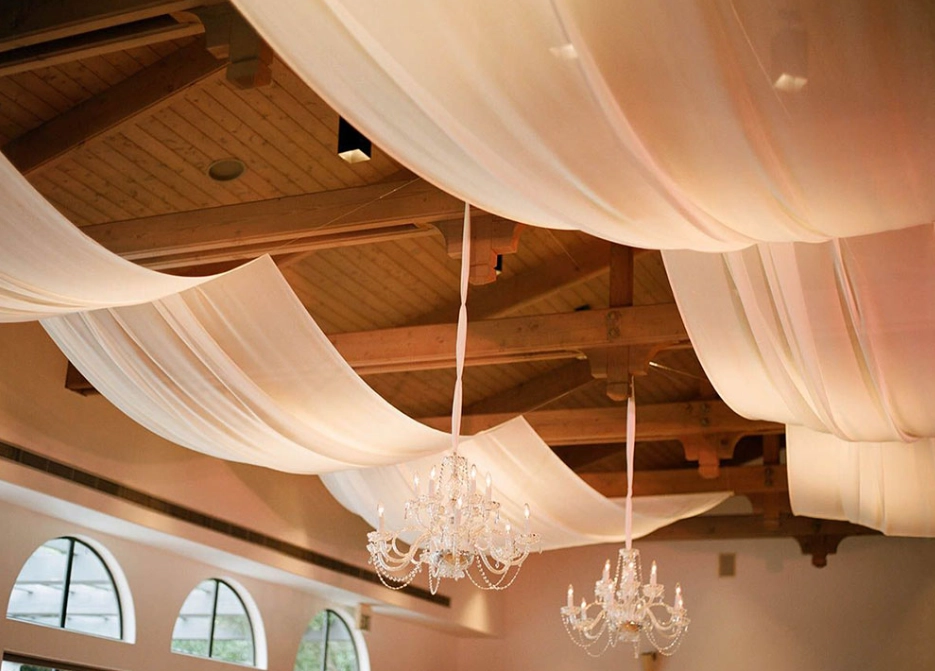 I'm designing a home decor item like curtains. How do I apply drape principles there?