Let's be honest. The idea of sewing can be intimidating. The machine whirring, the fear of crooked stitches, the sheer commitment of learning a new skill—it's enough to make anyone stash that beautiful fabric in a closet forever. I've been there. My first attempt at a pillowcase looked like it was made by a sleepy raccoon. But here's the secret no one tells you: you don't need a sewing machine, or even a needle and thread, to create stunning, useful fabric projects.
No-sew crafting is the perfect gateway. It's fast, forgiving, and focuses purely on the fun part: designing and assembling. Whether you're upcycling an old t-shirt, adding a personal touch to your home, or just need a mindful activity, these projects deliver satisfaction in under an hour. Forget the complexity; we're using fabric glue, fusible web (that magical iron-on adhesive), and simple knots.
What You'll Find Inside
- The 5 Essential Tools for No-Sew Success (And What to Avoid)
- Project 1: The 10-Minute Knotted Fleece Blanket
- Project 2: Iron-On Appliqué Tote Bag Upgrade
- Project 3: Fabric-Wrapped Storage Boxes
- Project 4: No-Sew Fabric Coasters with Fray Check
- Project 5: Simple Fabric Garland or Bookmark
- 3 Common Mistakes Beginners Make (And How to Fix Them)
- Your No-Sew Questions, Answered
The 5 Essential Tools for No-Sew Success (And What to Avoid)
You can start with just a few key items. Don't go buying out the craft store. Here’s what actually matters.
| Tool | What It Does | Beginner-Friendly Brand/Type | Approx. Cost |
|---|---|---|---|
| Fabric Glue | Bonds fabric to fabric or other surfaces. Dries clear and flexible. | Aleene's No-Sew Fabric Glue or Beacon's Fabri-Tac. Avoid white school glue—it dries stiff and cracks. | $5 - $8 |
| Fusible Web (Iron-On Adhesive) | A paper-backed adhesive sheet you iron onto fabric. It melts to create a bond. | Pellon Wonder-Under or HeatnBond Lite. Get the "Lite" version for easier handling. | $3 - $5 per yard |
| Sharp Fabric Scissors | For clean cuts. Ragged edges make no-sew projects look messy. | Dedicate one pair solely to fabric. Paper blunts the blades. | $15 - $25 |
| Fray Check or Clear Nail Polish | A liquid sealant that stops fabric edges from unraveling. | Dritz Fray Check is the standard. A clear topcoat nail polish works in a pinch. | $4 - $6 |
| Self-Healing Cutting Mat & Rotary Cutter (Optional but Game-Changing) | For perfectly straight lines and cutting multiple layers. Far more accurate than scissors. | A small 12"x18" mat and a 45mm rotary cutter from Fiskars or Olfa. | $25 - $40 (set) |
My personal non-consensus tip? Go slower with the fabric glue than you think. A thin, even bead is stronger and dries cleaner than a thick, globby one. The thick glue soaks through and leaves a dark, stiff stain on the front of your fabric. I learned this the hard way on a lovely linen napkin.
Project 1: The 10-Minute Knotted Fleece Blanket
This is the ultimate confidence builder. You get a cozy, finished product with zero adhesives.
Why it's perfect for beginners: No glue, no iron, just cutting and tying. It's tactile and instantly gratifying.
Materials: Two pieces of polar fleece (1.5 yards each), sharp scissors, a ruler. Fleece doesn't fray, which is the magic here.
The Process, Simplified:
- Lay the two fleece pieces flat, wrong sides together.
- Trim them to the exact same size.
- Cut a 4-inch square out of each corner (through both layers). This removes bulk.
- Now, cut 1-inch-wide strips, 4 inches deep, all around the perimeter.
- Tie the top and bottom strip (from each layer) together in a double knot. Move all the way around.
Pro Tip Everyone Misses: Don't pull the knots strangling-tight. A firm, snug knot looks better and preserves the stretchy, soft drape of the fleece. Yanking it too tight makes the edge curl and pucker.
Project 2: Iron-On Appliqué Tote Bag Upgrade
Transform a plain canvas tote bag with fusible web. This teaches you precision with heat.
Why it's perfect for beginners: You learn to use fusible web, the most versatile no-sew tool. It's also a great way to personalize gifts.
Materials: Plain canvas tote bag, scrap fabric for your design, fusible web (like HeatnBond Lite), an iron, parchment paper (not wax paper!).
Step-by-Step: Creating a Simple Leaf Design
Draw a leaf shape on the paper side of the fusible web. Cut roughly around it. Iron the rough side (the adhesive side) onto the *wrong side* of your scrap fabric, following the product's instructions—usually a dry iron for 2-3 seconds.
Let it cool, then cut out the shape precisely on your drawn line. Peel off the paper backing. Position the leaf on the tote bag. Cover it with parchment paper (this protects your iron and the bag). Press firmly with a hot, dry iron for 10-15 seconds. Apply pressure, don't glide.
Let it cool completely before testing the bond. For extra security on edges, you can dab a tiny bit of fabric glue.
Project 3: Fabric-Wrapped Storage Boxes
Turn boring cardboard boxes into chic storage. This is about covering large, flat areas.
Why it's perfect for beginners: It's forgiving. The box corners hide a multitude of minor imperfections. You practice measuring and wrapping.
Materials: A cardboard box (shoe box size is ideal), fabric large enough to wrap it, fabric glue, a foam brush, clips or clothes pins.
Cut your fabric to size: height of the box plus 2 inches for top/bottom wrap, and length to go around plus 2 inches for overlap. Run a bead of glue along one side of the box and press the fabric on. Use clips to hold it while you work your way around, pulling the fabric taut but not stretched. For the top and bottom edges, cut slits in the excess fabric at the corners, fold them in like wrapping a present, and glue down.
The inside? Don't bother lining it for your first try. It's a hidden area. Focus on a crisp exterior.
Project 4: No-Sew Fabric Coasters with Fray Check
Learn to manage fabric edges with this small, quick project.
Why it's perfect for beginners: It introduces Fray Check on a low-stakes item. You also work with batting for thickness.
Materials: Cotton fabric scraps, felt or thin batting, fabric glue, Fray Check, a glass or jar as a template.
Trace four circles onto your fabric and onto the felt. Cut them out. Apply Fray Check to the edges of the fabric circles and let them dry completely—this is the crucial step. It seals the threads. Then, simply glue a fabric circle to each side of the felt circle, sandwiching it. Place a book on top while it dries for a flat finish.
Project 5: Simple Fabric Garland or Bookmark
Master the art of the clean finish without stitching.
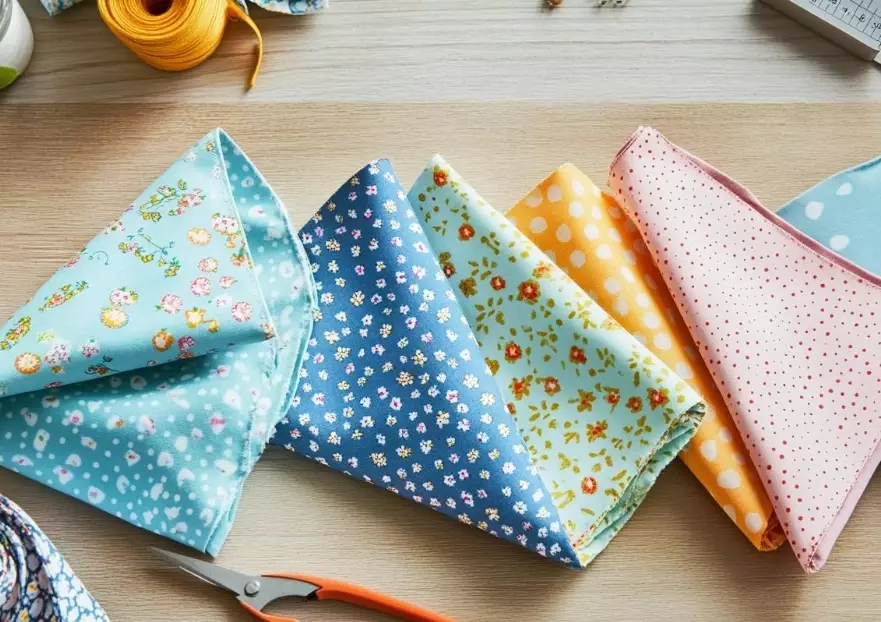
For a Garland: Cut fabric triangles. Run a thin line of fabric glue along the top two edges of a triangle. Fold the edges over a long piece of twine or ribbon, pressing to seal. Repeat, spacing triangles out. The glue creates a sealed hem.
For a Bookmark: Cut a rectangle of fabric. Apply Fray Check to all edges. Let dry. Cut a piece of fusible web the same size. Sandwich it between the fabric and a second decorative fabric rectangle. Iron to fuse. Now you have a double-sided, fray-proof bookmark. You can add a ribbon tassel at the top with a dot of glue.
3 Common Mistakes Beginners Make (And How to Fix Them)
I've seen these ruin projects time and again.
1. Skipping the Pressing (Ironing): You think, "It's no-sew, I don't need an iron." Wrong. Ironing your fabric before you start removes wrinkles that cause bubbles and bad adhesion. Always press first.
2. Impatience with Drying Time: Fabric glue isn't instant. Moving a project before it's fully set (check the bottle, often 24 hours for full strength) weakens the bond. Set it aside and leave it alone.
3. Using the Wrong Glue for the Fabric: That all-purpose glue won't hold stretchy knit fabric. For knits (like old t-shirts), you need a glue specifically formulated for flexible fabrics, like Beacon's Fabri-Tac. For woven cotton, the standard no-sew fabric glue is fine.