Silk. The word alone conjures images of shimmering gowns, luxurious sheets, and a feel that's both cool and warm to the touch. But that final, beautiful fabric starts in a surprisingly humble place: a single, sticky thread spun by a caterpillar. The transformation from that thread to the cloth in your hands is a fascinating blend of ancient tradition, meticulous handwork, and modern technology. Let's cut through the mystery and walk through every step of how silk is made into fabric, from mulberry leaves to the finished textile. You'll see it's more complex, and more human, than you might think.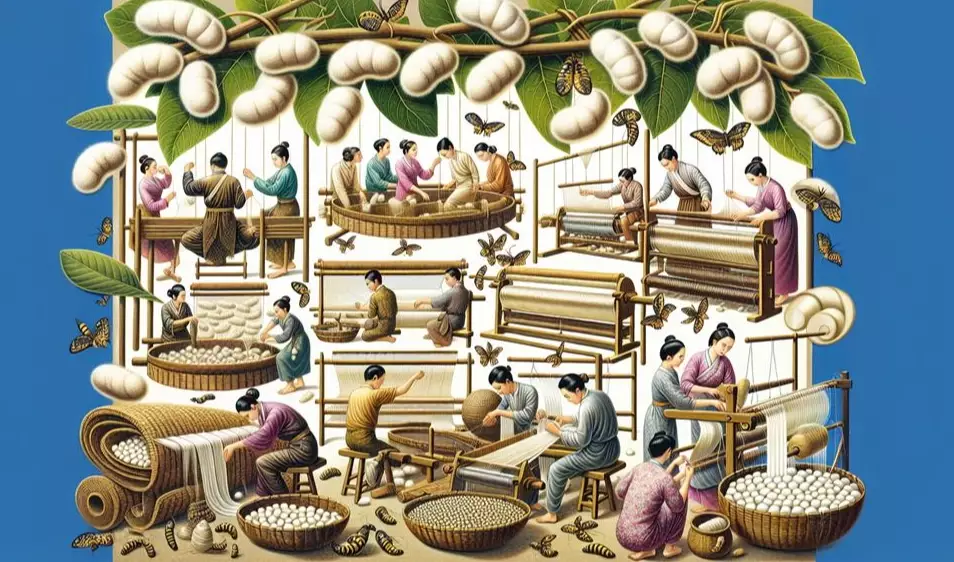
Your Quick Guide to Silk Fabric Creation
Stage 1: Sericulture – Raising the Silkworms
It all begins with the Bombyx mori silkworm. Forget wild silk for a moment—the vast majority of commercial silk comes from this domesticated moth caterpillar. For about 5000 years, we've been perfecting its care. The process is called sericulture, and it's a full-time, delicate job.
The lifecycle is tightly controlled. Farmers start with moth eggs, which hatch into tiny larvae. These larvae have one job: eat. And they eat only one thing: fresh mulberry leaves. I've visited small-scale sericulture farms, and the sound is unforgettable—a constant, soft rustling of thousands of caterpillars munching away in trays. They're fed meticulously, kept in clean, temperature-controlled environments, because any stress or disease can ruin the silk.
After gorging themselves for 25-30 days and molting four times, the silkworms are ready to spin. Their bodies are full of a liquid protein called fibroin, coated with a gum-like substance called sericin. They instinctively seek a frame or twig to anchor themselves and begin figure-eight head movements, drawing out a single, continuous filament of liquid silk that solidifies on contact with air.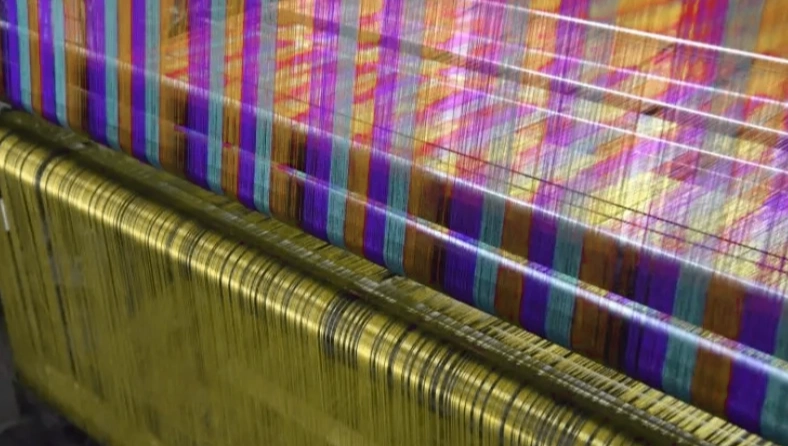
Stage 2: Reeling & Throwing – From Cocoon to Thread
You have a basket of cocoons. Now you need a usable thread. This stage is where skill really separates mediocre silk from great silk.
First, the cocoons are sorted. They're then softened in basins of hot water (around 95°C/200°F). This loosens the sericin gum. The hot water bath also helps find the loose end of the filament. Here's a nuance most articles miss: the temperature and timing are critical. Too hot or too long, and you damage the fiber's strength and luster. Too cool, and the gum won't soften enough for reeling.
Reeling (or Filature) is the act of unwinding the filament. Several cocoon filaments (usually 4 to 8) are gathered together and fed through a porcelain guide, twisting slightly as they combine. The sericin acts as a natural glue, bonding them into a single, stronger thread called raw silk or reeled silk. The number of filaments combined determines the thickness of the final yarn. This process was traditionally done by hand on reeling wheels; now it's mostly done by automated reeling machines, but the principle is identical.
Next comes Throwing. No, we're not discarding anything. In silk terminology, "throwing" means twisting the reeled yarns. This isn't always done, but it's essential for creating certain types of silk yarn. A simple, light twist might be given to organize the fibers for weaving. A much heavier twist creates crepe yarns, which give silk that distinctive pebbly, textured look and excellent drape. The direction (S-twist or Z-twist) and tightness of the twist are carefully controlled.
The yarn is then wound onto skeins or cones, ready for the loom.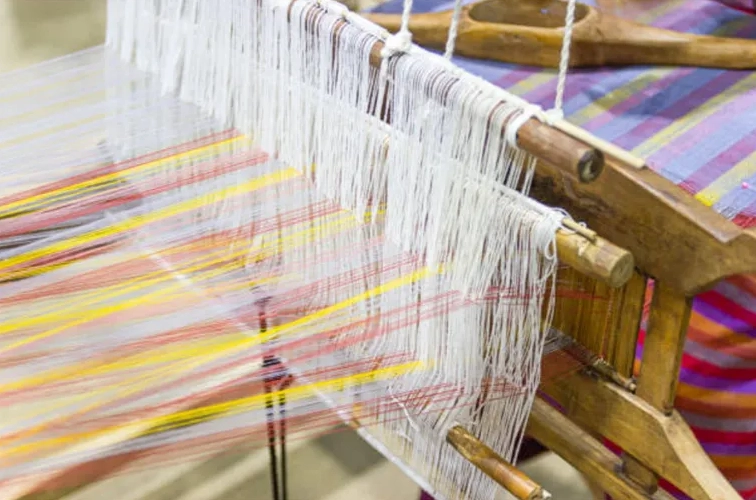
Stage 3: Weaving – The Threads Become Cloth
Now we have our silk yarn. Time to make fabric. Weaving is the interlacing of lengthwise threads (the warp) and crosswise threads (the weft). The specific pattern of interlacing creates different weaves, each with unique properties.
Before weaving, the warp threads must be prepared—a process called warping. Hundreds of parallel yarns are wound onto a large beam under consistent tension. This is a make-or-break step. Uneven tension here leads to visible flaws in the final fabric: streaks, bars, or uneven texture. It's a painstaking job, even with modern equipment.
Here are the three fundamental silk weaves you'll encounter:
| Weave Type | How It's Made | Key Characteristics & Common Uses |
|---|---|---|
| Plain Weave (e.g., Habotai, China Silk) | The simplest pattern: weft goes over one warp, under the next, repeat. Like a checkerboard. | Lightweight, flat surface, can be sheer. Often used for linings, scarves, and lightweight blouses. It's the most common and affordable silk fabric. |
| Twill Weave (e.g., Silk Twill, Surah) | Creates a diagonal rib pattern. The weft passes over two or more warps, then under one or more, shifting each row. | Stronger, more durable, and drapes beautifully. Has a subtle sheen and resists wrinkles better than plain weave. Used for ties, dresses, and heavier shirts. |
| Satin Weave (e.g., Charmeuse, Satin) | Warps "float" over multiple wefts before being tied down. Creates long, unbroken threads on the fabric surface. | The iconic high-gloss, ultra-smooth face and a dull back. Luxurious drape but can be prone to snagging. Used for lingerie, evening wear, and linings. |
Weaving can be done on handlooms, power looms, or sophisticated electronic jacquard looms for complex patterns. The choice affects the price, character, and often the "soul" of the fabric. Handwoven silk has slight, beautiful irregularities that add to its value.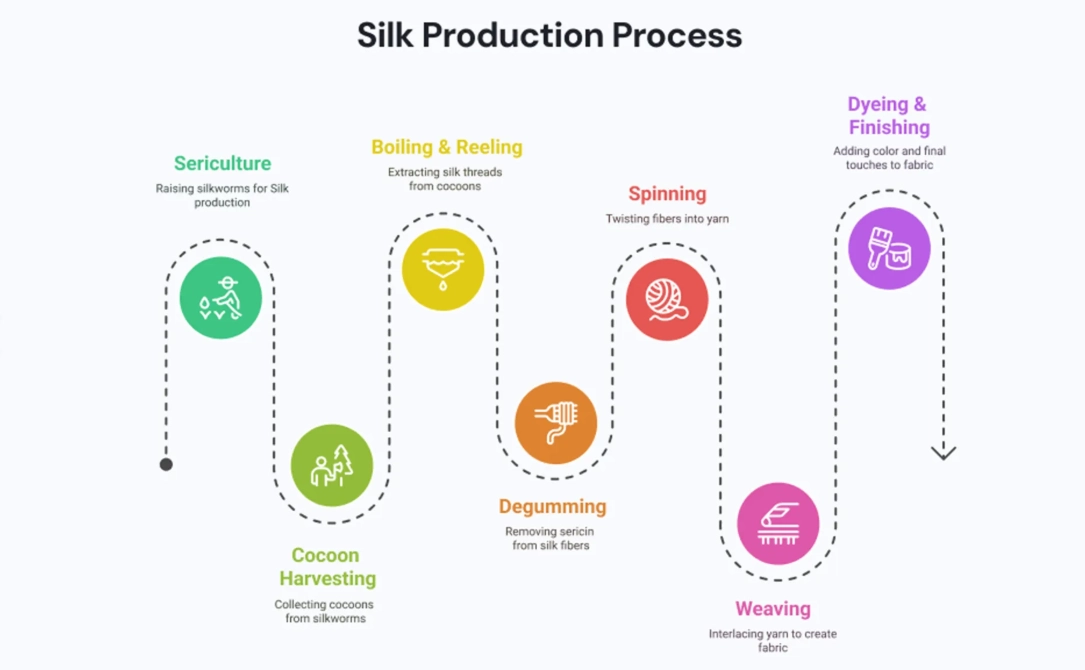
Stage 4: Dyeing & Finishing – Adding Color and Character
The loom produces greige goods (pronounced "gray")—raw, off-white fabric still coated in sericin gum. It's stiff and dull. This is where it gets its final personality.
Degumming: The first crucial step. The fabric is washed in hot, soapy water to remove the remaining sericin (about 20-30% of the cocoon's weight). This is what unlocks silk's famous luster, softness, and drape. The waste sericin is sometimes recovered for use in cosmetics.
Dyeing: Silk takes dye brilliantly. It can be dyed at various stages: as yarn (skein-dyed) for patterned fabrics like stripes, or as finished fabric (piece-dyed). Natural dyes from plants and insects are used for artisanal pieces, while most commercial silk uses acid dyes, which bond beautifully with the protein fibers. The depth and vibrancy of color on silk are hard to match with other fibers.
Finishing: This is the secret toolbox of the textile industry. Finishes give the fabric its final hand (feel) and performance. A few common ones for silk:
- Weighting: Historically, a controversial practice where metallic salts (like tin) are used to add body and heft to silk. Over-weighting makes silk brittle and prone to splitting. Quality silk today is often "pure-dye" or lightly weighted.
- Calendering: Passing the fabric between hot, heavy rollers to create a smooth, glossy surface.
- Sandwashing or Peach Finish: Tumbling the fabric with abrasives to create a soft, sueded, matte feel with reduced sheen.
- Crease-Resistant Finish: Applying a resin to help the fabric hold its shape and wrinkle less (though purists argue it changes the natural feel).
Finally, the fabric is inspected for flaws, measured, and rolled onto bolts, ready to be shipped to designers, tailors, or fabric stores.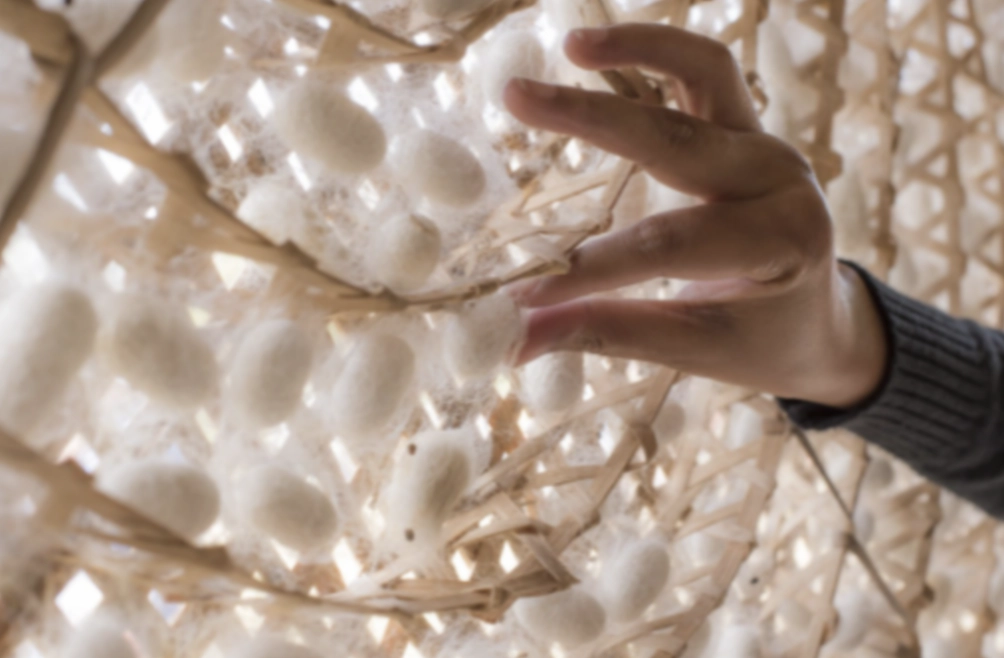
Silk Fabric: Your Questions Answered
Why is silk so expensive compared to cotton or polyester?
I bought a silk blouse that says "100% Silk," but it feels rough and stiff. Did I get a fake?
What's the difference between "Mulberry Silk" and just "Silk"?
How can I tell if I'm buying real, high-quality silk fabric?
Is the silk industry ethical? I've heard concerns about silkworms.