Let's talk about gold stud earrings. You probably own a pair. Maybe they were a gift, or you bought them on a whim. They sit in your jewelry box, reliable but maybe a bit... boring? That's the common mistake. We think of studs as basic, as a default. But a well-chosen pair of gold studs isn't just an accessory; it's the foundation of your personal style. It's the piece you put on when you can't decide what else to wear, the one that makes you feel pulled together even in sweatpants.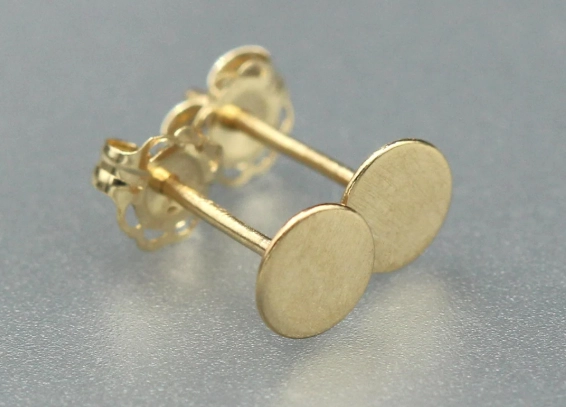
I've been collecting and advising on fine jewelry for over a decade, and I've seen all the missteps. The earrings that turn ears green, the "timeless" diamond studs that look dated, the posts that bend after six months. The truth is, finding the perfect gold stud earrings for women involves navigating a minefield of marketing hype and overlooked details.
This guide cuts through the noise. We're going beyond "buy 14k gold." We'll dig into the specifics that actually matter for comfort, style, and longevity. By the end, you'll know exactly what to look for—and what to avoid—to find a pair you'll genuinely love wearing every single day.
What's Inside This Guide?
The Gold Truth: Karats, Colors, and Alloys Explained
This is where most guides stop. "14k is best." But why? And what about the other options? Let's break it down like you're making an investment, not just a purchase.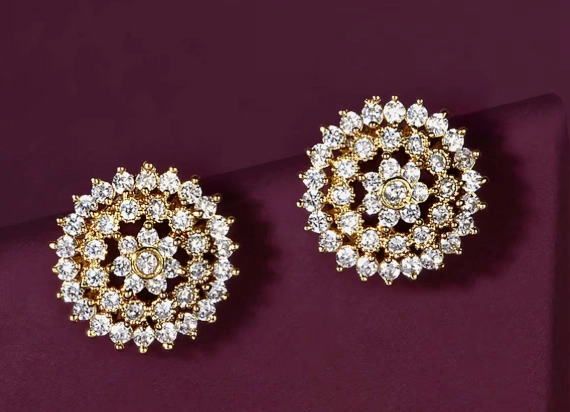
Karats: The Durability vs. Purity Trade-Off
Pure gold (24k) is too soft for everyday earrings. It dents and scratches easily. So we mix it with other metals (alloys) for strength. The karat (kt) tells you the gold percentage.
14k Gold (58.5% gold): The undisputed champion for daily wear. It offers the perfect balance—excellent durability, a rich color, and a reasonable price point. It's hard enough to resist significant scratching from normal use. This is my default recommendation for first fine jewelry or an everyday workhorse pair.
18k Gold (75% gold): Has a deeper, warmer yellow hue. It's noticeably richer. The downside? It's softer. You might see fine scratches more easily, and the posts can bend if you're not careful. I love 18k for special occasion studs or if you have nickel sensitivities (fewer alloys).
Gold-Filled vs. Gold-Plated: Here's a crucial distinction many miss. Gold-filled jewelry has a thick layer of gold (legally, at least 5% of the item's weight) bonded to a base metal core. It's durable and can last for years with care, a fantastic budget-friendly option for solid gold look. Gold-plated items have a microscopic layer of gold, measured in microns. It wears off quickly, especially on high-friction areas like earring posts. Once it does, the base metal (often brass or copper) is exposed, which can oxidize and irritate your skin.
Yellow, White, and Rose Gold: It's Not Just About Color
The alloy metals create the different colors. Yellow gold mixes gold with copper and silver. White gold is alloyed with nickel, palladium, or other whitening metals and is usually rhodium plated for that bright white shine. That plating wears off over 1-2 years, requiring re-dipping to maintain the color—a hidden maintenance cost many aren't told about. Rose gold gets its blush from a high copper content, which makes it very durable but can cause reactions for those with copper allergies.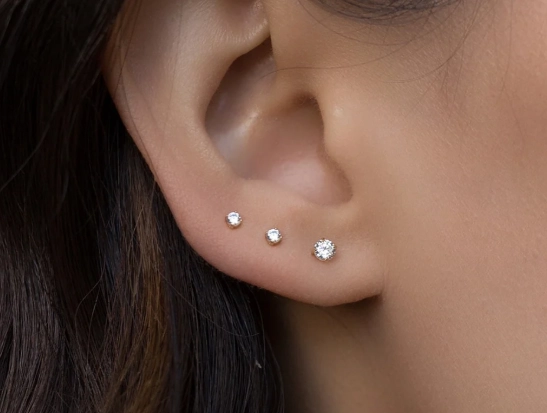
My take? For studs you never want to think about, go for un-plated yellow or rose gold. The color is permanent.
Finding Your Style Match: From Minimalist to Statement
Studs aren't just tiny dots. The style dictates when and how you'll wear them.
The Classic Solitaire: A single diamond, gemstone, or pearl. Timeless, but size matters. A 1-carat total weight (ctw) diamond stud is a classic, but a 0.25 ctw pair can be more versatile and modern. Don't feel pressured to go big.
The Geometric: Cubes, triangles, bars, or hoops so small they're practically studs. These add a subtle edge to a basic outfit. Look for clean lines and a secure setting—small prongs on geometric shapes can snag.
The Textured or Organic: Hammered finishes, twisted wire, or natural shapes like leaves. These catch the light in a diffuse, interesting way and hide minor scratches beautifully. They're perfect for adding visual interest without being loud.
The Cluster or Mosaic: Multiple small stones set together. They offer more sparkle per millimeter than a solitaire. Check that the setting isn't too tall or bulky, or it might knock against your glasses or hairbrush.
Here's a personal rule: Your primary everyday studs should be low-profile. You should be able to sleep on them (though I don't recommend it), hug someone, or put on a sweater without them getting in the way. Save the taller, more elaborate designs for when you want to make more of a statement.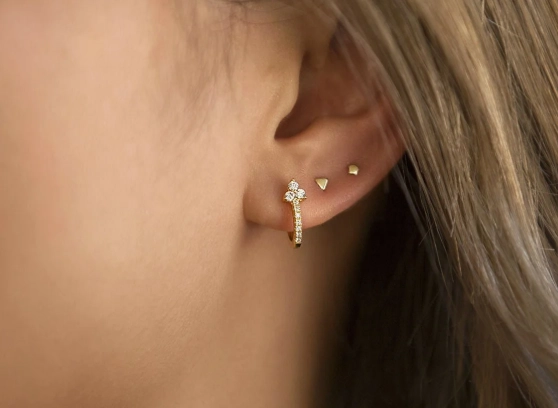
The Comfort & Fit Factor: Posts, Backs, and Sensitive Ears
This is the chapter most jewelry sites ignore, and it's the most important. Uncomfortable earrings are useless, no matter how pretty.
The Post: Thickness and Material
Most studs use a "butterfly" or "push" back on a straight post. The post's thickness (gauge) matters. Standard is about 0.8mm. Thinner posts (like on cheap earrings) can feel sharp and wiggle more. Some higher-end brands use slightly thicker posts (0.9-1.0mm) for a more secure, substantial feel.
For sensitive ears, the post material is critical. Even 14k gold contains alloys. If you react, look for posts made from implant-grade materials: specifically, titanium or niobium. These are bio-inert and used in surgical implants. Some jewelers offer 14k gold heads with titanium posts—the best of both worlds.
The Back: Security vs. Comfort
Butterfly backs are common but problematic. They can dig into the back of your ear, especially when sleeping. They also collect gunk. Flat-backed studs (like labret studs) are a game-changer. They sit flush against your earlobe, distributing pressure evenly. The back screws on or clicks securely, making loss almost impossible. They are, in my opinion, the ultimate upgrade for everyday gold stud earrings.
Another pro tip: Loosen the backs slightly during the day. Having them clamped on too tight restricts blood flow and can cause irritation. They just need to be snug enough not to fall off.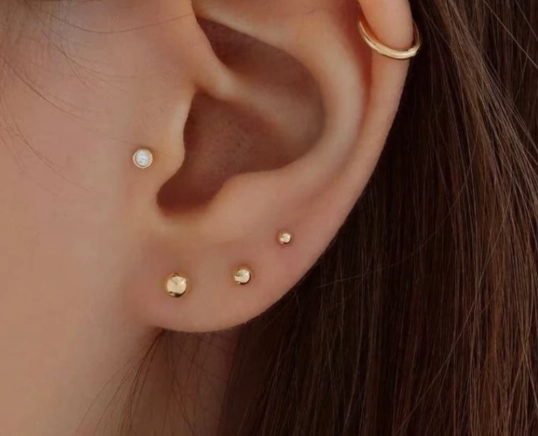
Keeping the Shine: Daily Care and Long-Term Storage
Gold is durable, but it's not invincible. The main enemies are chemicals and abrasion.
Put them on last, take them off first. This simple habit is the number one thing you can do. Perfume, hairspray, lotion, and makeup contain chemicals that can dull the metal and build up gunk around the settings.
Clean them monthly. Don't wait until they're filthy. A bowl of warm water with a drop of mild dish soap. Soak for 10 minutes, then gently scrub the posts and backs with a soft baby toothbrush. Rinse with clean water and pat dry with a soft cloth. That's it. No ultrasonic cleaners for delicate clusters, and never use toothpaste—it's abrasive.
Store them alone. Never toss studs loose into a jewelry box. They will scratch each other and everything else. Use the soft pouch they came in, or get a dedicated multi-compartment box with fabric lining. Keeping each pair separate preserves their finish for decades.
Your Top Gold Stud Questions, Answered
The right pair of gold stud earrings becomes a part of you. They're not flashy, but they're confident. They don't shout, but they communicate. By focusing on the right material for your life, a style that genuinely reflects you, and the nitty-gritty of comfort and care, you move beyond buying just another piece of jewelry. You're investing in a quiet, constant source of confidence. That's worth getting right.
Start with one perfect pair. You might be surprised how often you reach for them.