What’s Inside
- From Obscure Launch to Icon: The Panthère's Unexpected Journey
- Deconstructing the Design: What Makes a Panthère a Panthère?
- The Panthère Line-Up: Picking Your Perfect Model
- The Real-World Wear: Pros, Cons, and That "Worth It" Question
- Buying Guide: New, Vintage, and Grey Market
- Care, Service, and Making It Last
- Answering Your Cartier Panthère Questions
Let's talk about the Cartier Panthère. You've probably seen it. That sleek, linked bracelet, that square face – it's been on the wrists of everyone from 80s socialites to modern-day celebrities. It’s one of those pieces that just looks expensive and cool, without even trying. But what's the real story behind it? Is it just a pretty face, or is there more to this iconic watch? And more importantly, if you're thinking about getting one, what do you really need to know?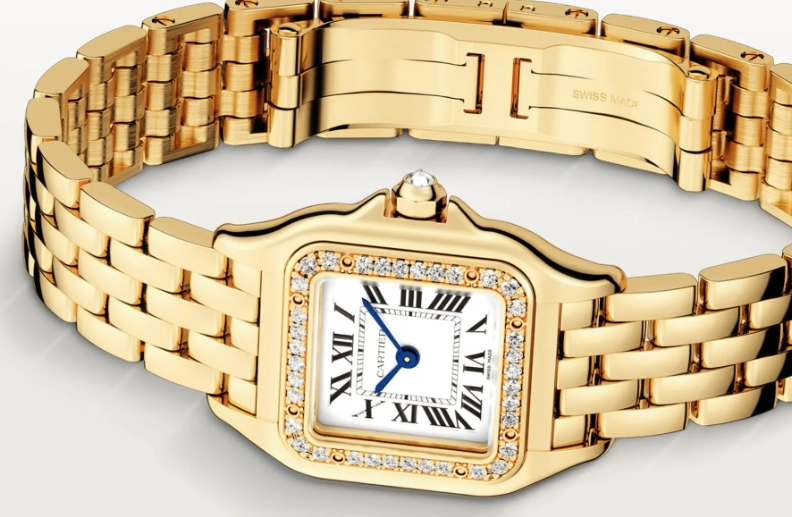
I remember the first time I tried one on. It was in a dimly lit boutique, and the sales associate placed it on a velvet tray. It wasn't the biggest or the flashiest watch in the case, not by a long shot. But there was something about the way the light caught the links, the satisfyingly quiet *snap* of the folding clasp. It felt… substantial. Not heavy, but present. It made my simple sweater feel instantly more put-together. That's the magic of the Panthère de Cartier. It’s an accessory that elevates.
But before you get swept up in the glamour, let's get practical. This guide is for anyone who's ever searched "Cartier Panthère review" or stared at the price tag with a mix of desire and dread. We're going deep – past the marketing and into the nuts and bolts. We'll look at its history (it's more interesting than you think), break down every model, talk about what it's actually like to wear every day, and tackle the big question: is it worth it?
From Obscure Launch to Icon: The Panthère's Unexpected Journey
Here's something that might surprise you: the Cartier Panthère wasn't an instant, smash-hit success. Not like the Tank or the Santos. It was introduced in 1983, and the world of watch design was a different place. Men's watches were dominating the conversation, often leaning towards bulky and technical. For women, options were frequently delicate, jewel-encrusted dress watches or smaller versions of men's models.
The Panthère de Cartier was different. It was unapologetically a jewelry watch, but with a sporty, modern edge. Its defining feature was (and is) its bracelet – composed of small, interlocking links that were supple, comfortable, and lay perfectly flat on the wrist. It was inspired by the fluid movement of its namesake, the panther. The case was a softened square, a cousin to the Santos, but distinctly its own.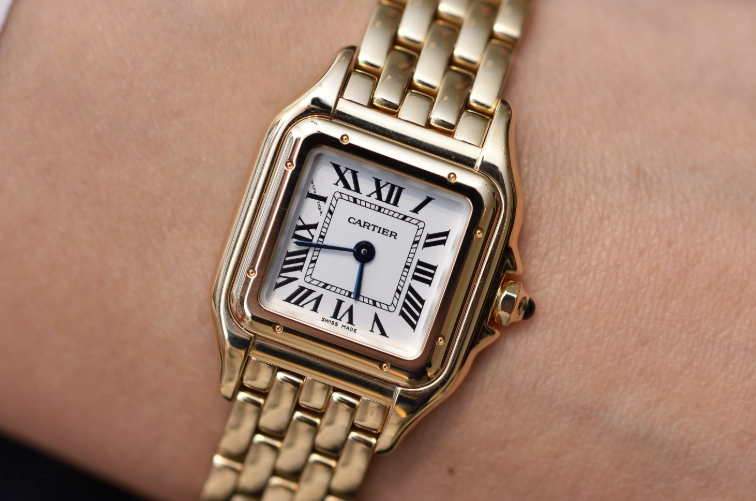
Key Fact: The "Panthère" name wasn't new for Cartier. The panther motif, created by legendary designer Jeanne Toussaint, had been a cornerstone of Cartier's high jewelry since 1914. The watch was an extension of this iconic symbol into a new, wearable form. You can explore the rich history of Cartier's panther motif on their official Panthère de Cartier jewelry page.
So why did it take off? The 1980s. That was the decade it found its soulmate. The era of power suits, bold shoulders, and statement accessories. The Panthère was the perfect wrist companion. It was luxurious but not fussy, elegant but with a bit of an attitude. It was seen on icons like actress Maria Shriver and socialite Brooke Astor. It became a symbol of a certain kind of effortless, inherited-chic wealth. Then, as trends do, it faded slightly from the spotlight in the 90s and early 2000s.
And then Cartier did something smart. They re-launched it in 2017. Not just a re-issue, but a full-blown revival with updated mechanics and a refreshed range. The timing was perfect. The market was hungry for vintage-inspired design, for iconic pieces with a story. The Panthère came roaring back, finding a whole new generation of fans. Today, it sits firmly as one of Cartier's "must-have" lines, alongside the Tank and the Ballon Bleu.
Deconstructing the Design: What Makes a Panthère a Panthère?
You can spot a Cartier Panthère from across a room. Its design language is that strong. But let's get specific about what you're actually looking at.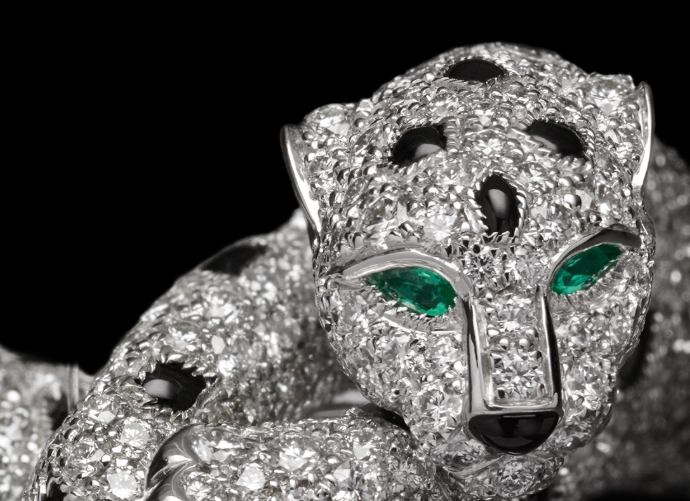
The most important element is the bracelet. Forget stiff, clunky links. The Panthère bracelet is made up of small, rectangular links that are double-jointed. This gives it an incredible fluidity. It drapes and moves with your wrist like liquid metal. It's incredibly comfortable for all-day wear because there's no pinching or pulling. The clasp is a distinctive double-folding deployant, often referred to as a "hidden clasp." It sits flush with the bracelet, maintaining the seamless, continuous look. It takes a bit of practice to open and close, but that solid *click* is deeply satisfying.
The case is a curved square with rounded corners. It's never harsh or angular. It sits low and flat on the wrist, which is a big part of its elegance. The dial is typically a clean silvered opaline or guilloché, with Roman numerals (the "X" is often a standout) and the classic Cartier railway minute track. The sword-shaped hands are blued steel, a signature Cartier touch. Of course, the crown is set with that iconic blue sapphire cabochon.
Now, let's talk about the elephant in the room: the quartz movement. The vast majority of Cartier Panthère watches are quartz. In the world of high-end watch snobbery, this is sometimes held against it. "It's just a quartz watch," they say.
Here's my counterpoint: for this watch, it makes perfect sense. The Panthère is, at its heart, a jewelry watch. Its priorities are thinness, reliability, and low maintenance. A mechanical movement would make it thicker, more expensive to service, and less accurate for daily wear. You put on a Panthère and you simply expect it to tell the right time, every time, for years, with a battery change every few years. That's the point. If you want a mechanical Cartier, you look at the Tank or the Santos. The Panthère owns its quartz heart, and it's better for it. That said, for the purists, Cartier does offer a few limited edition or high-jewelry models with mechanical movements, but they are the exception, not the rule.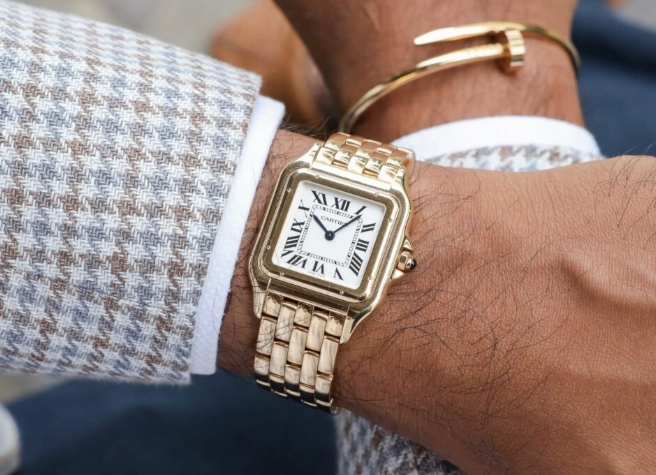
The Panthère Line-Up: Picking Your Perfect Model
This is where it gets real. Cartier offers the Panthère in a surprisingly wide array. Choosing isn't just about size; it's about personality. Let's break down the current core collection.
By Size: Small, Medium, and Large
The size is the first and biggest decision. It's not just about your wrist measurement, but your style.
- Small Model: This is the classic, dainty look. It's ultra-feminine and works as a bracelet that happens to tell time. Perfect for those with slender wrists or who prefer a more delicate, jewelry-first aesthetic. It can easily be stacked with other bracelets.
- Medium Model: For many, this is the Goldilocks size. It has more presence than the small but isn't overpowering. It reads clearly as a watch while retaining its elegance. I think this is the most versatile size for everyday wear for most people.
- Large Model: This is the statement maker. It has a definite 80s power vibe. It's bold, modern, and works wonderfully as a standalone piece. If you have a larger wrist or simply love a bigger watch, this is your pick.
My advice? You must try them on. A small might look perfect in the case but disappear on your wrist. A large might feel just right in person, even if you thought you were a medium person. The way the links wrap around your wrist bone changes everything.
By Material: Steel, Two-Tone, and Gold
Another major fork in the road. The material defines the watch's character and, of course, its price.
| Material | Look & Vibe | Considerations |
|---|---|---|
| Stainless Steel | Cool, modern, versatile. The most "sporty" of the options. Goes with everything from jeans to a little black dress. | The most affordable entry point into a Cartier Panthère. Incredibly durable and low-maintenance. |
| Two-Tone (Steel & Yellow Gold) | The classic 80s look. Warm, rich, and has a timeless, luxury feel. The gold links catch the light beautifully. | More versatile than you think—the steel tones it down, the gold dresses it up. A safe yet luxurious choice. |
| Yellow Gold or Rose Gold | Pure, unadulterated luxury. Warm, opulent, and makes a definitive statement. This is a heirloom piece. | The highest price point. Softer than steel, so may show fine scratches more easily over time. A forever piece. |
Beyond these, Cartier also creates incredible high-jewelry versions paved with diamonds, sometimes with panther-spotted sapphire or onyx dials. These are in a different universe of price and craftsmanship, but they show the full artistic potential of the Panthère form.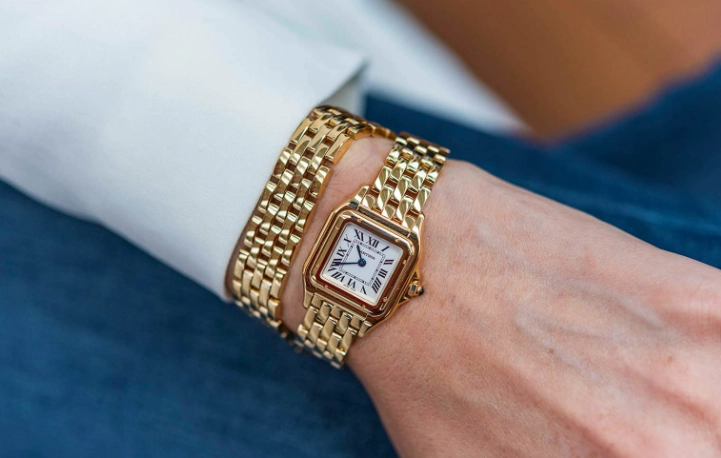
The Real-World Wear: Pros, Cons, and That "Worth It" Question
Okay, let's get down to brass tacks. You can read all the specs and history, but what's it like to live with a Cartier Panthère day in, day out?
The Good (Really Good)
The comfort is no joke. That bracelet is a masterpiece of ergonomics. It doesn't snag hairs (a huge win), and it molds to your wrist. It's lightweight but feels solid. The versatility is its superpower. I've worn mine to the grocery store, to weddings, and on business calls. It never looks out of place. It's also surprisingly low-profile. It slips under shirt cuffs and sweater sleeves without a fuss.
Then there's the timelessness. This isn't a trendy watch. Its design is decades old and still looks fresh. You're not buying a fleeting fashion piece; you're buying a design icon. As a 2022 New York Times article noted, its revival cemented its status as a permanent classic, transcending its 80s roots.
The Not-So-Good (Let's Be Honest)
It's a scratch magnet. The high-polish surfaces on the links and bezel will develop fine hairline scratches, especially on the gold models. It's inevitable. For some, this "patina" adds character. For others, it's a source of anxiety. If you're someone who needs your things to look pristine forever, this might bother you. Cartier can polish it during a service, but that removes metal.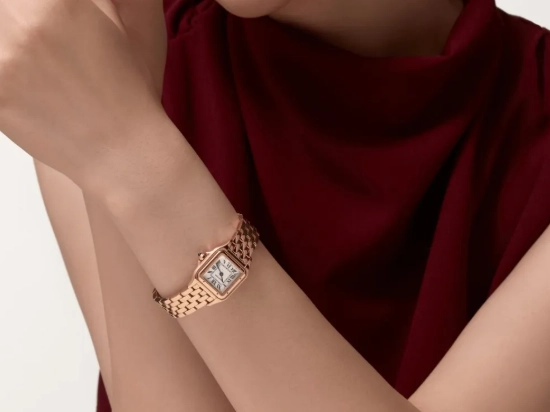
The quartz movement, while practical, will always be a point of contention for watch enthusiasts who value mechanical artistry. And the price. Let's not sugarcoat it. A steel Cartier Panthère is a significant luxury purchase. You are paying a substantial premium for the name, the design, and the heritage. You can get a technically superior mechanical watch for the same money. But you wouldn't be getting a Panthère.
So, is the Cartier Panthère worth it? Here's my take: It's worth it if what you want is that specific iconic look and feel. You're not just buying timekeeping; you're buying a piece of design history, unparalleled wearing comfort, and a versatile luxury accessory that will last for decades. If those things have value to you, then yes. If you're purely a specs-driven watch nerd, you'll likely be disappointed. It's an emotional purchase as much as a logical one.
Buying Guide: New, Vintage, and Grey Market
You've decided you want one. Now, how do you get it?
Buying New from a Cartier Boutique/Authorized Dealer: This is the safest, most straightforward route. You get the full experience, the warranty (usually 8 years now), and the assurance of authenticity. You can also try on every size and material. The downside is you pay full retail price. If you're considering this, building a relationship with a sales associate can be helpful.
The Vintage Route: This is a fascinating option. You can find original 1980s and 1990s Panthère watches on the pre-owned market. The appeal is the authenticity of the era. They often have a slightly different, sometimes chunkier, charm. Caution is key. You need to buy from a highly reputable vintage dealer. Service history is crucial, as old quartz movements can fail and be difficult to repair. Bracelets can be stretched. Do your homework. A publication like Hodinkee has covered the vintage Panthère market and can give you a sense of what to look for.
Grey Market/Pre-Owned Modern: Websites selling unworn or lightly used modern pieces can offer significant discounts off retail. The risk is lower than with vintage, but you must still verify the seller's reputation. Ensure the watch comes with its original box, papers, and ideally, some remaining warranty. The serial number can be checked with Cartier for authenticity during a service.
My personal strategy? For my first one, I bought new. I wanted the certainty and the experience. For a potential second (maybe a small gold one someday), I'd confidently explore the pre-owned market from a trusted seller.
Care, Service, and Making It Last
You've made the investment. Now, keep it nice.
Daily Care: Wipe it down with a soft, dry microfiber cloth after wear to remove oils and sweat. Avoid contact with chemicals: perfume, hairspray, lotions, and household cleaners can damage the finish and, on gold models, cause discoloration. Take it off before showering, swimming, or doing dishes. Water resistance is minimal (typically 30 meters), meaning it's really just splash-resistant.
Scratches: Embrace them as a sign of wear, or take it to Cartier for a polish every 5-7 years. Polishing is not free and removes a tiny amount of metal, so don't overdo it.
Service: Even though it's quartz, it needs care. Cartier recommends a check-up every 5-8 years. This involves checking the movement, replacing the battery (with a genuine Cartier one to prevent leakage), checking the seals for water resistance, and giving the case and bracelet a professional clean. A basic service from Cartier will cost several hundred dollars. Keep all your service records.
Answering Your Cartier Panthère Questions
So, there you have it. The Cartier Panthère isn't just a watch; it's a specific kind of style statement. It's about a feeling—confident, chic, and effortlessly put together. It has its quirks and it demands a premium, but for those it resonates with, there's simply nothing else like it. It’s a modern icon for a reason.
The final step? Go try one on. Feel that bracelet, hear that clasp, see it on your own wrist. That's the only way to know for sure if the legend lives up to the reality for you.