Let's be honest. You've seen those perfectly layered gold bracelet stacks on someone's wrist and thought, "I want that." But when you try it yourself, it either looks messy, feels uncomfortable, or just… doesn't click. I've been there. After years of working with fine jewelry and styling clients, I've learned that a great stack isn't about throwing every piece you own on your arm. It's a practiced, personal composition.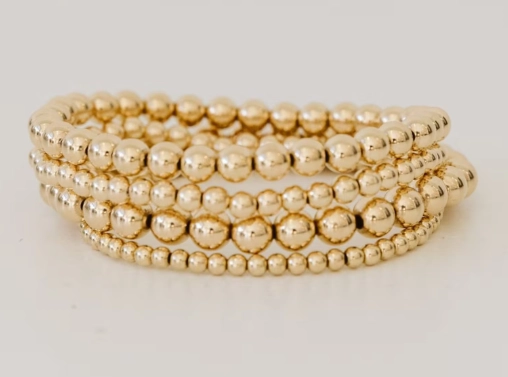
This isn't just another list of "wear three bracelets." We're going deeper. We'll talk about the mechanics—the clasps, the weights, the textures—that make a stack work in real life, not just in a photoshoot. Forget the generic advice. Let's build a stack that feels like you.
Your Quick Guide to Stacking Success
Foundation First: Picking Your Core Pieces
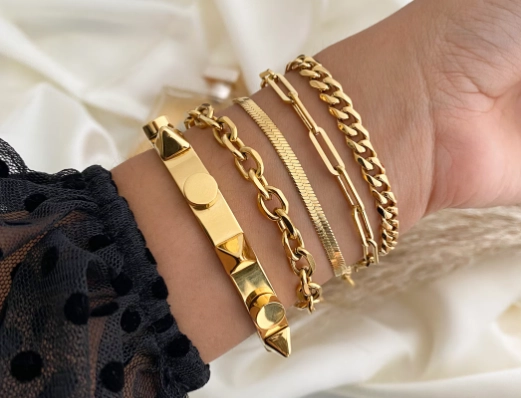
Start with one bracelet you absolutely love. This is your anchor. It could be a simple gold chain link, a personalized ID bracelet, or a bangle with sentimental value. Everything else complements this piece.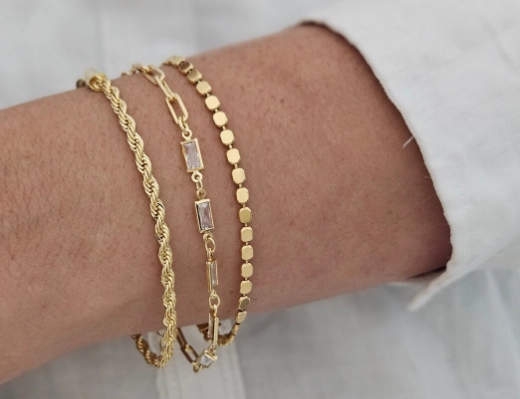
Now, think about variety in three key areas:
1. Texture & Finish
A stack of only high-polish bracelets can look flat and commercial. Mix it up. Pair that shiny curb chain with a hammered gold band. Add a piece with milgrain detailing or a brushed finish. The light catches each one differently, creating depth. I often use a textured bracelet as a "spacer" between two shiny ones—it breaks up the monotony.
2. Width & Proportion
This is crucial for comfort. A stack of five massive 10mm-wide cuffs will feel like a shackle. Alternate widths. Try a thin 2mm rope chain, a medium 5mm engraved band, and one statement 8mm bangle. The variation lets them sit neatly against each other without bulking up.
3. The "Golds" Question
Stick to only yellow gold? That's an old rule. Mixing yellow, rose, and white gold is not only acceptable, it's sophisticated. Rose gold adds warmth, white gold offers a cool contrast. The trick is to interweave them. Don't group all your yellow gold together. Place a rose gold piece between two yellow ones. It looks intentional, not accidental.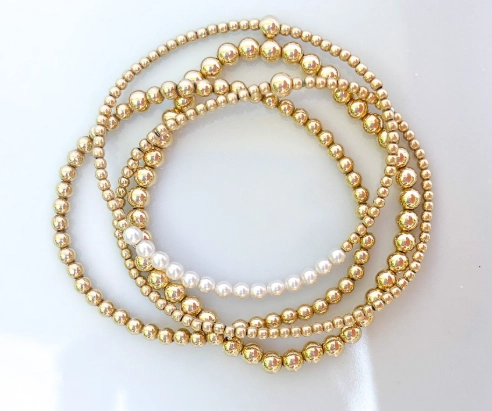
The Unspoken Rules of Stacking (And When to Break Them)
Rules are guides, not laws. But knowing them helps you break them with purpose.
The Odd-Number Rule: Stacks of 3 or 5 bracelets often feel more dynamic and balanced than even numbers. It's a design principle that works. But if your 4-piece stack feels perfect, ignore this.
Mind the Gap: Your bracelets should have a little room to move. They shouldn't be squeezed so tight they dig in, nor so loose they slide over your hand constantly. A good test? You should be able to slip a finger or two underneath the whole stack comfortably.
The Dominant Side: If you wear a watch, let it be the star on that wrist. Keep the bracelet stack on the other arm simpler or let the watch integrate into the stack as the largest, most functional piece. Having a huge stack fighting with your watch often looks cluttered.
How to Elevate Your Stack with Personality
Now for the fun part. A stack tells a story. Here’s how to write yours.
Incorporate Non-Metal Elements: Add a beaded bracelet with gold accents, a black leather cuff, or a woven thread piece. This adds a casual, collected-over-time vibe. It keeps the look from being too "precious." A single black leather band can ground an entire stack of gold.
Add a Charm or Two: Not a charm bracelet covered in trinkets, but one or two meaningful charms on a simple chain. A small disc with initials, a tiny star, a birthstone charm. It becomes a hidden detail, a personal secret in the stack.
Play with Asymmetry: You don't need symmetry on both wrists. Try a substantial stack on your left wrist and a single, delicate tennis bracelet or a slim chain on your right. It feels modern and less "done."
I remember a client who added her grandmother's thin, engraved wedding band to her stack. It was so subtle, but it meant everything. That's the goal—pieces that have weight beyond grams.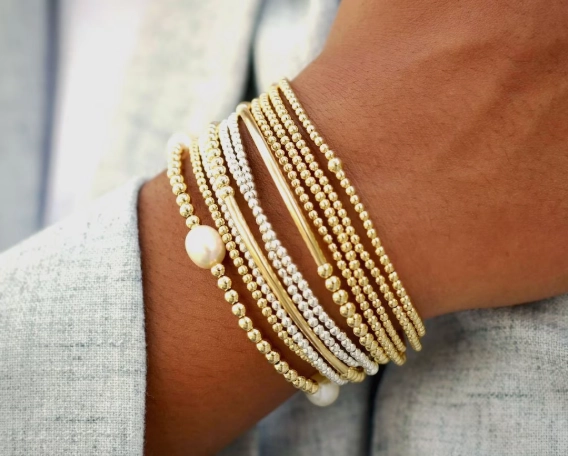
Common Pitfalls & How to Avoid Them
The Tangle: Light, chain-based bracelets love to intertwine. The fix? Include at least one solid, rigid piece—a bangle or a solid cuff—in the mix. It acts as a barrier, keeping the chains separated. Also, try to hook clasps through links rather than letting them dangle freely.
The Noise: Some stacks jingle with every move. If you find it annoying, opt for soldered bangles or bracelets with secure, flat clasps. Chain maille or fully flexible pieces are quieter than ones with dangling charms or loose links.
The Damage: Yes, gold scratches gold. It's a fact of life. To minimize it, avoid stacking two identical high-polish bangles that will constantly rub the same spot. As mentioned, mix finishes. A scratch on a hammered or matte piece is virtually invisible. Save your pristine, perfect heirloom bangle to wear alone on a special occasion.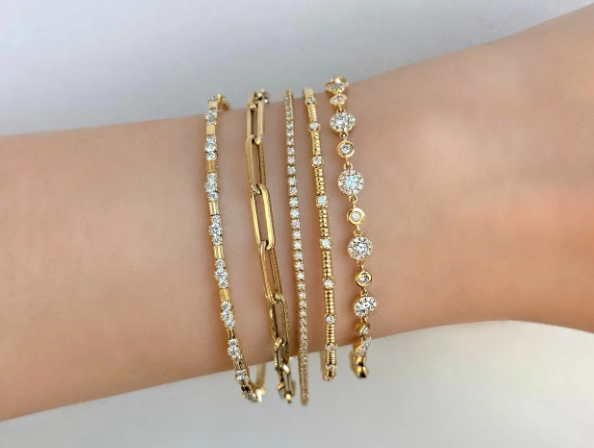
Your Stacking Questions, Answered
The best gold bracelet stack isn't about following trends from a jewelry authority like The Gemological Institute of America (GIA) on care, but about expressing your personal style through composition. It's an evolving collection. Start with what you have, play with the combinations, and don't be afraid to edit. Take one off if it feels wrong. The goal is a look that feels effortless, because you built it for your life, not for a picture.
Now go look at your jewelry box with fresh eyes. What's your anchor piece today?