Jump to What Matters
Let's cut to the chase. You're here because you've bought nail polish that chips in a day, or you're overwhelmed by shelves full of brands promising the moon. I've been painting nails for over a decade, from salon work to testing hundreds of bottles at home. This isn't about hype; it's about what works. Nail polish brands vary wildly in formula, brush design, and longevity, and picking the right one can save you time, money, and frustration.
I remember buying a luxury brand because everyone raved about it, only to find it peeled off my nails in sheets. Meanwhile, a drugstore brand I'd ignored lasted a full week. That's when I realized price doesn't always equal performance. In this guide, I'll walk you through the key factors, compare top brands honestly, and share tips you won't find on most beauty blogs.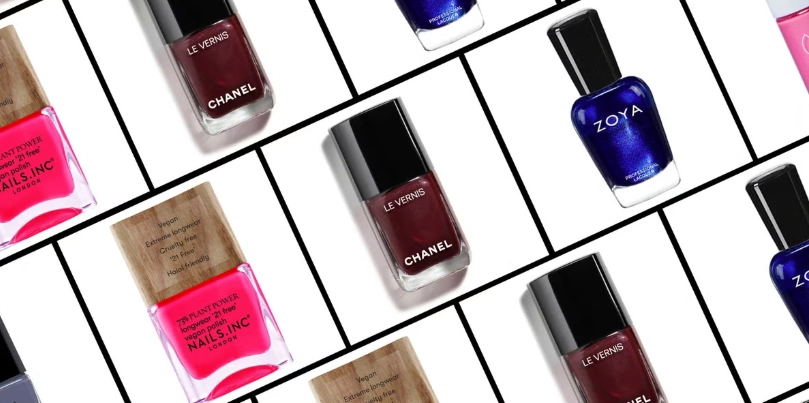
What Actually Makes a Nail Polish Brand Good?
Forget the marketing. When I evaluate a nail polish brand, I look at three things: formula, brush, and wear time. Formula includes ingredients—some brands like Zoya boast being "10-free," meaning they avoid toxins like formaldehyde and toluene, which is great if you have sensitive skin. Others, like OPI, focus on pigment density and smooth application.
The brush matters more than you think. A wide, flat brush like Essie's makes application faster and reduces streaks, while skinny brushes from some indie brands require more precision. Wear time depends on your body chemistry; a polish that lasts on me might chip on you. But generally, brands with flexible resins, like China Glaze, tend to adhere better through nail flexing.
Here's a pro tip: Always check the bottle neck for thickness. If polish collects there and gets gloopy, the formula might dry out faster. Brands with airtight caps, like Deborah Lippmann, often stay fresh longer.
Top Nail Polish Brands Broken Down by Category
I've grouped brands by budget and need. This isn't a ranked list—it's about matching you with the right fit.
Best Drugstore Brands: Affordable and Reliable
These are your workhorses. Sally Hansen leads with their Miracle Gel line, which doesn't require a UV lamp and gives a gel-like shine. A bottle costs around $8, and colors like "Wine Not" are staples. But their brushes can be inconsistent—I've had some fray after a few uses.
Essie is another favorite, with a vast color range and smooth application. However, their core line can chip quickly if you don't use a base coat. For under $10, it's solid for experimenting.
Best Mid-Range Brands: Balance of Quality and Price
OPI sits here. At $10-$12 per bottle, their ProWide brush is a game-changer for coverage, and shades like "Lincoln Park After Dark" are iconic. But some of their newer collections have thinner formulas that need three coats, which annoys me.
Butter London is worth mentioning for their 8-free formulas and chic packaging. Around $15, they're kinder to nails, though I find their polishes can be streaky if applied too thick.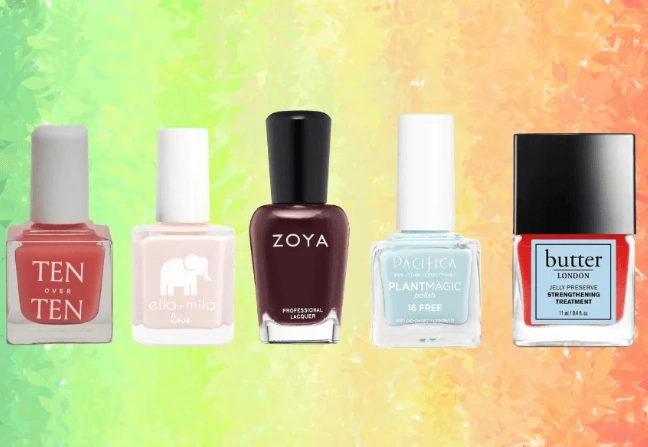
Best Luxury Brands: When You Want to Splurge
Chanel and Dior offer stunning colors and elegant bottles, but at $28-$30, you're paying for the name. Chanel's "Rouge Noir" is legendary, but it chips as fast as cheaper polishes on me. I only buy these for special occasions.
Smith & Cult, at $18, bridges luxury and performance. Their vegan formulas are durable, and the brush is perfect for control. It's my go-to when I need polish to last through a busy week.
| Brand | Price Range | Key Feature | Best For |
|---|---|---|---|
| Sally Hansen | $5-$10 | Gel-like shine without lamp | Everyday wear, beginners |
| Essie | $8-$10 | Wide color selection | Trendy colors, frequent changes |
| OPI | $10-$12 | Professional brush design | Salon-quality at home |
| Zoya | $10-$12 | Non-toxic, 10-free formula | Sensitive nails, health-conscious |
| Chanel | $28-$30 | Luxury branding, classic shades | Special occasions, gift-giving |
Note: Prices are approximate and vary by retailer. I've sourced this from personal purchases and industry reports like those from Nails Magazine.
How to Choose Your Perfect Nail Polish Brand
Start by asking yourself: What's my priority? If it's longevity, look for brands with terms like "long-wear" or "gel effect." OPI's Infinite Shine line uses a different resin system that bonds better, but it requires their specific base and top coats.
If you're vegan or eco-friendly, brands like Pacifica and Ella+Mila are fully cruelty-free and use plant-based ingredients. Pacifica's colors are fun, but I've noticed their reds fade faster in sunlight.
For nail health, avoid brands with high levels of dibutyl phthalate (DBP), which can cause brittleness. Check labels or websites—brands like Deborah Lippmann are transparent about ingredients.
Here's a scenario: You have short, brittle nails and want a natural look. Go for a strengthening brand like Nail Aid, which has biotin-infused polishes, paired with a sheer pink from Zoya. Apply thin coats and always use a ridge-filling base.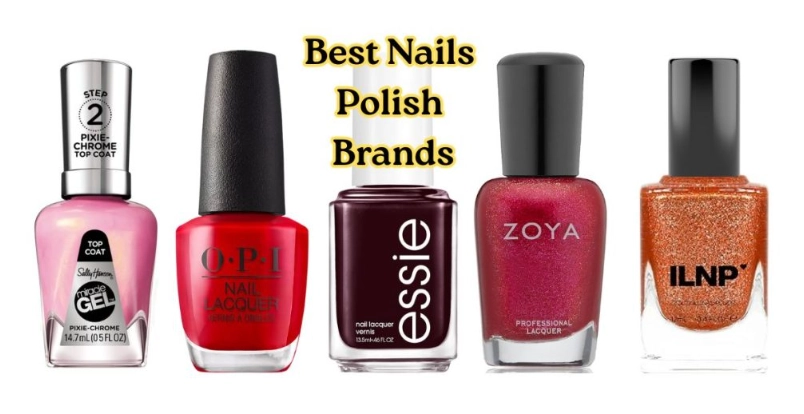
Common Mistakes Everyone Makes (And How to Avoid Them)
I see this all the time. People blame the brand when it's their technique. First mistake: skipping the base coat. Even the best nail polish brand will chip without a proper base. Orly Bonder is my favorite because it's sticky and grips the polish.
Second, applying thick layers. It leads to bubbling and longer drying time. Thin coats are key—let each dry for two minutes before the next.
Third, ignoring nail prep. Wipe nails with acetone to remove oils. If you use cuticle oil, do it after painting, not before.
A niche mistake: storing polish in the bathroom. Humidity and temperature changes ruin formulas. Keep them in a cool, dark place like a bedroom drawer.
Your Burning Questions Answered
 Wrapping up, the best nail polish brand for you depends on your nails, lifestyle, and budget. Don't get swayed by trends—test a few from different categories. I keep a mix: Sally Hansen for quick touch-ups, OPI for work events, and Zoya when my nails need a break. Remember, even a cheap polish can shine with the right care. Happy painting!