In This Guide
- Why Bother with a "Designer" Label for Silver?
- The Landscape: Iconic Designers & Their Signature Silver Styles
- Silver 101: What Does "Sterling" Actually Mean?
- How to Spot Quality (Beyond the Brand Name)
- The Buying Guide: Finding YOUR Perfect Designer Silver Necklace
- Caring for Your Investment
- Answering Your Burning Questions (FAQ)
- Final Thoughts: Trust Your Gut
Let's be real for a second. The world of jewelry is huge, and sometimes it feels like you need a decoder ring just to figure out what's worth your money. You see "designer," you see "silver," and a million questions pop up. Is it just a fancy name for expensive silver? Will it turn my skin green? How do I even know if I'm getting a good piece? I've been there, staring at online listings or glass cases, completely overwhelmed.
This guide is here to cut through the noise. We're not just talking about any silver chain. We're talking about the designer silver necklace – the kind of piece that feels special every time you put it on, that gets compliments, and honestly, that might just become a part of your personal signature. Whether you're buying it for yourself as a milestone gift or looking for that perfect statement piece, getting it right matters.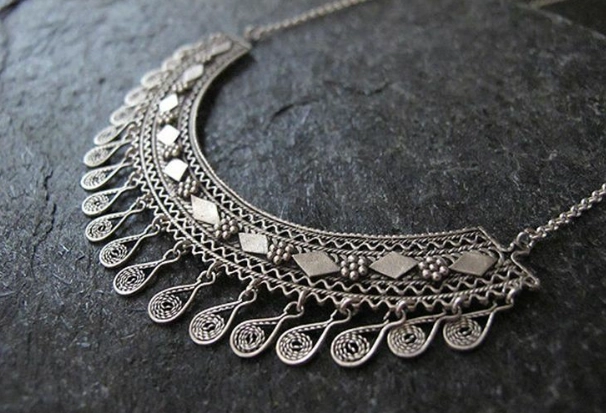
And silver? It's the unsung hero of the jewelry box. More accessible than platinum, cooler than yellow gold (in my opinion, at least), and incredibly versatile. But not all silver is created equal, and when a designer's name is attached, the game changes.
The Core Idea: A designer silver necklace isn't just about the metal. It's about a vision. It's a specific design language, often superior craftsmanship, and a brand story that adds intangible value. You're buying artistry, not just an accessory.
Why Bother with a "Designer" Label for Silver?
It's a fair question. You can find pretty silver necklaces everywhere. The designer tag often comes with a higher price. So what are you actually paying for? I used to wonder the same thing until I bought a cheaper, generic pendant and a designer sterling silver necklace within a few months of each other. The difference was in the details nobody talks about in the product description.
The generic one? The clasp felt flimsy. The link where the pendant connected to the chain started to wear thin and discolor after a few months. The finish, which looked brilliant at first, quickly dulled in uneven patches.
The designer piece? The weight was different – substantial but not heavy. The clasp clicked shut with a satisfying, secure sound. Two years later, with basic care, it looks almost new, and the chain hasn't stretched or weakened. That's where the value hides.
You're paying for:
- Superior Materials: While both might be 925 sterling silver, the alloy mix (that 7.5% other metal) can vary. Better designers often use purer alloys or specific mixes for better tarnish resistance and strength.
- Construction & Durability: How the links are soldered, the thickness of the chain, the security of the clasp. This stuff determines if your necklace lasts a season or a lifetime.
- Design Innovation: This is the big one. A designer isn't just making a circle on a chain. They're creating a recognizable aesthetic. Think of the silver designer necklace with the sculptural, organic forms from a brand like Monica Rich Kosann, or the sleek, architectural lines from Larsen & Eriksen. You're buying into a specific point of view.
- Resale & Heirloom Potential: Let's not kid ourselves. A piece from a known designer like Tiffany & Co. or David Yurman holds its value and narrative far better than an unknown brand. It becomes a story, not just an item.
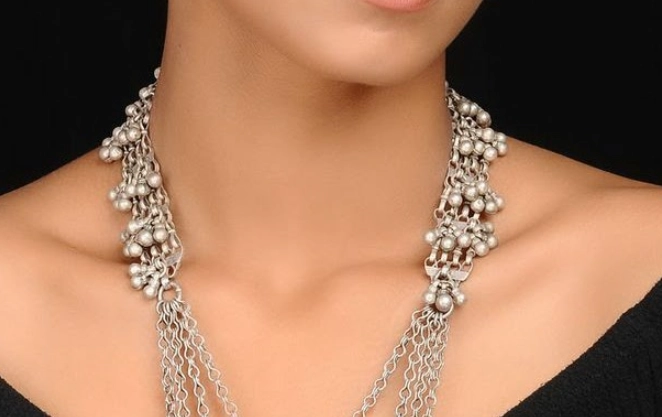
The Landscape: Iconic Designers & Their Signature Silver Styles
Not all designers are equal, and they certainly don't all do the same thing with silver. Some have built empires on it. Here’s a breakdown of key players, from the legendary houses to the brilliant independents. This table should help you start to spot the differences.
| Designer/Brand | Signature Style in Silver | What You're Really Buying | Price Point Vibe |
|---|---|---|---|
| Tiffany & Co. | Classic, elegant, often minimalist. Think the Return to Tiffany tag, Elsa Peretti's fluid bean or teardrop shapes, Paloma Picasso's bold scribbles. | Ultimate brand recognition, timeless design, impeccable finishing. It's the blue box experience. | Investment/Luxury |
| David Yurman | The cable motif is everything. Twisted sterling silver ropes, often combined with gold accents and gemstones. Chunky, recognizable, American luxury. | Iconic, sculptural jewelry that makes a statement. Incredible craftsmanship in weaving those cables. | Investment/Luxury |
| Georg Jensen | Danish modernism at its finest. Clean, organic lines inspired by nature. Less about sparkle, more about form and matte finishes. | Understated, artistic sophistication. A piece of design history (their vintage stuff is amazing). | |
| Independent Designers (e.g., Monica Rich Kosann, Catbird's roster) | Incredibly diverse. From delicate, personalized chains (Catbird) to vintage-inspired portrait lockets (Kosann). Often more narrative or personal. | Unique design, personal connection, supporting small-scale artistry. Often more wearable day-to-day. | Accessible to Mid-Range |
| High-Fashion Houses (Gucci, Dior, etc.) | Their jewelry line aesthetics—often featuring logos, house motifs (like Gucci's bees, Dior's stars). | The fashion statement. You're wearing the brand's aura first and foremost. | Mid-Range to Luxury |
See what I mean? A designer necklace in silver from Tiffany gives you a totally different vibe than one from an edgy independent designer on Etsy. Neither is better universally—it's about what speaks to you.
My personal take?
I lean towards the independents or the classic design houses like Jensen. Sometimes the big fashion brands feel like you're paying a huge markup just for a tiny logo engraved on a fairly simple chain. But hey, if that logo brings you joy, that's valid too! That's the thing about jewelry—it's deeply personal.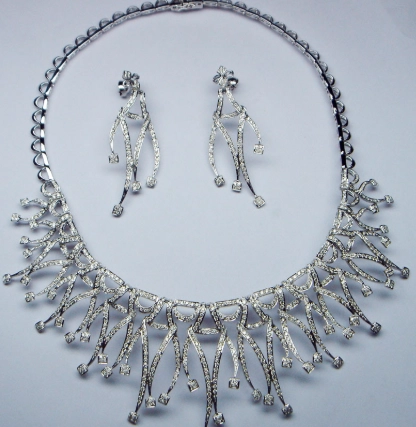
Silver 101: What Does "Sterling" Actually Mean?
Before we go further, let's demystify the metal itself. This is crucial because terminology is used loosely, and knowing the basics protects you.
Pure Silver (999 or .999 Fine): Too soft for most jewelry. It dents and bends easily.
Sterling Silver (925 or .925 Sterling): This is the standard. It means 92.5% pure silver and 7.5% other metals (usually copper). The copper adds strength and durability. Any quality designer silver necklace should be made of sterling silver. It will almost always be stamped with "925," "Sterling," or ".925." If it's not stamped, be very skeptical.
Argentium Silver or Tarnish-Resistant Silver: A newer alloy where the copper is partly replaced with germanium. It's more tarnish-resistant and is considered a premium form of sterling. A great choice if you hate polishing.
Silver Plating or Silver-Tone: A thin layer of silver over a base metal (like brass or nickel). This is NOT what we're talking about with designers. Plating wears off. A true designer piece uses solid sterling.
Watch Out For: "Nickel Silver" or "German Silver." These terms are misleading—they contain no real silver at all. They're copper-nickel-zinc alloys. Always look for the "925" stamp.
Hallmarks & Stamps: Your Best Friend
This is non-negotiable. A legitimate piece will have hallmarks. These are tiny stamps, usually on the clasp, a jump ring, or the back of a pendant.
- 925 / Sterling / .925: Confirms sterling silver content.
- Designer's Maker's Mark: A unique symbol or initials (e.g., Tiffany & Co. has their "& Co." or "T&Co.").
- Country of Origin Mark: Sometimes present.
The Gemological Institute of America (GIA) website, while focused on gems, has excellent resources on precious metals and marks that can help with verification. For antique or vintage pieces, these marks are essential for identification.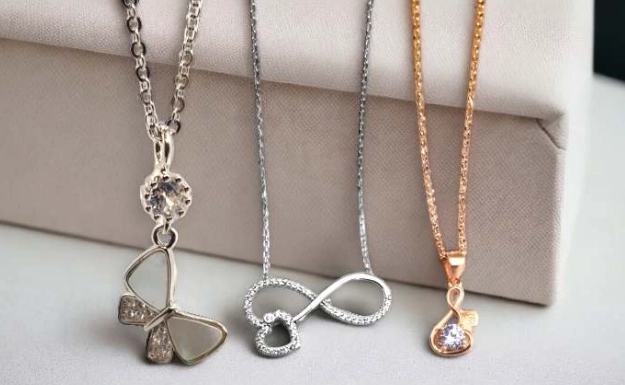
How to Spot Quality (Beyond the Brand Name)
Let's say you have two sterling silver necklace designer pieces in front of you. How do you judge which is better made? Forget the price tag for a minute.
- The Clasp. This is the workhorse. A good clasp (like a lobster claw or a secure box clasp) should open and close smoothly but firmly. It shouldn't feel loose, flimsy, or sharp. Spring ring clasps are common but can be less secure; for a heavier pendant, you want something sturdier.
- The Weight. Pick it up. Good silver has a certain heft—it shouldn't feel insubstantial or like cheap tin foil. A heavier gauge chain is more durable but may be less dainty.
- The Finish. Look closely. Is it polished to a high, even shine? Is a matte finish consistent? Are there any rough spots, scratches (beyond normal try-on wear), or discolored areas at the solder points (where links are joined)?
- The Chain. Pull it gently between your fingers (if allowed). Does it lie flat and flexible, or does it kink? Are all the links uniform and well-closed?
- The Details. Are any gemstone settings secure? Is engraving crisp and clean? On a pendant, is the bail (the loop that holds it on the chain) solid and well-attached?
I learned this the hard way with a beautifully designed but poorly constructed pendant. The bail was too thin for the weight of the pendant, and it snapped within weeks. The design was great, the execution wasn't. Now, I always give the bail a careful look.
The Buying Guide: Finding YOUR Perfect Designer Silver Necklace
Okay, theory is done. Let's get practical. How do you actually choose? Break it down by thinking about your life, not just the jewelry.
1. Budget & Value
Be honest with yourself. Designer silver can range from $150 to well over $2000.
- Under $300: You're in the realm of talented independent designers, smaller-scale pieces from larger brands (like a simple chain from a designer line), or vintage finds.
- $300 - $800: This is the sweet spot for a significant piece from an independent or a entry-level piece from a major house (e.g., a small Tiffany pendant).
- $800+: You're looking at signature pieces from iconic designers, pieces with significant gemstones, or intricate craftsmanship.
Question to ask: Is this a trend piece or a forever piece? For a forever piece, stretching the budget for the right designer might be worth it.
2. Lifestyle & Occasion
Are you a jeans-and-tee person, or are you in boardrooms? Do you want something you never take off, or a showstopper for events?
Everyday Stackable: A delicate chain (16-18 inch) with a small, personal charm or solitaire pendant. Perfect for layering. Independent designers excel here.
Statement Soloist: A bold, sculptural pendant on a substantial chain (like a David Yurman cable piece). This is your conversation starter.
Vintage/Heirloom Vibe: A locket, a cameo, or an art deco-inspired geometric piece. Look to designers who specialize in this aesthetic or scour reputable vintage dealers.
3. Neckline & Face Shape (The Practical Stuff)
This seems fussy, but it makes a difference in how the piece feels on you.
- Chokers (14-16 inches): Great for open necklines (off-shoulder, V-necks). Can feel restrictive for some.
- Princess Length (17-19 inches): The most common, universally flattering. Sits just below the collarbone.
- Matinee Length (20-24 inches): Perfect for high necklines (turtlenecks, button-ups). A longer designer silver necklace can elongate the torso.
- Opera Length (28-36 inches): Dramatic. Can be worn long, doubled, or even tripled.
A trick: Use a piece of string to mimic the length in front of a mirror. Do you like where it falls?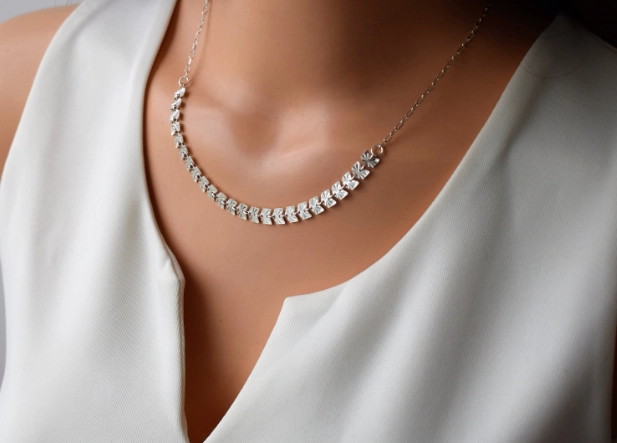
Caring for Your Investment
Silver tarnishes. It's a fact of life, a reaction with sulfur in the air. Don't panic. It's not ruined; it's just chemistry.
Prevention is Key:
- Store it right. Keep it in a dry, airtight container (a ziplock bag works) or an anti-tarnish cloth pouch. Don't just toss it in a jumbled jewelry box.
- Take it off. Before swimming (chlorine!), showering (soap scum), working out (sweat), or applying lotions/perfumes.
Cleaning:
- The Polish-Cloth Method: For light tarnish, a dedicated silver polishing cloth (impregnated with anti-tarnish chemicals) is your best friend. Rub gently. Don't use on oxidized (deliberately blackened) details, as it will remove them.
- The Mild Soap & Water Bath: For dirt. A drop of mild dish soap in lukewarm water, soft toothbrush for crevices, rinse thoroughly, pat dry with a lint-free cloth.
- Professional Cleaning: For intricate pieces or deep tarnish, take it to a professional. This is especially wise for pieces with gemstones, as some cleaners can damage certain stones. Resources like the Jewelers of America site can help find reputable professionals.
Never use toothpaste or baking soda paste.
It's too abrasive and will scratch the hell out of your beautiful polished surface. I made that mistake once. Never again.
Answering Your Burning Questions (FAQ)
Final Thoughts: Trust Your Gut
After all this talk of hallmarks, alloys, and designers, the most important thing is how the piece makes you feel. Does it bring you a little spark of joy when you see it? Does it feel like "you"? A designer necklace in silver is a personal anchor, a tiny piece of art you carry with you.
Do your homework—check the stamps, feel the weight, research the designer's ethos. But when you find the one that feels right, that seems to click with your style in a way you can't quite explain, that's the one. That's your piece.
It's more than just metal and a name. It's a companion for your adventures, big and small. Choose wisely, care for it well, and wear it in good health.