Quick Guide
- Why Buy a Luxury Designer Necklace Anyway?
- The Icons: A Look at Top Luxury Necklace Designers
- Beyond the Sparkle: Materials & Craftsmanship Decoded
- Your Personal Buying Guide: Finding "The One"
- Caring for Your Investment: It's Not Rocket Science
- Answering Your Burning Questions (FAQ)
- Wrapping It Up: Your Necklace, Your Story
Let's be honest. Scrolling through social media or walking down a fancy street, you see them. Those stunning pieces resting on collarbones, catching the light just so, and you wonder. What does it feel like to own one? Is it just a shiny bauble, or is there more to the story? I used to think it was all about the logo. A flashy name to show off. Then, a few years back, I saved up for my first serious piece—a simple diamond pendant from a heritage house. It wasn't the biggest or the loudest, but the weight of it, the way the clasp clicked securely, the sheer feel of it... it changed my perspective completely.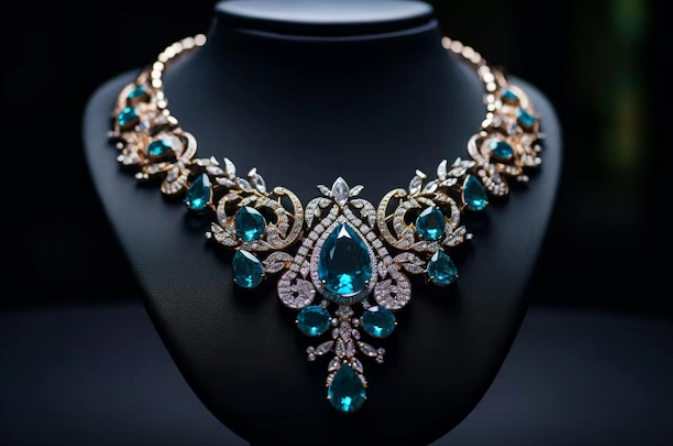
This guide is for anyone who's past the "maybe someday" stage and is seriously considering investing in a luxury designer necklace. We're not just talking about picking a pretty thing. We're talking about understanding why certain pieces cost what they do, how to choose one that actually fits your life (not just an influencer's feed), and how to care for it so it lasts generations. Forget the fluff and the generic lists. Let's get into the real talk about materials, brands, value, and style.
Why Buy a Luxury Designer Necklace Anyway?
It's a fair question. In a world of fast fashion and convincing replicas, why drop a significant amount on a single piece of jewelry? The answer is rarely one thing. It's a combination.
For some, it's heirloom potential. You're not buying for yourself; you're buying for your future daughter, niece, or loved one. A well-crafted piece from a renowned maison carries a story and a legacy that mass-produced items simply cannot. The craftsmanship ensures it won't turn your skin green or fall apart in five years. It's durability meets history.
For others, it's pure personal expression. A luxury designer necklace can be a talisman. Maybe it's a reward for a career milestone, a symbol of self-love after a tough period, or just because you've always adored a particular design. There's an emotional weight that transcends the material cost.
And yes, let's address the elephant in the room: status. It's a factor, though not always the primary one. Wearing a recognizable piece from Cartier, Van Cleef & Arpels, or Bulgari communicates a certain level of taste and achievement. It's a non-verbal cue. There's no point pretending otherwise, though I find the pieces that are a bit more subtle often feel more personally satisfying than the ones that scream for attention.
My two cents? The biggest surprise for me was the confidence boost. It sounds silly, but putting on that well-made necklace somehow made me stand straighter. It wasn't about others seeing it; it was about me feeling it. It became my secret armor for important meetings.
But here's the crucial part: not all that glitters is solid gold. The market is vast. How do you navigate from "I want something nice" to "This is the perfect piece for me"? It starts with knowing the players.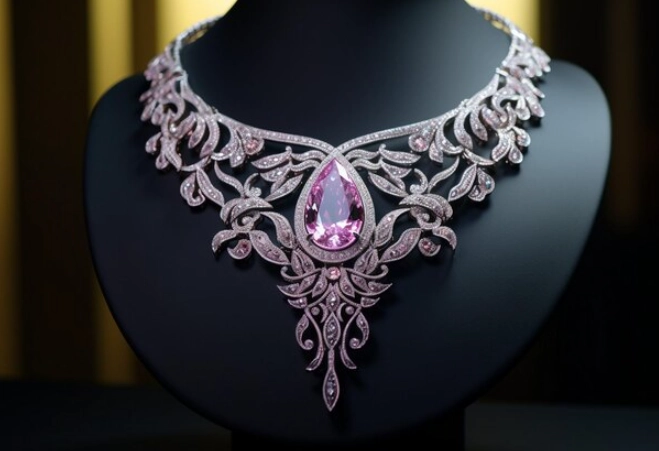
The Icons: A Look at Top Luxury Necklace Designers
When you think of luxury designer necklaces, a few legendary names instantly come to mind. Each has a distinct DNA, a history, and signature styles that have defined eras. Understanding these differences is key to finding your aesthetic home.
The Heritage Powerhouses
These are the institutions. Their names are synonymous with luxury jewelry, often with royal warrants and centuries of history.
Cartier. The "Jeweler of Kings, King of Jewelers." If you want timeless, unshakable classicism, this is your destination. Think the iconic Love collection (though that's more bracelets), the Panthère motifs, and the stunning Tutti Frutti pieces. Their solitaire diamond pendants are masterclasses in understated elegance. Cartier's strength is in its impeccable proportions and stone quality. You're buying a piece of history that will never go out of style. I find some of their newer, trend-driven collections less compelling than their classics, but that's just personal taste.
Van Cleef & Arpels. Poetry in gemstones. Their signature Alhambra motif (the four-leaf clover) is arguably one of the most recognizable necklace symbols in the world. But look beyond that. Their fairy-themed pieces and magical secret watches showcase unparalleled artistry. Van Cleef necklaces often feel feminine, delicate, and dreamlike. They excel at using materials like mother-of-pearl, carnelian, and malachite alongside diamonds to create color and texture.
Bulgari. Italian boldness. Where Cartier is French restraint, Bulgari is Roman grandeur. Think bold, colorful gemstones, substantial gold chains like the Serpenti, and the iconic B.zero1 and Bvlgari Bvlgari collections. Their necklaces make a statement. They're for the person who isn't afraid to be seen. The quality is exceptional, but the designs are decidedly more extroverted.
The Modern Masters & Disruptors
Not all great design comes from 19th-century houses. These brands have redefined what a luxury necklace can be.
Tiffany & Co.. The American dream in diamond form. While they offer everything, their necklaces are everyday luxury icons. The Return to Tiffany tag pendant, the Elsa Peretti Open Heart, and the Schlumberger designs are woven into pop culture. Tiffany makes luxury feel accessible and wearable daily. Their recent focus on traceable diamonds and sustainability is a significant move in the industry.
David Yurman. The king of the cable motif. His twisted sterling silver and gold cables with gemstone accents created a whole new category of American luxury jewelry. His necklaces, like the Cable Classics, are sturdy, artistic, and bridge the gap between fine jewelry and more casual wear. They have a sculptural quality that's instantly recognizable.
Messika. A relative newcomer (founded in 2005) that has taken the world by storm with its "Move" collection—diamonds that slide and move freely on delicate rails. It's playful, modern, and captures light in a dynamic way. It appeals to a younger client looking for something iconic but not traditional.
So you've got a sense of the brands. But a name is just the start. What are you actually paying for? Let's dig into the stuff that matters—the materials and the magic touch of the craftsman.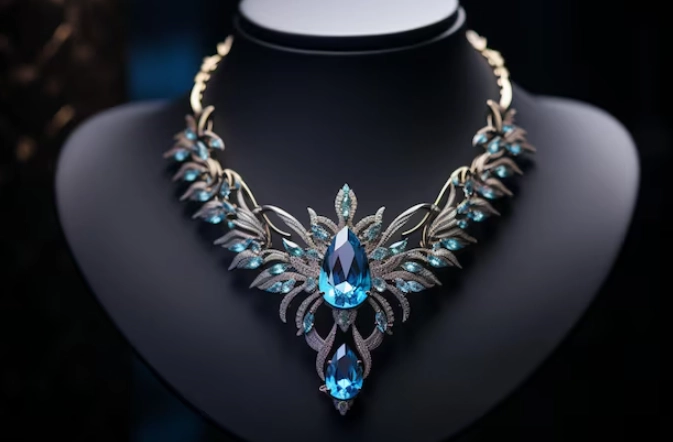
Beyond the Sparkle: Materials & Craftsmanship Decoded
This is where the rubber meets the road, or rather, where the gold meets the diamond. The price tag on a luxury designer necklace isn't arbitrary. It's built on specific, often costly, foundations.
Quick Tip: Always ask about the "hallmarks" or stamps inside the clasp. A piece marked "750" or "18k" indicates 18-karat gold (75% pure gold). "PT950" is platinum. These are your first clues to quality.
The Metals: More Than Just Color
Gold isn't just gold. 18-karat gold (75% pure) is the standard for high-end jewelry. It's durable enough for daily wear but rich in color. You'll see yellow, white, and rose gold. Rose gold gets its hue from a copper alloy—I find it incredibly flattering on most skin tones. Lower karatages (14k, 10k) contain less pure gold and more alloy, making them harder and slightly less valuable, but still good for more active lifestyles.
Platinum is the heavyweight champion. It's denser, heavier, and naturally white, so it doesn't need rhodium plating like white gold. It's hypoallergenic and incredibly durable, making it a premium choice for settings that need to securely hold major stones. It usually commands a higher price than gold.
The Stones: The Four Cs and Beyond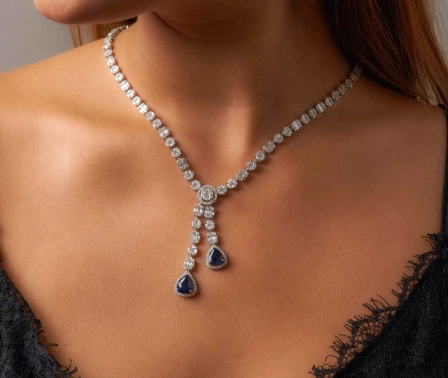
For diamonds, you know the drill: Cut, Color, Clarity, Carat. But with designer pieces, you're often paying for the brand's selection. They curate stones for exceptional whiteness and brilliance, even in smaller sizes. A melee diamond (the tiny ones in pavé settings) from a top house will be consistently white and well-cut, creating that seamless blanket of sparkle.
Colored gemstones are a whole other world. Sapphires, rubies, and emeralds are the "big three." Value depends on color saturation, clarity, and origin. A Burmese ruby or a Kashmir sapphire can be astronomically priced. Brands like Van Cleef or Chaumet use stunning colored stones as the centerpiece of their art. Then you have semi-precious stones like turquoise, lapis lazuli, or onyx, which offer incredible visual impact for a relatively lower material cost, letting you pay more for the design and craftsmanship.
A Word of Caution: Be wary of treated stones without disclosure. Many rubies and sapphires are heat-treated to enhance color—this is standard and accepted but should be disclosed. Ask for a lab report (from GIA, AGL, etc.) for any significant center stone. Reputable dealers provide them.
The Craft: Where the Value Truly Lies
This is the invisible cost, and it's massive. We're talking hundreds of hours by specialized artisans: the model-maker who sculpts the wax, the setter who painstakingly claws each tiny diamond, the polisher who brings up the mirror finish. Techniques like serti neige ("snow setting") or serti mystérieux ("mystery setting") where stones are set without visible prongs, are mind-bogglingly complex. This human artistry is what makes a luxury designer necklace a wearable miniature sculpture, not just a product. The Gemological Institute of America (GIA) website is a fantastic resource to understand these quality benchmarks in depth.
Okay, you're armed with knowledge. Now, the fun part: how do you actually choose one?
Your Personal Buying Guide: Finding "The One"
Walking into a boutique can be intimidating. Don't just point at the window. Have a game plan.
Step 1: The Honest Budget & Occasion Conversation
Set a realistic range. Luxury designer necklaces start around $2,000 for simple gold chains or small pendants from entry lines and go up into the millions. Be clear with yourself and the sales associate. Are you looking for an everyday piece you'll never take off? A special-occasion showstopper? This dramatically narrows the field. An everyday piece should be comfortable, secure (think: lobster clasp, not a delicate hook), and versatile enough for a t-shirt and jeans.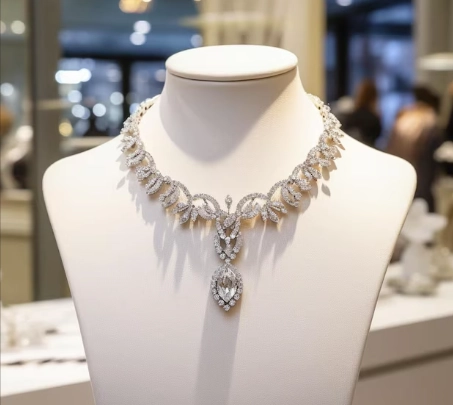
Step 2: Length & Proportion – It's All About Your Frame
This is so often overlooked! A necklace that sits wrong can ruin the effect.
- Choker (14-16 inches): Makes a bold, modern statement. Best for showing off collarbones. Can feel restrictive for some.
- Princess (17-19 inches): The most common and versatile length. Falls just below the clavicle. Works on almost everyone.
- Matinee (20-24 inches): Falls on the chest. Great for layering or for pendants you want to be more prominent.
- Opera (28-34 inches): Dramatic and elegant. Can often be worn doubled. I love the look but find myself fussing with it more.
Try them on. With the outfit you'd most often wear it with.
Step 3: Style Identity – What's Your Vibe?
Do you lean classic, modern, romantic, or edgy? Your other jewelry and clothing choices are a big clue. A minimalist might gravitate towards a single brilliant diamond solitaire on a thin chain. A romantic might love a floral-inspired pendant with colored stones. Someone with an edgier style might be drawn to Bulgari's Serpenti or a bold geometric piece.
I made a mistake early on. I bought a very ornate, vintage-inspired necklace because it was stunning in the case. I've worn it maybe three times in five years. It's just not "me." It taught me to buy for my actual life, not my fantasy life.
To make this concrete, let's look at some archetypes and what might suit them.
| Style Persona | Perfect First Luxury Necklace | Brands to Explore | Why It Works |
|---|---|---|---|
| The Timeless Classic | A simple diamond solitaire pendant, a single gold link chain | Cartier, Tiffany & Co., Mikimoto (for pearls) | Effortlessly elegant, goes with everything, never dates. The foundation of a jewelry wardrobe. |
| The Modern Minimalist | A geometric bar pendant, a delicate paperclip chain, a moving diamond piece | Messika, Tiffany HardWear, Jennifer Fisher | Clean lines, architectural feel. Makes a quiet but confident statement. |
| The Romantic & Feminine | A floral motif, a heart pendant, a piece featuring moonstones or pearls | Van Cleef & Arpels (Alhambra, Félicité), Chaumet, Dior | Adds a soft, dreamy touch. Often features organic shapes and subtle colors. |
| The Bold Statement Maker | A substantial gemstone collar, a dramatic Serpenti coil, a tassel necklace | Bulgari, David Yurman (statement cable pieces), Pomellato | For those who love to be the center of attention. The necklace is the outfit. |
Step 4: The In-Store Experience & Questions to Ask
Go to the boutique. Touch the pieces. Feel the weight. Examine the clasp mechanism—is it sturdy? Ask questions:
- What is the metal composition exactly? (e.g., 18k white gold, platinum)
- Can I see the lab report for the center stone?
- What is the warranty or service policy? Do you offer complimentary cleaning/check-ups?
- How long would a resize or repair take?
- Is this part of a permanent collection or a limited edition? (This affects long-term repairability).
You've bought it. Now, how do you keep it looking pristine for decades?
Caring for Your Investment: It's Not Rocket Science
Luxury items need love, but it's simple love.
Storage is Key. Never, ever toss pieces into a jumbled box. They will scratch. Use a soft-lined jewelry box with individual compartments. Keep chains fastened to prevent tangling. Silica gel packets can help control moisture.
The Last On, First Off Rule. Perfume, hairspray, lotions—these are enemies of metals and stones. They can cause clouding and buildup. Put your necklace on after your beauty routine.
Cleaning. For most pieces, a gentle soak in warm water with a drop of mild dish soap, a soft brush (like a baby toothbrush), and a thorough rinse followed by a pat dry with a lint-free cloth works wonders. Do this monthly if worn regularly.
Professional Check-ups. Just like a car, take it in for a service. Most reputable brands offer a free annual check-up to tighten stones, check prongs, and give it a professional polish. For example, Cartier's care program is a benchmark. Use it!
The single best thing you can do for a fine necklace? Wear it. The natural oils from your skin can actually keep gold looking warm and lovely. Pieces that sit in darkness for years can develop a dullness that requires professional attention to revive.
Answering Your Burning Questions (FAQ)
Let's tackle some of the specific, sometimes awkward, questions people have before pulling the trigger.
See? Not so mysterious after all.
Wrapping It Up: Your Necklace, Your Story
Choosing a luxury designer necklace is a journey. It's part education, part self-discovery. It's about moving beyond the logo to appreciate the material, the craft, and the design that speaks to you personally. Whether it's the iconic clasp of a Cartier love note, the playful glide of a Messika diamond, or the colorful joy of a Van Cleef Alhambra, the right piece becomes more than jewelry.
It becomes a part of your narrative. It's the confidence you feel on a big day, the memory of a milestone celebrated, the quiet pleasure of a beautifully made object. Don't rush the process. Do your homework, try things on, ask the awkward questions. In the end, the best luxury designer necklace for you isn't the most expensive or the most famous—it's the one you'll reach for, time and time again, and smile every single time you put it on.
Now go forth and find it. And maybe, in thirty years, you'll be the one passing down the story.