My Reading Companion
- What Does "A Lot" Even Mean? Context is King
- What Do You Actually Get for $10,000? The Diamond Breakdown
- The Big Debate: Investment vs. Expense
- What Are the REAL Costs Beyond the Diamond?
- Smart Alternatives: Stretching Your $10,000 (or Spending Less)
- How to Decide: A Practical Checklist
- Common Questions & Honest Answers (FAQ)
- Final Thoughts: Your Answer Awaits
So you're thinking about popping the question. Congratulations! That's huge. But then your brain starts spinning with all the details, and one question looms larger than the rest: the ring. Specifically, the budget. You've heard numbers thrown around, seen dazzling rocks on social media, and maybe even felt the pressure of old "rules." And now you're here, wondering, is $10,000 a lot for an engagement ring?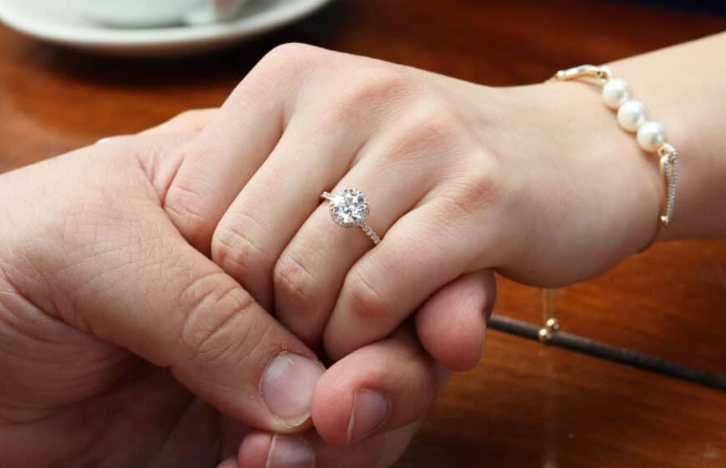
Let's cut through the noise. The short, honest answer is: it depends. It depends on who you are, what you value, and what story you want that ring to tell. For some people, dropping ten grand on a ring feels like a natural, meaningful investment. For others, it's an unthinkable amount for a piece of jewelry. Neither perspective is wrong.
I remember helping my best friend shop for his now-wife's ring. We walked into a fancy boutique, and the salesman immediately started showing us solitaries that cost more than my first car. My friend's face went pale. It wasn't about being cheap; it was about the sheer weight of that number against his current life—student loans, a new apartment, plans for a wedding. That moment crystalized the whole debate for me. So, let's unpack this together, without the sales pitches or the guilt trips.
What Does "A Lot" Even Mean? Context is King
Before we can answer if $10,000 is a lot, we need a baseline. What are people actually spending? You've probably heard the "two or three months' salary" rule. Frankly, I think that rule is a marketing gem that has outlived its usefulness. It puts immense pressure on people and ignores their unique financial picture.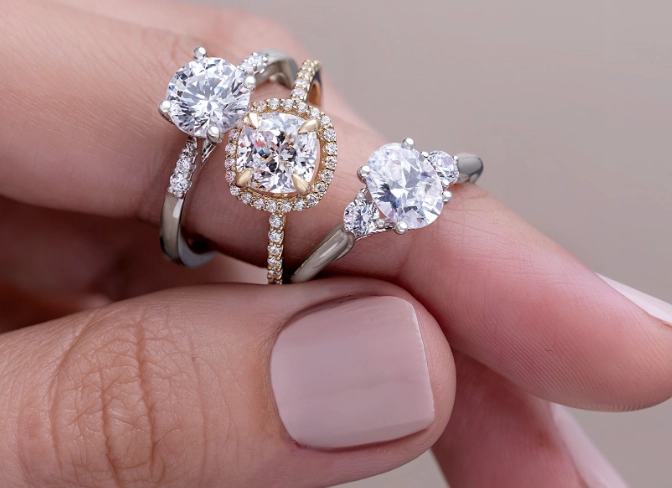
Let's look at some real data. According to widely cited surveys from sources like The Knot, the national average cost of an engagement ring in recent years has hovered around $6,000. Notice I said *average*. That means plenty of people spend well below that, and plenty spend well above.
So, compared to that $6,000 average, a $10,000 budget is definitely on the higher end. It's about 67% more. But an average is just a midpoint in a vast ocean of spending. In major metropolitan areas like New York or San Francisco, you'll find that average skews higher. In other regions, it might be lower.
Here's a more useful way to think about it: your personal finances. Is $10,000 a lot for an engagement ring in the context of your savings, your debt, and your shared future goals? That's the only comparison that truly matters.
The Real Question: Instead of asking if it's a lot for *a* ring, ask if it's a responsible amount for *your* ring, given your complete financial landscape. A $10,000 ring might be "a lot" for someone with significant debt, but a comfortable choice for someone with robust savings and a clear plan.
What Do You Actually Get for $10,000? The Diamond Breakdown
Okay, so you're considering this budget. What kind of ring are we talking about? A $10,000 engagement ring opens up a world of quality and options, but it's not a blank check for a massive, flawless rock. Understanding the "Four Cs" (Cut, Color, Clarity, Carat) is crucial here.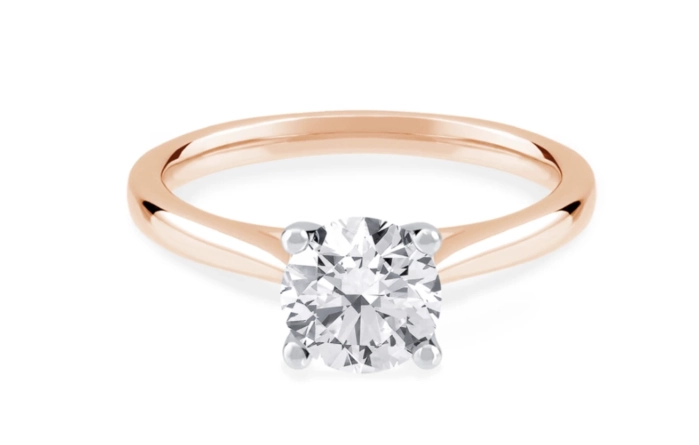
For a classic round brilliant solitaire diamond (the most popular shape), a $10,000 budget in today's market (let's be clear, diamond prices fluctuate) could reasonably get you something in this ballpark:
- Carat Weight: A diamond in the 1.00 to 1.30-carat range is very achievable. You might even push toward 1.5 carats if you're flexible on the other Cs.
- Cut: This is where you should not compromise. An Excellent or Ideal cut is non-negotiable—it's what makes the diamond sparkle. You can afford the best cut within this budget.
- Color: You can target a near-colorless stone, in the G or H range. To the naked eye, it will look white and brilliant, especially in a white gold or platinum setting.
- Clarity: Aim for VS1 or VS2 (Very Slightly Included). These diamonds have inclusions that are typically invisible to the unaided eye. You're paying for eye-clean perfection, not microscopic perfection.
I made a table to show how different allocations of that $10,000 can change what you bring home. Remember, these are illustrative estimates based on common price points.
| Budget Focus | Diamond Specs (Estimate) | What You're Prioritizing | Good For... |
|---|---|---|---|
| Maximize Size | 1.50 carat, I color, SI1 clarity, Very Good Cut | Getting the largest possible carat weight on the finger. | The "wow" factor of size, accepting slight color tint or minimal visible inclusions. |
| Balanced Quality | 1.20 carat, G color, VS2 clarity, Excellent Cut | A harmonious blend of size, sparkle, and purity. The "sweet spot." | Most buyers who want a beautiful, high-quality all-rounder. |
| Premium Sparkle & Purity | 1.00 carat, D color, VVS2 clarity, Ideal Cut | Ultimate whiteness, flawless appearance under magnification, and supreme light performance. | Perfectionists who value top-tier quality over maximum spread. |
See how the focus shifts? That's the power of a $10,000 budget—it gives you meaningful choices. You're not just buying "a diamond"; you're making strategic decisions about what aspects of beauty matter most to you (and your partner).
The Big Debate: Investment vs. Expense
This is a touchy one. You'll often hear jewelry salespeople say a diamond is an "investment." Let's be brutally honest: a typical mass-market diamond engagement ring is a terrible financial investment. Unlike stocks or real estate, most diamonds lose a significant portion of their value the moment you walk out of the store. The resale market is a fraction of the retail price.
So, if you're thinking of a $10,000 ring as a financial asset that will grow, please reconsider. View it for what it is: a purchase. A meaningful, symbolic, and hopefully enduring purchase, but a purchase nonetheless.
Where the word "investment" does make sense is in the emotional and experiential sense. You are investing in a symbol of your commitment, in a piece of jewelry your partner will (ideally) wear every day for decades, in the memory of the proposal, and in the quality of the item itself. A well-made ring from a reputable seller is an investment in durability and satisfaction.
My Take: I get why people use the "I" word. It makes a big purchase feel more rational. But I think it sets wrong expectations. Call it a meaningful purchase. Own it. A $10,000 ring is a significant financial commitment to a lifelong symbol. That's powerful enough on its own without pretending it's a stock portfolio.
What Are the REAL Costs Beyond the Diamond?
When you budget $10,000, that needs to cover the whole package, not just the center stone. People forget this and get a nasty surprise.
- The Setting: A simple solitaire setting in platinum might cost $800-$1,500. A more intricate pave or halo setting can easily add $1,500 to $3,000 or more to the tab.
- The Metal: Platinum is denser and more hypoallergenic than white gold, but it's also more expensive. The choice of metal (platinum, 18k gold, 14k gold) directly impacts the final cost.
- Side Stones: Any additional diamonds or gemstones on the band or surrounding the center stone add cost.
- Sales Tax: Don't forget this! Depending on your state, tax on a $10,000 purchase could add $600 to $1,000.
- Insurance: You absolutely must insure a ring of this value. An annual jewelry insurance policy (often a rider on your homeowner's or renter's insurance) will typically cost 1-2% of the appraised value per year. So, that's $100-$200 annually for a $10,000 ring. This is non-optional.
Suddenly, your $10,000 diamond budget needs to accommodate a $2,000 setting and $800 in tax. That means you're really shopping for an $8,000 diamond. See how it works? Always budget for the total out-the-door cost.
Smart Alternatives: Stretching Your $10,000 (or Spending Less)
What if you love the idea of a spectacular ring but want to ensure your $10,000 is working as hard as possible? Or what if this section convinces you that maybe, just maybe, is $10,000 a lot for an engagement ring for your situation, and you'd rather reallocate some funds? Here are powerful strategies.
1. Consider the Diamond Alternatives
The diamond monopoly is over. Lab-grown diamonds are physically, chemically, and optically identical to mined diamonds. The main difference? Price. For your $10,000 budget, you could get a lab-grown diamond with significantly better specs (think 2+ carats, D color, VVS clarity) for the same price as a smaller mined stone. Organizations like the Gemological Institute of America (GIA) grade lab-grown diamonds with the same rigor. It's a legitimate way to maximize size and quality.
Other alternatives like moissanite (incredible fire and brilliance, a fraction of the cost) or colored gemstones (sapphire, emerald) are also breathtaking and unique. They break the "expected" mold and can be stunning.
2. Go Vintage or Antique
This is my personal favorite secret. Vintage and antique rings offer unparalleled craftsmanship, unique designs you won't see everywhere, and often better value because you're not paying for contemporary brand markup. A $10,000 vintage ring can feel like a $15,000 ring from a modern store. Plus, there's a beautiful history and sustainability aspect to it.
3. Prioritize the Design & Craftsmanship
Maybe instead of chasing the highest carat, you use that $10,000 to commission a fully custom ring from an independent goldsmith. You get a one-of-a-kind piece designed with your partner's personality in mind. The story and personal connection become the primary value, not just the carat weight.
Actionable Tip: If you're unsure about the full $10k, consider setting a firm max budget of $7,000 or $8,000. See what amazing rings you find in that range. You can always use the "saved" $2,000 for an unforgettable proposal experience (a trip?) or to kickstart your wedding fund. The ring is the beginning of the spending, not the end.
How to Decide: A Practical Checklist
Still wrestling with the decision? Let's make it practical. Ask yourself these questions, honestly.
- What is your total non-retirement savings? Does spending $10,000 make a massive dent in it?
- Do you have high-interest debt (credit cards, personal loans)? Paying off 20% APR debt is almost always a better financial return than buying a diamond.
- Have you had an open conversation with your partner about expectations? This is huge. Maybe they'd be horrified you spent that much. Maybe they have a specific dream ring. Maybe they'd prefer a down payment on a house. The Bureau of Labor Statistics data on spending can start interesting conversations about priorities, even if it's not about rings specifically.
- Can you pay for it in cash? Financing a ring is common, but paying interest on a luxury item stings. If you can't save up for it beforehand, it's a red flag that the price might be too high for your current cash flow.
- What are your upcoming major expenses? Wedding, honeymoon, housing, car? Map out the next 3-5 years of big costs.
Answering these will give you a clearer signal than any article ever could.
Common Questions & Honest Answers (FAQ)
Is it okay to spend LESS than $10,000?
Absolutely. It's more than okay; it's the reality for most people. A beautiful, well-made, and meaningful ring can be found at $3,000, $5,000, or $7,000. The price tag does not dictate the depth of your love or the success of your marriage. Full stop.
Will people judge the ring if it's "only" 1 carat?
Anyone who judges your commitment based on the size of a diamond isn't someone whose opinion should matter. In the real world, a 1-carat, well-cut diamond is a lovely, substantial, and classic stone. The internet and celebrity culture have distorted perceptions.
How can I make sure I'm not overpaying?
Education is your armor. Understand the 4Cs. Get a diamond grading report from a reputable lab like GIA or AGS. Compare prices from multiple vendors (online and brick-and-mortar). Never feel pressured to buy on the first visit. A reputable jeweler will educate, not pressure.
What if my partner expects a $10,000+ ring?
This is a relationship and values conversation, not just a budget one. Discuss why that expectation exists. Is it about family tradition, social circle, or a specific dream? Open communication about finances is the bedrock of a strong marriage. This is the first of many such talks.
Final Thoughts: Your Answer Awaits
So, after all this, is $10,000 a lot for an engagement ring?
Statistically, yes, it's above average. In terms of what it can buy, it's a solid budget that gets you a high-quality, beautiful diamond ring with room for a nice setting. But in the grand scheme of your life, only you and your partner can answer that.
It's a lot if it strains your finances, creates debt you resent, or diverts money from goals that are more important to you as a couple. It's not a lot if it's a comfortable, savings-based purchase that brings you both immense joy and aligns with your shared priorities.
My advice? Set a budget range that makes you breathe easy, not one that makes you sweat. Whether that's $4,000, $8,000, or $10,000, own it with confidence. Then, focus on finding the most beautiful ring within that range—the one that makes you think of your partner's face lighting up, not the monthly payment. That's the ring worth buying.
The journey to find the right ring is part of the story. Take your time, ask questions, and remember that the love it represents is priceless, no matter what the receipt says.