Quick Navigation
Let's cut right to the chase. You're here because you typed that exact question into Google. "Does Cartier do engagement rings?" Maybe you saw a stunning piece on someone's finger, or you've always dreamed of a red box for that special question. The short, direct answer is a resounding yes. Cartier absolutely creates engagement rings, and they've been doing so for a very, very long time.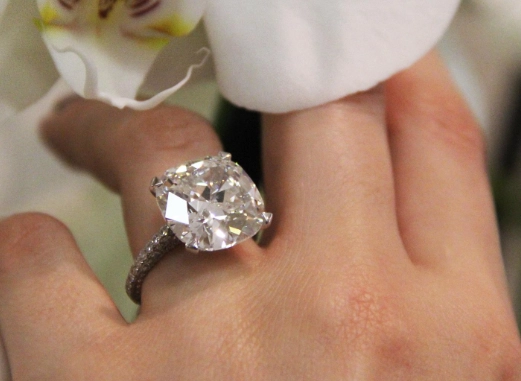
But if you stop there, you're missing the whole story. It's not just a "yes." It's a "yes, and here's what makes them different, what makes them expensive, and what you absolutely need to know before you walk into that boutique." Buying a Cartier engagement ring isn't like buying any other ring. It's buying a piece of history, a specific design ethos, and yes, paying a premium for that iconic name stamped inside the band. Sometimes that's worth every penny. Sometimes... you might wonder.
So, does Cartier do engagement rings? They absolutely do. They don't have a collection explicitly labeled "Engagement" in the same way some brands do. Instead, they offer timeless, high-jewelry pieces within their legendary collections that have become the de facto choice for couples worldwide. Think less of a separate department and more of their entire philosophy applied to the ultimate symbol of love.
The Heart of the Matter: Cartier's Signature Bridal Styles
This is where it gets interesting. You won't find a generic solitaire setting called "The Classic" at Cartier. Every ring is part of a lineage. The design is the star, often as important as the central diamond itself. This can be a huge pro or a potential con, depending on what you're after.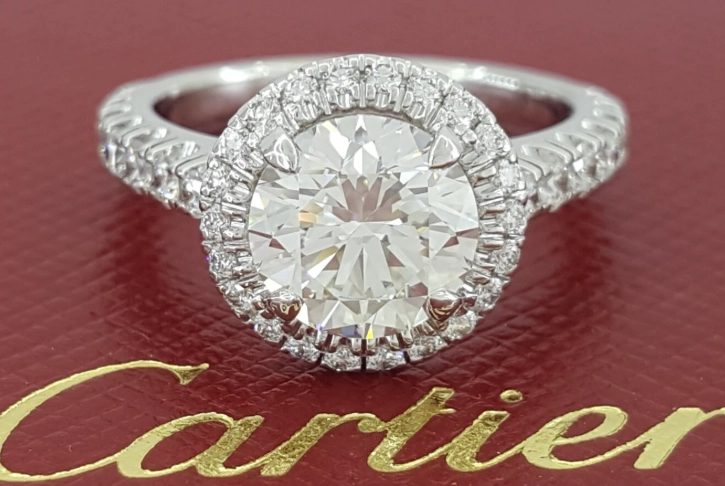
The Undisputed Icon: The Cartier Love Ring as an Engagement Ring
This is probably the most searched-for variation of our main question: "Does Cartier do engagement rings from the Love collection?" The answer is a fascinating one. The classic Love band—the one with the screw motifs—was designed as a wedding band. It's meant to be screwed on with a special tool, symbolizing locked-in love. But here's the real-world truth: countless people use it as an engagement ring, often pairing a diamond-set Love band with a plain one for the wedding.
I've seen it done, and it looks incredibly modern and cool. But is it practical? The screw heads can catch on sweaters. The design is wide and bold, not a delicate prong setting. It makes a statement: "Our love is locked down." It's less about showcasing a single, blazing diamond and more about the symbol of the bond itself. If your partner loves the Love collection's aesthetic and meaning, this is a powerful, non-traditional route. Cartier itself showcases diamond pavé versions of the Love ring, blurring the line between band and engagement piece beautifully. You can explore these on their official Love collection rings page.
The Timeless Choice: Solitaire 1895
Now, if you're asking, "Does Cartier do engagement rings that are classic solitaires?" then you need to meet the Solitaire 1895. This is Cartier's answer to the timeless single-stone ring. Named for the year Cartier started creating mystery clocks, it's a masterclass in understated elegance.
The setting is famously minimalist. Four, six, or sometimes more prongs hold the diamond with such precision and lightness that the stone appears to float. The band tapers gently, drawing all eyes to the centerpiece. There are no extra flourishes, no hidden diamonds on the shank (unless you customize it). The magic is in the proportions and the craftsmanship. The diamond is the undisputed hero. This is for the purist who believes the stone's beauty should stand alone, framed by impeccable, nearly invisible craftsmanship.
The Modern Legacy: The Cartier Destinée Setting
Want more sparkle? The Destinée setting is Cartier's signature halo design. A central diamond is surrounded by a double or single row of smaller brilliant-cut diamonds, all set in platinum. The effect is radiant, luxurious, and makes the center stone look significantly larger.
The design is substantial and feels incredibly secure on the hand. It's less ethereal than the 1895 and more about a bold, confident display of brilliance. If the Love ring says "locked love," and the 1895 says "timeless beauty," the Destinée says "celebratory brilliance." It's a popular choice for those who love a classic halo but demand Cartier's level of finish and detail.
A personal observation: The Destinée is stunning, but it's also a specific look. The halo is very defined and geometric. If your partner prefers organic, nature-inspired halos or more intricate vintage details, this might feel too structured. It's impeccably Cartier—precise, graphic, and bold.
What About the Diamond? Cartier's 4Cs and Beyond
Okay, so Cartier does engagement rings. But what about the rock? Here's a critical thing to understand: Cartier is first and foremost a design house and a jeweler, not a diamond miner or wholesaler. They source high-quality diamonds, but you are paying for the Cartier selection, the Cartier cut, and the Cartier setting.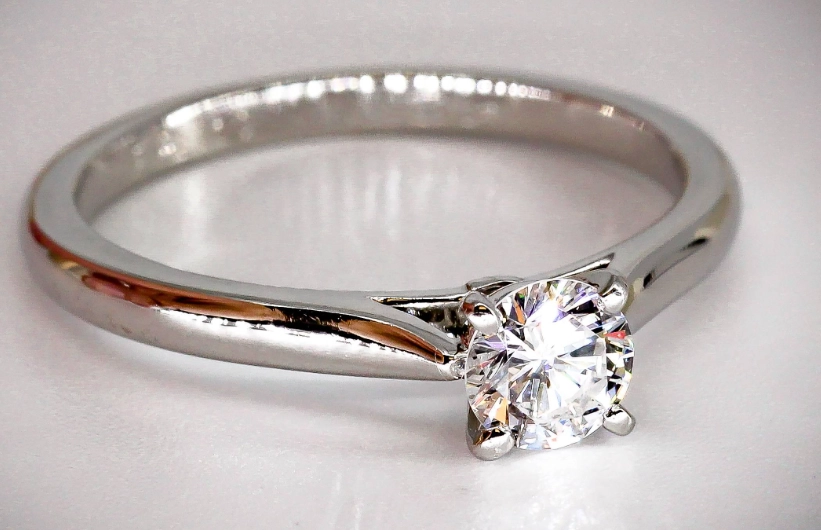
They typically work with diamonds in the higher ranges of the color and clarity scales (think G color and VS2 clarity and above for their standard offerings). Their cut is excellent, aimed at maximizing brilliance within their specific settings. All their diamonds over 0.30 carats come with a Gemological Institute of America (GIA) or equivalent certificate, which is the industry standard for grading. You can learn more about what these certificates mean on the GIA Gem Encyclopedia.
The trade-off? You likely won't find "bargain" diamonds with slightly lower color but great cut and sparkle at Cartier. Their curation leans toward traditional high grading. For some, this assurance is priceless. For others who are more flexible on paper grades to get a larger or more fiery stone, it can feel restrictive.
| Cartier Collection | Best For Someone Who Loves... | Key Feature | Consideration |
|---|---|---|---|
| Solitaire 1895 | Ultimate classicism, minimalist design, pure focus on a superb central diamond. | The "floating diamond" setting with minimal visible metal. | Can look simple next to more elaborate rings; all attention is on diamond quality. |
| Love Ring (Diamond Pavé) | Modern symbolism, bold statement, matching a future Love wedding band. | The iconic screw motif and locked-in love symbolism. | Wider band, not a traditional solitaire; screw heads may catch. |
| Destinée | Maximum sparkle, a classic halo look with a graphic, modern edge. | Double halo setting that magnifies the center stone's appearance. | A very specific, structured halo aesthetic; can be a higher price point. |
| Cartier Tradition (Custom/Special Orders) | Truly unique, vintage-inspired, or highly personalized designs. | Access to archival designs and high-jewelry workshops. | Significantly higher cost and lead time (often 6+ months). |
The Price Tag: What Does "Cartier" Really Add?
Let's talk numbers, because this is where the rubber meets the road. Does Cartier do engagement rings at a premium? Absolutely. You are paying for:
- The Brand Legacy: Over 170 years of history, royal warrants, and association with iconic style.
- The Design & Craftsmanship: Made in their workshops in France, Switzerland, or Italy. The polish, the setting, the finishing details are exceptional.
- The Materials: They use high-karat gold (18k) and platinum. No 14k gold here.
- The Retail Experience & Service: The boutiques, the packaging, the after-sales care (polishing, resizing within limits, check-ups).
- The Resale/Heritage Value: A Cartier piece generally holds its value better than an unbranded piece, thanks to recognizability and desirability.
As a rough guide (prices fluctuate), a Cartier Solitaire 1895 with a 1-carat diamond can start in the mid-five-figure range (USD). The same diamond in a simpler setting from a non-branded jeweler could be less. The Love ring in diamond pavé or the Destinée setting will often cost more than a comparable 1895 due to the extra metal and diamond work.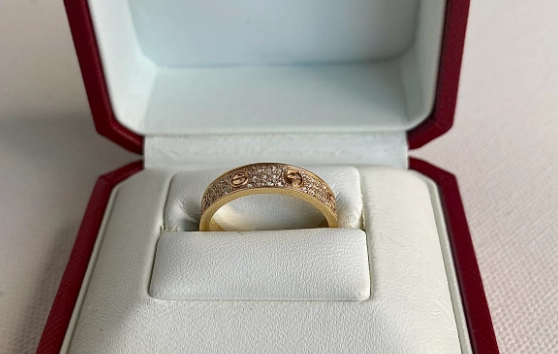
Is it worth it? That's deeply personal. For some, the intangible feeling of wearing a Cartier, the confidence in its make, and the seamless ownership experience justify the cost. For others solely focused on maximizing diamond size or carat weight for their budget, a fantastic independent jeweler might be a better path. There's no wrong answer, just self-awareness.
The Buying Process: Boutique vs. Everything Else
If you've decided to explore Cartier for an engagement ring, your primary channel is a Cartier boutique or their official online store. This is non-negotiable for a new piece. You won't find authentic new Cartier rings at department store counters or other jewelers.
Step-by-Step in the Boutique
- Research First: Know the collections (1895, Destinée, Love). Have a rough budget and diamond size/quality in mind. This helps the sales associate (they're called Client Advisors) help you efficiently.
- The Appointment: It's wise to book one, especially on weekends. You'll get dedicated time and attention.
- The Consultation: Be open about your budget. A good advisor will work within it, showing you options (e.g., a slightly smaller diamond with higher clarity, or a specific setting). They have stones "in the back" or can source based on your preferences.
- Customization: This is where Cartier shines. Want a different metal for the prongs? A diamond on the band? They can do it, but it becomes a special order with a longer wait time (months) and added cost.
- Payment & Wait: If the ring is in stock or the diamond is set, you can walk out with it. For special orders, a deposit is required.
What about pre-owned? The vintage and pre-owned market for Cartier engagement rings is robust. Sites like Worthy or established vintage jewelers can offer older models or discontinued styles, often at a lower price point. Critical: Always ensure the piece comes with its original papers (certificate of authenticity) and get it independently verified. The risk of super fakes is real.
Your Burning Questions, Answered (FAQs)
Yes, but within the framework of their existing collections. You can't ask for a completely new design from scratch unless you're entering the rarefied air of their high jewelry department (think six figures and up). But you can often change the metal of the setting (platinum vs. gold), add or remove pavé diamonds on the band, or adjust the width of a band. This turns it into a "special order" with a 4-6 month lead time and a price increase.
Typically, yes. Cartier often has partnerships with third-party lenders to offer installment plans. The terms (interest rates, down payment) vary by country and promotion. It's always best to ask directly in the boutique.
Cartier offers an international warranty. They recommend a free annual check-up (cleaning, prong tightening inspection). Resizing is possible but depends on the design—a full eternity band or a ring with complex patterning cannot be easily resized. Repolishing is a standard service. Their after-care is generally considered excellent and adds to the long-term value of ownership.
Think of them as a value-retaining luxury purchase, not a financial investment that will grow. You buy it to wear and cherish. That said, due to brand desirability, a well-kept Cartier piece will retain a higher percentage of its original value compared to an unbranded piece if you ever need to resell. The "Cartier" name itself has tangible value in the secondary market.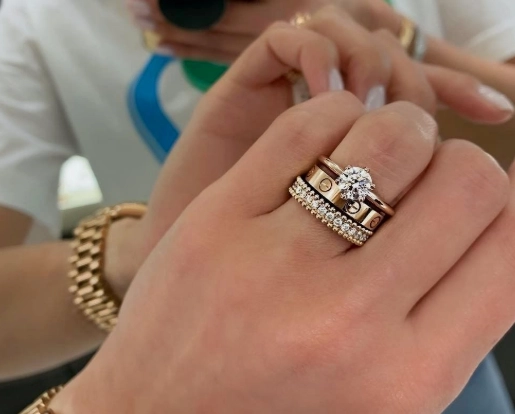
Every authentic Cartier piece has specific hallmarks: the "Cartier" logo engraved in a specific font, a serial number, metal marks (e.g., 750 for 18k gold, PT950 for platinum), and often a maker's mark. The engraving is crisp, clean, and precise. Fakes often have blurry, shallow, or incorrect engravings. The absolute best verification is taking it to a Cartier boutique—they can authenticate it for you.
Final Thoughts: Is a Cartier Ring Right for You?
So, we've definitively answered "Does Cartier do engagement rings?" They do, with a distinct point of view. Choosing Cartier is about buying into a heritage. It's for the person who values design history as much as the diamond, who finds meaning in the symbolism of the Love collection or the purity of the 1895. It's for those who prioritize craftsmanship and after-sales peace of mind and are comfortable with the associated cost.
It might not be the best fit if your primary goal is to get the absolute largest diamond possible for a strict budget, or if your partner dreams of a highly unique, organic, or antique-style design that doesn't align with Cartier's graphic, modern-classic DNA.
My advice? Go try them on. Feel the weight of a Solitaire 1895. See how the Destinée sparkles under boutique lights. Slip on a Love ring and see if it feels like "you." The answer to whether Cartier does engagement rings that are right for your story will become perfectly clear the moment you see that reflection.