Your Anthracite Journey: A Quick Map
- The Original: Anthracite the Mineral
- The Adopted Child: Anthracite the Color
- Side-by-Side: The Great Anthracite vs Anthracite Showdown
- Navigating the Nuances: Undertones Are Everything
- Anthracite vs. Its Lookalikes: Charcoal, Graphite, and Slate
- Real-World Applications: Where You'll Find "Anthracite"
- Your Burning Questions, Answered
- The Final Verdict: How to Never Be Confused Again
Let's be honest, the question "what color is anthracite vs anthracite" sounds like a trick. It's the same word, right? How can it be versus itself? That's exactly the head-scratcher that sends people down a Google rabbit hole. I remember picking out tiles for my kitchen backsplash a few years back. The designer showed me an "anthracite" option. It was a deep, sophisticated grey. Later, I looked up the actual mineral anthracite coal online for a science project with my kid. The pictures looked... different. Not quite the same. More black, less grey. That's when the penny dropped.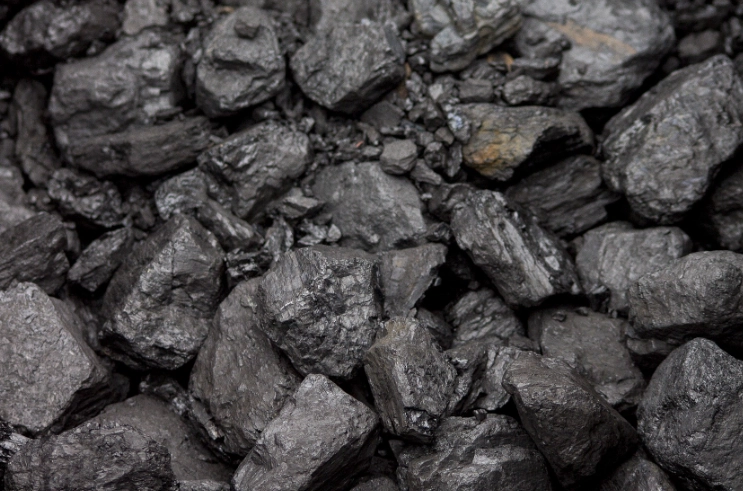
There are, in fact, two very common meanings behind the single word "anthracite." One is rooted in geology—a real, physical substance you can hold. The other is a child of the design and manufacturing world—a color name meant to evoke a certain feeling. Confusing them is incredibly easy, and it leads to a lot of mismatched expectations. You order an "anthracite" sofa expecting a soft charcoal, and a near-black behemoth shows up at your door. Not ideal.
The Original: Anthracite the Mineral (The Geological Benchmark)
To understand the color confusion, we have to start with the source. Anthracite is a type of coal. But it's not the soft, crumbly stuff you might picture. It's the hardest and highest-rank coal, formed under intense heat and pressure over millions of years. It has a high carbon content and a semi-metallic luster.
Think of a raven's feather in bright sunlight. It's black, but it has depth and highlights. That's closer to true mineral anthracite. It’s a color of density and substance. In the world of geology and industry, when someone says "anthracite," this is the color they're picturing: a profound, slightly reflective black. This is our baseline, our "Version A" in the "what color is anthracite vs anthracite" puzzle.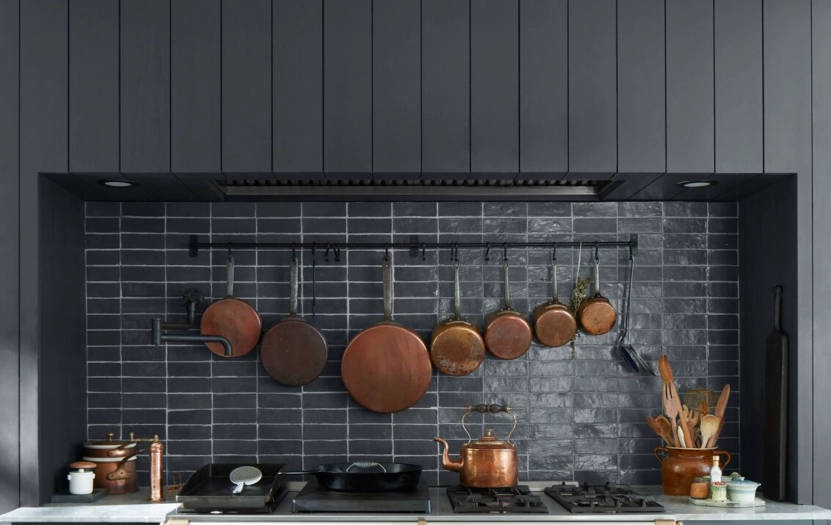
The Adopted Child: Anthracite the Color (The Design World's Darling)
Now, enter the world of interior design, automotive finishes, and appliance manufacturing. Designers love evocative names. "Slate," "Taupe," "Charcoal"—they sound more interesting than "dark grey #4." "Anthracite" was adopted because it sounds premium, solid, and modern. It conjures images of sleek metals and urban landscapes.
But here's the catch. The paint chip or powder-coated finish named "anthracite" is almost never the pure, unadulterated black of the mineral. Why? Because a true, flat black can be visually heavy, stark, and difficult to use in design. It absorbs all light. So, the design industry took the *idea* of anthracite and lightened it up, softened it, and often injected subtle color tones.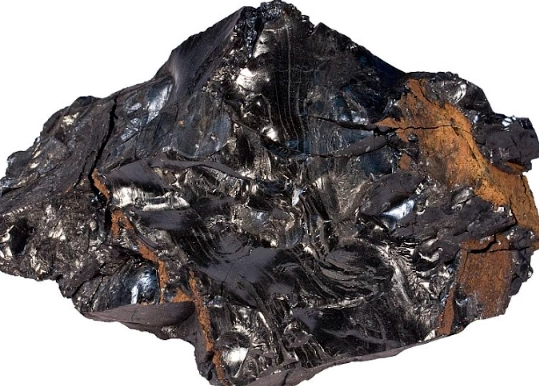
So, when you're searching for what color is anthracite in the context of a new car, a window frame, or a sofa, you are almost certainly looking at this design interpretation. It's a chameleon. In some lights, it looks like a warm, almost brownish dark grey. In others, it reads as a cool, blue-leaning charcoal. I've seen laminate flooring labeled anthracite that had a distinct greenish undertone. It's maddening, but also kind of fascinating.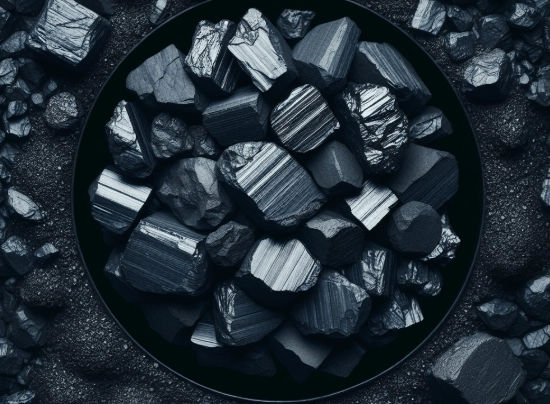
Side-by-Side: The Great Anthracite vs Anthracite Showdown
Let's put them in a head-to-head comparison. This table breaks down the core differences, which is really the heart of answering "what color is anthracite vs anthracite."
| Feature | Anthracite (The Mineral) | Anthracite (The Design Color) |
|---|---|---|
| Primary Color Family | Black (with reflective highlights) | Dark Grey / Charcoal |
| Undertones | Steel grey, silvery, sometimes brassy metallic sheen. | Highly variable: blue, brown, green, or purple undertones are common. |
| Light Reflection | Semi-metallic luster; reflects sharp highlights. | Usually matte, satin, or gloss finish; diffuses light. |
| Consistency | Relatively consistent in nature (deep black). | Wildly inconsistent between brands and products. |
| Typical Use Case | Geological reference, industrial fuel. | Interior/exterior design, appliances (ovens, fridges), cars, tech gadgets. |
| Mood/Vibe | Raw, dense, industrial, natural. | Sleek, modern, sophisticated, sometimes moody. |
| Closest Pantone Analogy* | Pantone Black C or Pantone 426 C (a cool gray, but darker in reality) | Can range from Pantone Cool Gray 11 C to much darker grays with tints. |
*Pantone references are approximate to give a standardized idea. The Pantone Color Finder is a great tool to see how a single name can encompass many shades.
The biggest takeaway? The mineral is a black that acts grey in light. The design color is a grey that wishes it was as cool as that black. The design version is essentially a diluted, commercialized interpretation of the original's vibe.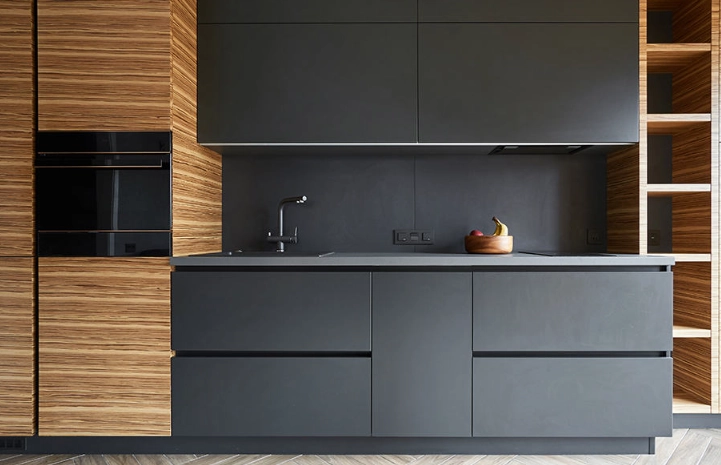
Navigating the Nuances: Undertones Are Everything
If you take away one practical tip from this whole discussion, let it be this: Never trust the name alone. The word "anthracite" on a tag or website is almost meaningless without seeing the actual color. The real work is in spotting the undertone.
How to Spot the Undertone in "Anthracite" Finishes:
- Compare it to pure black and pure white. Hold a true black item (like a matte black phone) next to the "anthracite" sample. Does the anthracite look distinctly lighter and maybe slightly blue or brown? Now hold it near white. The contrast will make the undertone pop.
- Look at it in different lights. Check it under warm indoor bulbs (yellowish light) and cool daylight. A warm undertone (brown) will look richer under warm light. A cool undertone (blue) will look sharper in daylight. I learned this the hard way with some anthracite cabinet handles that looked perfect in the showroom (warm light) but looked jarringly blue in my kitchen's daylight.
- Ask for a physical sample. Always, always get a swatch, paint chip, or small hardware sample. A photo on your screen is calibrated differently than mine, and different than reality.
Anthracite vs. Its Lookalikes: Charcoal, Graphite, and Slate
Since "anthracite" the color lives in the dark grey neighbourhood, it has cousins. And they all party together, making identification even harder. Here’s a quick rundown to prevent mix-ups.
- Charcoal: This is probably the closest relative. Generally, charcoal is a flat, pure dark grey with minimal undertones. If anthracite is the fancy cousin with a mysterious past, charcoal is the reliable, straightforward one. Charcoal is often slightly lighter and less reflective than the *idea* of anthracite.
- Graphite: Think pencil lead. Graphite tends to have a more obvious metallic, silvery sheen than anthracite (the design version). It's often used to describe finishes on cars or electronics that have a sparkle or metallic flake in them. It bridges the gap between the mineral's luster and the design grey.
- Slate: Slate is usually cooler (blue undertones) and can be lighter than anthracite. It also often has a textured, natural variation implied by the name, whereas anthracite implies a more uniform, man-made smoothness.
- Iron Ore / Gunmetal: These are often darker than design anthracite, pushing back towards the black territory of the mineral, but with a bluer or more pronounced metallic feel.
So, when you're puzzling over what color is anthracite vs anthracite, you might actually be trying to figure out anthracite vs charcoal or graphite. Context is king.
Real-World Applications: Where You'll Find "Anthracite"
This color isn't just a theoretical debate. It's everywhere. Knowing which "anthracite" is likely used helps set expectations.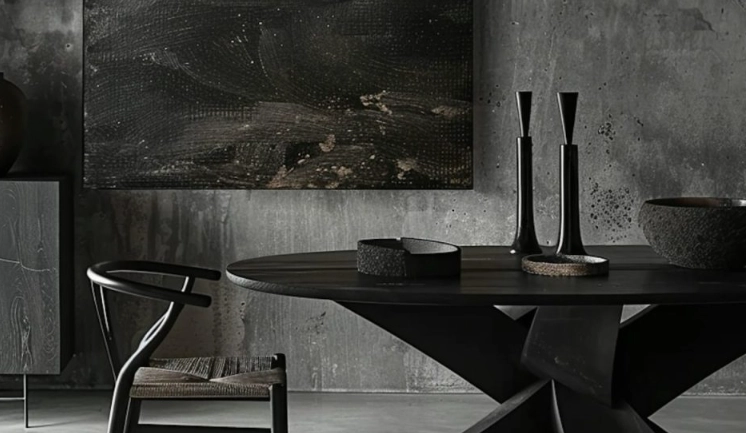
Where you'll likely find the *Design* Anthracite (Dark Grey):
- Kitchen & Laundry Appliances: Fridges, ovens, dishwashers. It's a huge trend as an alternative to stainless steel. Brands like Samsung and LG often have an "anthracite" line. It's usually a very dark, warm grey, good at hiding fingerprints.
- Window and Door Frames: Especially in uPVC or aluminum. It's a popular modern alternative to white or brown. Here, it's almost always a dark grey, sometimes with a slight bronze or green tint.
- Automotive Industry: Car paints and alloy wheel finishes. Automotive "anthracite" wheels are a classic—they're a dark grey, often with a metallic fleck, that sits between silver and black.
- Furniture and Fabrics: Sofas, bed frames, curtains. This is where the undertone variability is highest. A fabric's weave can change how the color reads entirely.
Where the *Mineral* Anthracite reference is key:
- Jewelry and Finishes: When a product says it has an "anthracite finish" or "anthracite plating," it sometimes (but not always!) means a darker, more blackened metallic look, perhaps with a brushed texture, aiming to mimic the mineral's luster. It's worth verifying.
- High-end Design Descriptions: Sometimes a designer or architect will use "anthracite" deliberately to mean a richer, blacker tone than standard charcoal, directly referencing the mineral's depth. Publications like Architectural Digest might use it in this more precise, material-informed way.
Your Burning Questions, Answered
Let's tackle some of the specific, practical questions that pop up when someone is deep in the "what color is anthracite" research phase.
- For a modern look: Pair with crisp whites, light woods (like oak or ash), and pops of bold color like mustard yellow, teal, or rust orange.
- For a cozy feel: Combine with other warm neutrals like beige, taupe, cream, and brass or gold accents.
- For an industrial vibe: Team it with raw concrete, black steel, and exposed brick.
- Classic combo: Anthracite and white is always a winner, creating high contrast and a clean, graphic feel.
Other quick hits:
- Is anthracite darker than charcoal? Usually, yes. The design color anthracite typically aims to be a shade or two darker than a standard charcoal grey.
- Does anthracite show fingerprints? The matte or satin dark grey versions are generally better at hiding smudges than glossy black or stainless steel, which is a big part of their appeal for appliances.
- Can I use anthracite in a small room? Yes, but carefully. Because it's a dark color, use it as an accent (one wall, furniture, fixtures) rather than painting all four walls, unless you have great lighting and want a dramatic, cocooning effect.
The Final Verdict: How to Never Be Confused Again
So, after all this, what's the final answer to what color is anthracite vs anthracite?
Think of it as a spectrum. On one end, you have Anthracite (Pure Mineral): a deep, lustrous black, the definitive standard. On the other end, you have Anthracite (Commercial Label): a loose category of dark grays that borrow the name's prestige.
Most of the time, when you're shopping for stuff for your home or life, you're dealing with the commercial label. Your mission is to ignore the label and decode the actual color in front of you. Check the undertone, view it in multiple lights, and get a sample.
The word itself is a placeholder, not a definition.
Understanding this split personality—the geological fact versus the design fiction—is the key. It turns a confusing search into an informed one. You're no longer just asking "what color is anthracite?" You're asking, "what specific shade of dark grey is *this product* calling anthracite?" And that is a much more powerful question that will save you time, money, and design regret. Now you can confidently navigate the world of dark neutrals, knowing exactly what you're looking at, and more importantly, what you're getting.