Quick Guide
- Why a Leather Shoulder Tote Bag Might Be Your Next Favorite Thing
- Breaking Down the Leather: It's Not Just One Thing
- Choosing Your Perfect Leather Shoulder Tote: A Buyer's Checklist
- Caring for Your Investment: It's Easier Than You Think
- Your Leather Tote Bag Questions, Answered
- Final Thoughts: It's About Your Life, Not Just a Bag
Let's talk about that perfect bag. You know the one. It's not too big, not too small. It slides onto your shoulder without a fuss and somehow holds your entire world. For so many of us, that ideal ends up being a leather shoulder tote bag. There's a reason it's a classic. But here's the thing – walk into any store or browse online, and you're hit with a wall of options. Full-grain, top-grain, saffiano, pebbled... it's enough to make your head spin. And the prices? They can range from "impulse buy" to "major investment." How do you even begin to choose?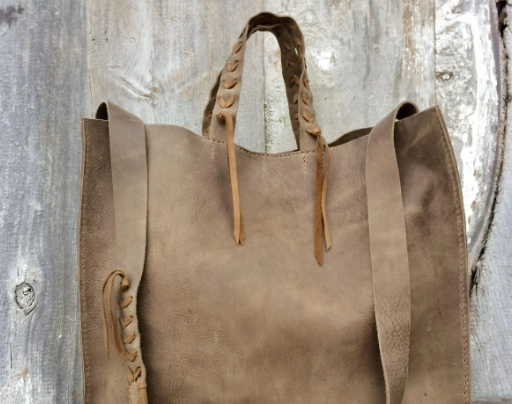
I remember buying my first "real" leather tote years ago. I saved up, convinced it would be my forever bag. Within six months, the corners were scuffed to hell, and the strap stitching started to look shaky. It was a lesson learned the hard way: not all leather shoulder tote bags are created equal. That experience sent me down a rabbit hole of research, talking to leatherworkers, and testing bags myself. This guide is what I wish I'd had back then.
Why a Leather Shoulder Tote Bag Might Be Your Next Favorite Thing
It's not just about looking good, though a good one definitely does that. The appeal is deeply practical. Think about your daily haul: laptop, tablet, a notebook, wallet, keys, a reusable water bottle, maybe a pair of flats for the commute home. A flimsy bag gives up under that pressure. A well-made leather shoulder tote bag takes it in stride.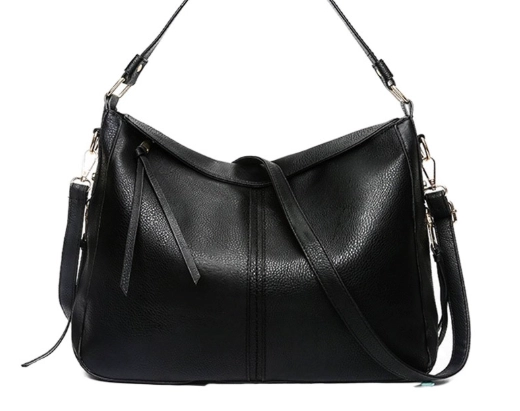
The structure is key. Unlike a floppy fabric tote, leather provides a defined shape that keeps things organized and prevents that frustrating "black hole" effect where you're digging for your keys for five minutes. The shoulder strap distributes weight far better than a handheld style, which is a lifesaver for your wrists and back on long days. But let's be real – not all straps are created equal. A thin, un-padded strap on a heavy bag is a recipe for shoulder pain, a major user痛点. The best designs consider this, offering wider, reinforced straps or even optional crossbody attachments.
Then there's the character. A leather shoulder tote bag ages with you. It develops a patina – a soft sheen and darkening in the creases that comes from use and care. This isn't damage; it's a story. My current daily driver, a simple top-grain leather tote, has a few scratches from a rogue key and a slight darkening where I always grip it. To me, those aren't flaws. They're proof of its usefulness. This evolving beauty is something synthetic materials can't replicate.
Breaking Down the Leather: It's Not Just One Thing
This is where most guides gloss over the details, but it's the most critical part of your decision. When a tag says "genuine leather," what does it actually mean? Well, in the industry, "genuine leather" is a specific grade, but it's often used as a broad, misleading marketing term. To make an informed choice, you need to look beyond that label.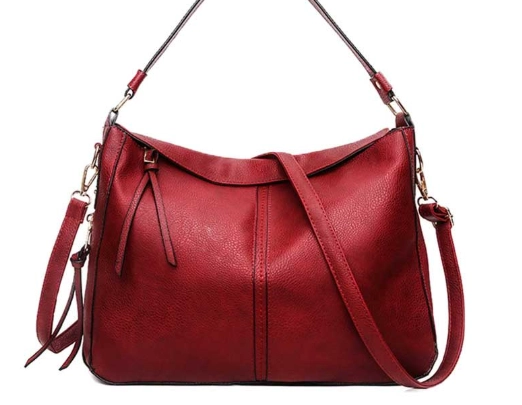
The Leather Quality Hierarchy
Think of a piece of animal hide like a layered cake. The quality and treatment of each layer determine the final product's look, feel, durability, and price.
The purist's choice. Ideal for a heritage-style bag you want to last decades. Think brands like Filson or older Coach styles.
The sweet spot for most people. Offers great durability and a polished look without the premium price of full-grain. Most high-street "quality" leather bags use this.
Often stiff or board-like. Usually coated with a heavy pigment or embossed with an artificial grain (like to look like alligator). Can crack or peel over time.
Budget-friendly items where the "leather" label is a priority over longevity. Often used for branded logos on straps or accents.
Shredded leather fibers mixed with polyurethane and bonded to a backing. Often called "reconstituted leather."
Has a plastic-like feel, poor durability, prone to flaking and cracking. Often has a strong chemical smell.
Avoid for bags meant for daily use. It's a cost-cutting measure.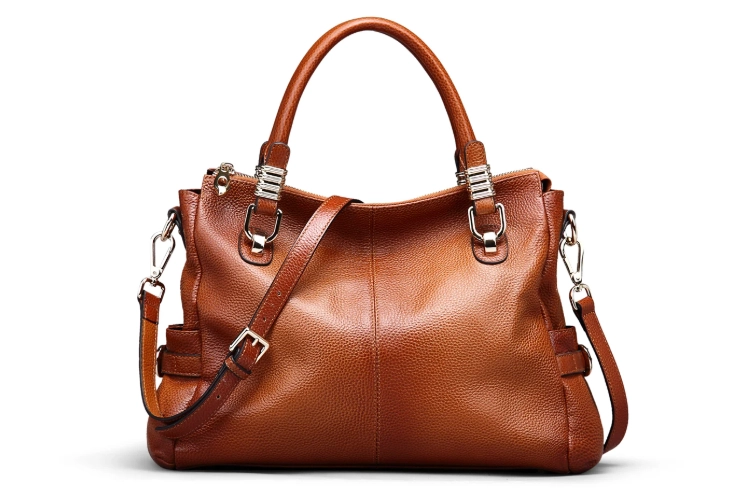
| Leather Type | What It Actually Is | Key Characteristics | Best For... | Price Range |
|---|---|---|---|---|
| Full-Grain Leather | The top, outermost layer of the hide. It includes all the natural grain, pores, and markings. It's the strongest part. | Develops a rich patina, highly durable, breathable, shows natural imperfections. Stiff at first but softens beautifully. | Heritage bags, long-term investments | $$$ - $$$$ |
| Top-Grain Leather | Also the top layer, but it's been sanded or buffed to remove surface imperfections. Then a finish coat is usually applied. | More uniform and supple than full-grain out of the box, still very durable, easier to clean, less prone to developing a dramatic patina. | Daily workhorse bags | $$ - $$$ |
| Genuine Leather | This refers to the layers left after the top is split off. It's real leather, but from the lower, fibrous layers of the hide. | Less durable, often coated, can feel stiff. Prone to cracking if not well-maintained. | Budget-conscious items, accents | $ - $$ |
| Bonded Leather | Reconstituted leather from scraps and fibers, bonded with polyurethane. | Low durability, plastic-like feel, prone to flaking. Often used in very cheap products. | Avoid for serious use | $ |
See the difference? It's huge.
My disappointing first bag was almost certainly a "genuine leather" with a poor finish. It looked fine new but had no resilience. When shopping, don't just ask if it's leather. Ask, "What type of leather is this?" Reputable sellers will know. For a daily workhorse, a good top-grain leather shoulder tote bag is often the most sensible choice. It balances cost, durability, and maintenance beautifully.
Common Leather Finishes & Textures
Beyond the grade, the surface treatment changes everything about the bag's personality and care needs.
- Saffiano: A wax-coated, cross-hatched texture pioneered by Prada. It's incredibly scratch-resistant and water-repellent. Perfect for someone who's rough on their bags or lives in a rainy climate. The downside? It has a very structured, almost industrial feel and won't develop a soft patina.
- Pebbled Leather: The surface is embossed with a small, bumpy texture. This is fantastic because it naturally hides small scuffs and scratches. It gives a casual, relaxed vibe to a leather shoulder tote bag. Very user-friendly.
- Smooth Leather: The classic. Shows every mark, which can be a pro or a con. It develops the most beautiful, personalized patina but requires a bit more babying initially.
- Nubuck/Suede: These are the "fuzzy" sides of the leather. Nubuck is the top-grain sanded down, suede is the split underside. They feel luxurious but are notoriously high-maintenance, staining easily with water or oil. I'd steer clear of a full suede tote for daily use unless you're prepared for serious upkeep.
Choosing Your Perfect Leather Shoulder Tote: A Buyer's Checklist
Okay, so you know your leather types. Now, how do you pick the one? It's about matching the bag to your actual life, not an aspirational version of it.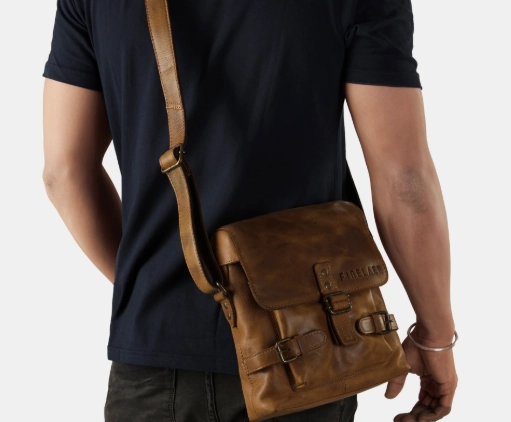
Function First: The Practical Interrogation
- What's your daily carry? Seriously, empty your current bag. Measure your laptop. Do you carry a water bottle? A gym kit? The interior dimensions listed online are useless without context. A 15-inch laptop needs more than a 15-inch wide bag—it needs padding and a snug sleeve so it doesn't slide around.
- How do you organize? Are you a pouches person, or do you need built-in pockets? Some leather tote bags are cavernous with just one small zip pocket inside. Others have designated slots for phones, pens, and laptops. Too many pockets can add bulk and weight, though.
- Closure: Zip-top, magnetic snap, open-top, or flap? A zip-top offers the most security and weather protection but can be fussy. An open-top is accessible but risky in crowds or rain. A magnetic snap is a good middle ground.
- Strap Details: This is critical for comfort. Are the straps attached with robust, riveted hardware or just stitching? Are they wide enough (at least 1.5 inches)? Are they adjustable? Can you wear it on your shoulder with a thick jacket on? This is a major pain point many designers overlook.
Construction & Hardware: The Signs of Quality
Look at the bag in profile. Does it slump over like a tired sack when empty, or does it hold some shape? Some structure is good. Run your fingers along the seams. Stitching should be even, tight, and straight. No loose threads. Glue should not be visible.
Check the lining. A cheap, thin polyester lining will tear quickly. Look for durable fabrics like cotton twill, microsuede, or even a sturdy nylon. Reinforced stitching at stress points—where the strap meets the bag, at the bottom corners—is non-negotiable.
Hardware should feel substantial, not lightweight and tinny. Zippers should glide smoothly. YKK is a brand known for reliability. Does the hardware color (like gold or silver) complement the leather, or does it look cheap? This is a small detail that makes a big difference in perception.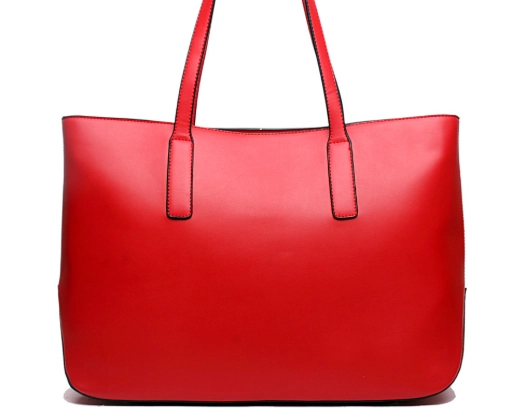
Caring for Your Investment: It's Easier Than You Think
A lot of people are scared of leather care. They shouldn't be. You don't need a complex regimen. A little preventative maintenance goes an incredibly long way.
First, understand that leather is skin. It needs conditioning to prevent it from drying out and cracking. For a new smooth or pebbled leather shoulder tote bag, I recommend applying a good leather conditioner (like Apple Brand or Bickmore) within the first month. Use a clean cloth, apply sparingly, let it absorb, and buff off any excess. Do this every 4-6 months, or whenever the leather starts to look dry.
For stains, act fast. Blot liquid—don't rub. For oil stains, sprinkle with talcum powder or cornstarch to absorb, leave overnight, and brush off. For general dirt, a damp cloth is usually enough. For specific, high-quality care advice tailored to different leather types, the Leather Working Guide's care section is an excellent, industry-respected resource.
Storage is simple: stuff it with bubble wrap or acid-free tissue paper to help it keep its shape, store it in the dust bag it (hopefully) came with, and keep it in a cool, dry place away from direct sunlight. Never store it in a plastic bag, as this can trap moisture and cause mildew.
Your Leather Tote Bag Questions, Answered
Final Thoughts: It's About Your Life, Not Just a Bag
Choosing the right leather shoulder tote bag isn't about finding a status symbol. It's about finding a reliable partner. It's the bag you grab without thinking on a busy morning, the one that holds your life together during a hectic day, and the one that still looks good when you finally slump into your seat on the ride home.
Ignore the hype and the fleeting trends. Focus on the feel of the leather in your hands, the logic of the pockets, the comfort of the strap on your shoulder. Ask the hard questions about construction. Think about the climate you live in and the beating your bag will take.
When you find the one that ticks your boxes, it stops being just a purchase. It becomes a tool, a companion, and a piece of personal style that gets better every single day you use it. And honestly, that's a feeling no fast-fashion bag can ever give you. Take your time, do the research, and invest in something that will truly work for you. Your shoulders—and your future self—will thank you.