Your Quick Guide
- What Exactly Are Curtain Bangs with Layers on Medium Hair?
- Who Does It Suit? The Real Deal on Face Shapes and Hair Types
- How to Talk to Your Stylist (And What to Bring)
- The Daily Reality: Styling and Maintenance
- The Honest Pros and Cons
- Answering Your Biggest Questions (The FAQ Section)
- Final Thoughts: Is This Cut For You?
So you're thinking about taking the plunge with curtain bangs and layers on your medium-length hair. Let me guess, you've seen it all over Instagram, on your favorite celebrities, and maybe even on that one friend who suddenly looks amazing. You're intrigued, but also a little nervous. What if it doesn't suit your face? What if it's a nightmare to style? I get it. I've been there myself, hovering in the salon chair, clutching a photo from Pinterest.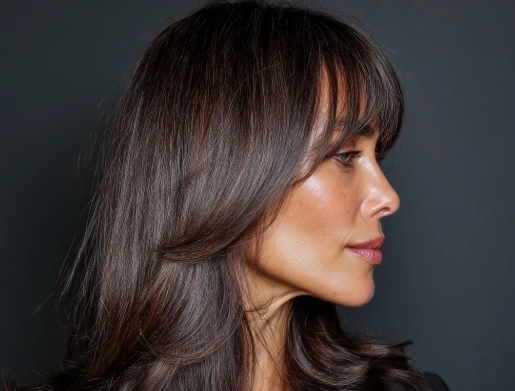
The truth is, curtain bangs with layers medium hair isn't just a fleeting trend—it's a modern classic for a reason. It's soft, it's versatile, and when done right, it can completely transform your look without the drama of a major chop. But there's a big difference between seeing it on a model and making it work for your real life, with your real hair texture and your real morning routine.
I remember the first time I asked for curtain bangs. My stylist, Sarah, who's been cutting my hair for years, leaned in and said, "Okay, but are you ready to use a round brush?" That was my wake-up call. This style has a reputation for being low-maintenance, and in many ways it is, but there's a learning curve. Over the years, through trial, error, and countless conversations with stylists, I've learned what makes this cut sing and what can make it a flop.
What Exactly Are Curtain Bangs with Layers on Medium Hair?
Let's break it down because the name can be misleading. It's not one haircut, but a combination of two key elements working together on hair that sits roughly between your chin and your collarbones.
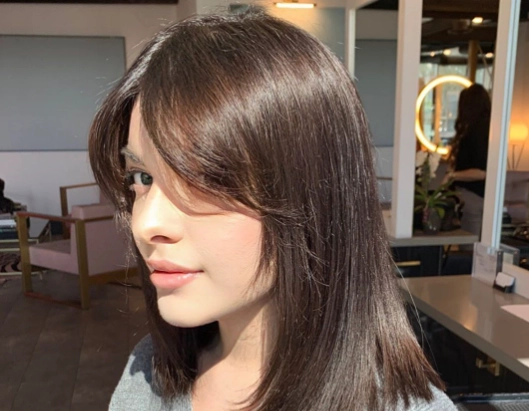
Curtain Bangs: Forget the blunt, heavy bangs of the past. These are parted down the middle (or slightly off-center) and are longer at the sides, gracefully framing your face like, well, a pair of curtains. They blend into the rest of your hair, which is the magic part. They're not a separate entity.
The Layers: This is where the movement comes in. Layers are cut throughout the medium-length hair to remove weight, add texture, and create shape. They help the hair swing and flow, and they're absolutely crucial for making the curtain bangs integrate seamlessly. Without layers, curtain bangs on medium hair can look a bit heavy and disconnected.
Put them together, and you get a haircut that's all about softness, face-framing, and movement. It's designed to enhance your features, not hide behind a wall of hair. It's the anti-helmet haircut.
Why Is This Combo So Popular Right Now?
It's a perfect storm of aesthetics and practicality. After years of ultra-blunt cuts and sharp bobs, there's a huge swing towards softer, more romantic shapes. This cut delivers that. It also works beautifully on video calls (hello, home office life), giving a polished but effortless look. Furthermore, it's incredibly forgiving as it grows out—a major plus for anyone who doesn't live at the salon. The layers and the bangs just soften and blend over time.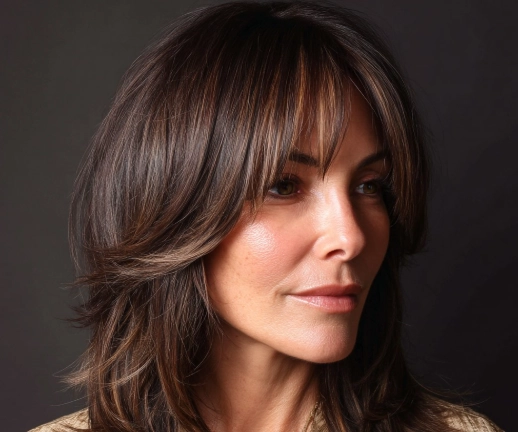
Who Does It Suit? The Real Deal on Face Shapes and Hair Types
Here's the million-dollar question. The beauty of curtain bangs with layers for medium hair is its adaptability. It's not a one-size-fits-all, but a one-concept-fits-many. The key is in the customization.
I used to think my round face was a no-go zone for any bangs. I was wrong. The trick is in the length and the layering. A good stylist will adjust where the bangs start, how deep they are cut, and how the layers are placed to flatter your unique bone structure.
| Face Shape | How to Customize the Cut | Key Goal |
|---|---|---|
| Round | Start the bangs slightly higher, keep them longer and wispier at the ends. Add longer, face-framing layers that start at the jawline to create length. | Avoid adding width; create the illusion of length and angles. |
| Square | Opt for softer, feathered ends on the bangs. Use layers to add softness around the jaw and temples. | Soften the angular jawline and forehead. |
| Oval | You have the most flexibility. You can play with bang length and layer placement more freely. | Enhance your balanced proportions; frame the eyes and cheekbones. |
| Heart | Focus on width at the jaw. Keep bangs full but soft, and ensure layers add volume below the cheekbones to balance a narrower chin. | Balance a wider forehead with a fuller jawline. |
| Long | This is a fantastic style for you. Keep the bangs a bit heavier and start them lower. Use layers to add width through the mid-lengths. | Break up the length of the face and add horizontal interest. |
Now, let's talk hair texture. This is where I see the most confusion online.
Hair Texture Deep Dive
Fine Hair: This cut can be a godsend. The layers remove weight, creating the illusion of more volume. The curtain bangs add instant interest and shape around the face. The catch? You need to be okay with using a texturizing spray or dry shampoo to add grit and hold. Without it, fine hair can fall flat. I have fine hair, and my can of sea salt spray is my best friend.
Thick/Coarse Hair: You are the ideal candidate for maximum impact. The layers will tame bulk and unleash movement. Your hair will hold the shape beautifully. The challenge can be frizz control, so a good smoothing serum is non-negotiable.
Curly/Wavy Hair: Yes, you can absolutely rock this! The approach is different. Your "curtain bangs" will be longer to account for shrinkage, and the layers will be cut to encourage your natural curl pattern. It's less about a precise part and more about framing. A stylist who specializes in curly cuts is essential here. The result is a gorgeous, romantic, Bardot-esque look.
A Personal Note on Super Straight, Resistant Hair: My friend has pin-straight, thick hair that refuses to hold a curl. She got this cut and hated it for the first month. The bangs just hung there, stubbornly straight, without that iconic swoop. It took her learning to use a large-barrel curling iron just on those front pieces to get the look she wanted. It's doable, but requires more daily styling commitment.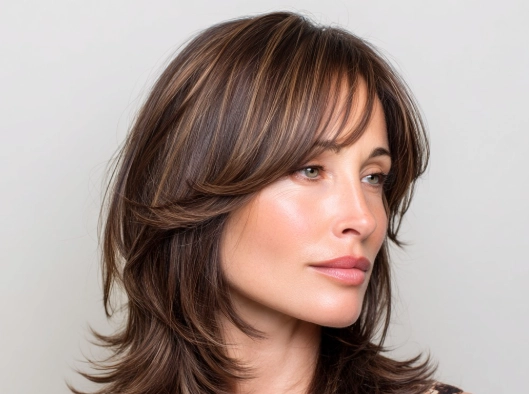
How to Talk to Your Stylist (And What to Bring)
Walking into a salon and saying "I want curtain bangs" is a recipe for disappointment. You need to be specific. Here’s a script based on what has worked for me and friends.
"I'm interested in a curtain bangs with layers medium hair look. I'd like the bangs to start about here (point to where you want them on your forehead—usually at or just above the eyebrows is safe), and I want them to blend into face-framing layers. I'm looking for softness and movement, not a heavy or choppy feel. Can we tailor the layers to work with my [mention your hair texture: fine, thick, wavy] hair?"
Bring Pictures. Plural. Not just one. Bring 3-4 photos from different angles that show the vibe you want. Include a photo of what you DON'T want. This is crucial. Saying "softer than this" or "more layered than this" gives your stylist a boundary.
Ask questions! A good stylist will ask you about your styling habits. Be brutally honest. If you air-dry 90% of the time, say so. They can adjust the cut to work with your natural texture. The American Academy of Dermatology Association has great general resources on hair care and scalp health, which is the foundation for any great haircut.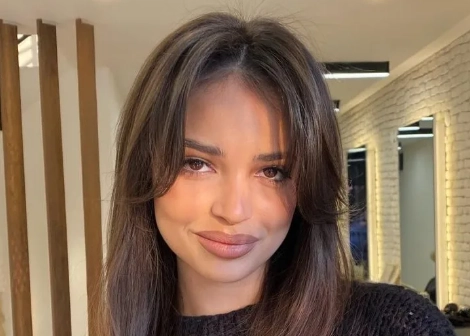
The Daily Reality: Styling and Maintenance
Okay, you got the cut. It looks amazing in the salon. Now what? Let's get real about the upkeep.
For most hair types, achieving that perfect, piecey, swoopy look requires a tiny bit of effort. But it's a 5-minute effort, not an hour. Here's the core routine that works for my medium hair with curtain bangs and layers:
- Wash & Condition: Use products suited to your hair type. For volume, apply root-lifting mousse to towel-dried hair.
- The Dry: Blow-dry the roots of your bangs and top layers first, directing them away from your face to create lift. You can let the rest air-dry if you want.
- The Swoop (The Essential Step): Once dry, take a 1-inch to 1.5-inch curling iron or a round brush. Wrap the front sections of your bangs (the pieces right by your part) around the barrel, rolling away from your face. Hold for 5-10 seconds. Don't clamp tightly—you want a bend, not a tight curl.
- The Finish: Run your fingers through the waves to break them up. Spritz with a light-hold texture spray. Done.
On day two and three, dry shampoo is your hero. It revives the roots and adds grip, making the style even easier to tweak. A quick pass with a flat iron on a low setting can also re-set the bangs if they've gone rogue overnight.
Essential Product Toolkit
- Dry Shampoo: Non-negotiable for refreshing volume.
- Texture Spray or Sea Salt Spray: Adds grit, separation, and that "lived-in" feel.
- A Lightweight Hair Oil or Serum: For the ends of your medium-length layers to prevent dryness and flyaways.
- A Heat Protectant: Always, always use one before hot tools.
Brands like Ouai and Bumble and Bumble have excellent, stylist-approved guides on their websites for using their products to achieve specific looks, which can be a helpful reference.
The Honest Pros and Cons
Let's balance the hype.
Pros:
- Incredibly Flattering: It softens features and draws attention to your eyes and cheekbones.
- Versatile: You can wear it down, in a half-up style, in a low ponytail (with the bangs out), or tucked behind your ears. The bangs always frame your face.
- Great Grow-Out: This is its superpower. As it grows, it just becomes longer, softer layers. There's no awkward "growing out bangs" phase where you need constant trims.
- Adds Volume: The layers create natural lift and body, especially for fine to medium hair types.
Cons:
- Requires Some Styling: It's not truly zero-effort for most people. To look "styled," you need to manage the bangs.
- Can Get in Your Eyes: If cut too short or not styled, the bangs can be annoying. This is a common complaint in windy weather or during workouts.
- Not a Set-It-and-Forget-It Cut: You'll need a bang trim every 4-6 weeks to maintain the perfect length and shape, though you can stretch a full haircut to 8-12 weeks.
- Can Highlight Dry Ends: If your hair is damaged, the layers will put the ends on display. Regular trims and good conditioning are key.
Answering Your Biggest Questions (The FAQ Section)
Final Thoughts: Is This Cut For You?
Look, no haircut is perfect for everyone. But curtain bangs with layers for medium hair comes close because of its flexibility. It's a style that feels both current and timeless, polished and relaxed.
If you're someone who enjoys a little bit of styling but doesn't want to be a slave to your hair, if you want a change that feels fresh but not drastic, and if you're looking for a cut that will grow out gracefully, this is a fantastic contender.
Do your homework. Find a stylist whose portfolio shows they understand soft, lived-in layers—not just sharp, geometric cuts. Go in with clear photos and clear communication. And be patient for the first week or two as you learn how to style it.
When it clicks, it's magic. It's the kind of haircut that makes you feel put-together even when you're just running errands. It has that effortless, French-girl cool factor that's so hard to pin down. And honestly, in a world of complicated beauty trends, finding a haircut that just works is a pretty great win.
Just remember my stylist's question: are you ready to use a round brush? If the answer is yes, or even a hesitant "maybe," then you might just be ready for your best hair yet.