In This Guide
- What Exactly Is This Haircut, Anyway?
- Who Does This Cut Actually Flatter? (Spoiler: More People Than You Think)
- Getting the Cut: How to Talk to Your Stylist (And Not Regret It)
- The Real Deal: Daily Care and Styling Your Long Layers with Curtain Bangs
- Answering Your Burning Questions
- Final Thoughts: Is This Cut For You?
Let's talk about a haircut that seems to be everywhere right now. You know the one – long, flowing waves with these soft, face-framing pieces in the front that part right down the middle. It's the long layers with curtain bangs wavy hair look. It's not some stiff, salon-perfect 'do. It's the hair you see on someone and think, "Wow, she just woke up like that." Spoiler: she probably didn't, but the magic is it looks like she could have. I got this cut last year, after months of staring at Pinterest boards, and it completely changed how I feel about my hair. But it's not all sunshine and perfect beach waves – there are some things I wish I'd known first.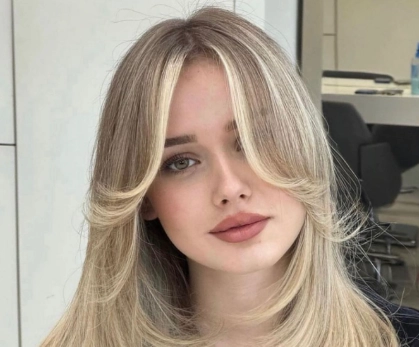
This style is a masterclass in strategic layering. The long layers remove weight, letting your natural wave pattern bounce up and do its thing. And those curtain bangs? They're not your grandma's blunt, heavy fringe. They're longer, blended, and designed to frame your face like, well, a curtain. The goal is movement, texture, and a seriously flattering shape that grows out gracefully. Honestly, it’s one of the most low-maintenance high-impact cuts you can get, especially if you have a natural wave. But getting it right, and more importantly, making it work for you, takes a bit of know-how.
What Exactly Is This Haircut, Anyway?
Before you run to the salon, let's break down what you're actually asking for. It's two components working together.
The long layers are key. We're not talking short, choppy layers from the 2000s. These layers start lower down the hair shaft. A good stylist will point-cut into the ends to create a seamless, feathered effect that removes bulk without sacrificing length. This is what gives wavy hair its volume and prevents it from looking triangular or bottom-heavy. The layers create internal movement, so even on days your waves are lazy, your hair still has shape.
Then, the curtain bangs. The name says it all. They part in the center and cascade down each side of your face, creating a soft, framing effect. They're usually cut on a curve, longer at the sides and slightly shorter toward the center, so they blend seamlessly into the rest of your long layers. The genius part? They're incredibly versatile. You can wear them as bangs, sweep them to the side, or blend them back with the rest of your hair on lazy days. The American Academy of Dermatology has some great general info on hair health and styling that's useful to keep in mind, as any chemical processing or heat on your bangs and ends can add stress.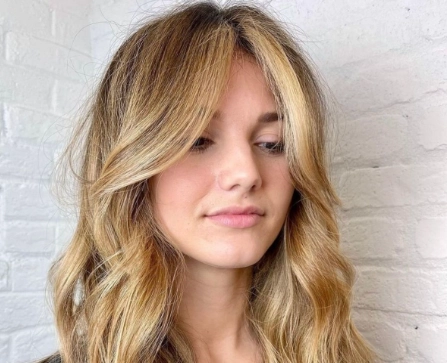
My Personal Aha Moment: The first time I styled my new long layers with curtain bangs wavy hair, I was shocked. I used less product than with my one-length hair, and the waves just... appeared. The layers did the work for me. The bangs, though? That took a week of practice not to look like I'd had a fight with a round brush.
Who Does This Cut Actually Flatter? (Spoiler: More People Than You Think)
This is probably the biggest question people have. The beauty of this cut is its adaptability. It's not a one-shape-fits-all, but a template a skilled stylist can customize.
The Best Candidates
If you have naturally wavy (Type 2) hair, this cut is basically your soulmate. It's designed to enhance what you already have. The layers free your wave pattern, and the curtain bangs work with the movement. But what if your hair is straight or super curly?
Straight hair can absolutely rock this look, but it becomes more of a styled look. You'll need a curling iron or wand to create the wave, and the texture from the layers will help hold the style. For straight hair, asking for softer, more blended layers is crucial to avoid a choppy appearance.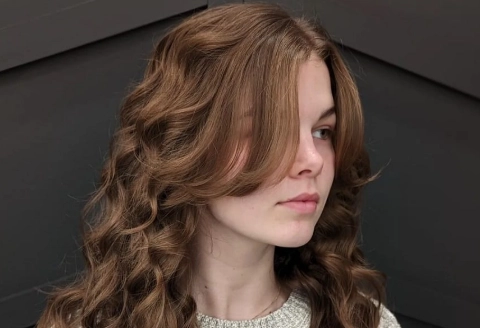
For curly hair (Type 3), the principle is similar but execution differs. You'd want longer, more graduated layers to avoid frizz and maintain curl integrity. Curtain bangs on curly hair are gorgeous but need to be cut dry, curl-by-curl, by someone experienced with curly cuts. The resources from the Naturally Curly community are invaluable here for finding techniques and stylists.
The Face Shape Factor
This is where customization is king. Curtain bangs are famously democratic.
- Round/Square Faces: The vertical line of the center part and the long, sweeping bangs create the illusion of length, which is super flattering. Keep the bangs longer and wispier.
- Oval Faces: You lucky ducks can pull off almost anything. This cut will highlight your balanced proportions.
- Heart-Shaped Faces: (That's me). The bangs soften a wider forehead, and the layers add width around the jawline, balancing everything out. It was a game-changer for me.
- Long Faces: Be cautious with the length of the bangs. Having them too short and face-framing can elongate the face further. Opt for bangs that start lower, around the cheekbones, to add width instead.
See? It's less about rules and more about adjustment.
Getting the Cut: How to Talk to Your Stylist (And Not Regret It)
This is the most critical step. A misunderstanding here can lead to six months of awkward grow-out. Bring pictures—multiple ones, from different angles. But don't just say "I want this." Use the right language.
Salon Speak Cheat Sheet: Ask for "long, blended layers starting at the collarbone" or "below the chin." Specify "face-framing layers" around the front. For the bangs, say "long, curtain-style bangs that part in the center and blend into the face-framing layers." Mention you want them "wispy and textured, not blunt or heavy." Emphasize you're going for a lived-in, wavy hair look.
Have an honest consultation. Discuss your hair's texture, density, and your daily routine. If you air-dry 90% of the time, say so! A good stylist will cut your hair with your lifestyle in mind. If they immediately want to thin your hair out with a razor, be wary—razors can be harsh on wavy ends and create frizz. Point-cutting or shears are generally safer for this texture.
And listen, I made a mistake my first time. I didn't clarify how long I wanted the shortest part of the bangs. They ended up a bit too short for my liking, right at my eyebrows, which felt too "bang-y" for me. It took a few weeks to grow into the perfect length. So, be specific! Use your fingers to show the exact length you're comfortable with.
The Real Deal: Daily Care and Styling Your Long Layers with Curtain Bangs
Okay, you've got the cut. Now what? The maintenance is surprisingly simple, but there are non-negotiables.
The Wavy Hair Routine (Simplified)
Forget the 10-step routines you see online. For this cut to work, you need to enhance your wave, not fight it.
- Wash & Condition: Use a shampoo and conditioner for wavy or textured hair. They're formulated to add moisture without weighing hair down. Squish the conditioner into your ends—this "squish to condish" method really helps define waves.
- Product Application (Soak Wet Hair): This is key. Out of the shower, scrunch out excess water with a microfiber towel (terry cloth causes frizz!). Apply a leave-in conditioner or curl cream from mid-lengths to ends. Then, use a lightweight mousse or gel. I like mousse for a softer hold. Scrunch it in aggressively.
- Drying: Here's your choice. You can plop your hair in a cotton t-shirt for 20 minutes, then air-dry. Or, for more definition, use a diffuser on low heat and speed. Hover the diffuser around your roots for volume, then gently cup sections of hair and hold them up to your scalp to dry. Don't break the cast until your hair is 100% dry!
- The Finale: Once completely dry, scrunch your hair to break the gel/mousse cast. You'll be left with soft, defined waves. Flip your head over and fluff the roots for extra volume.
The Bangs Reality Check: Your curtain bangs will often dry differently than the rest. They might be straighter or have a weird kink. I keep a small, 1-inch curling iron handy just for them. A quick, loose curl away from the face on each side in the morning takes 30 seconds and makes all the difference. It's the one part of this "effortless" look that sometimes requires a tiny bit of effort.
Product Roundup: What Actually Works
You don't need a shelf full of products. A few good ones will do. Brands like Ouai and Bumble and Bumble often have great resources and stylist tutorials on their sites for wavy hair techniques. Here’s a breakdown of what to look for:
| Product Type | What It Does | What to Look For |
|---|---|---|
| Shampoo/Conditioner | Cleanses and hydrates without buildup. | "Volumizing," "for wavy hair," "moisturizing but lightweight." Sulfate-free is gentler. |
| Leave-In Conditioner | Provides ongoing moisture, detangles, reduces frizz. | Lightweight, spray or cream formulas. Avoid heavy oils or butters at the root. |
| Curl Cream or Mousse | Defines wave pattern, adds hold and texture. | Creams for drier hair, mousses for fine hair or softer hold. Scrunch it in! |
| Lightweight Gel | Creates a cast for hold, fights frizz, enhances definition. | A "hard hold" gel isn't necessary. A medium or light gel works for most wave patterns. |
| Dry Shampoo/Texturizing Spray | Adds volume at roots on day 2/3, refreshes waves. | A holy grail for extending your style. Spritz at roots and scrunch into ends. |
Answering Your Burning Questions
To keep the shape of your long layered wavy hair with curtain bangs sharp, every 10-12 weeks is ideal. The bangs might need a light tidy-up every 4-6 weeks if you want to maintain their exact length, but part of their charm is how they grow out. I get my bangs trimmed every 8 weeks and a full shape-up every 16.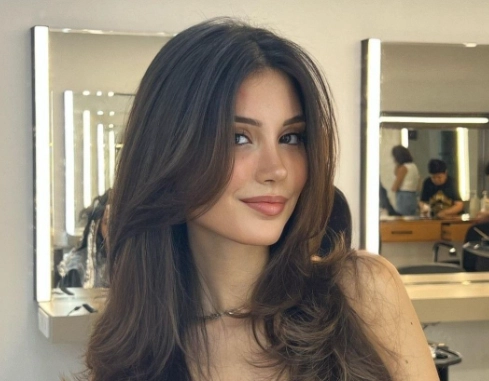
Absolutely! In fact, long layers are fantastic for fine hair because they create the illusion of volume and movement. The key is to avoid over-layering, which can make hair look wispy and thin. Ask your stylist for just a few, subtle layers. Curtain bangs also add visual density around the face. Use volumizing products at the root and avoid weighing hair down with heavy creams.
It's easier than you think. Enhance your waves with a curling wand for more uniform, polished curls or beach waves. Pull the front sections, including your curtain bangs, back into a half-up, half-down style with some face-framing pieces left out. Or, simply pin one side back with a decorative clip. The texture from the layers gives any updo a romantic, soft feel.
Using the wrong products. Slathering on heavy oils, thick butters, or silicone-laden serums can instantly flatten your wavy hair with long layers and curtain bangs. It turns the effortless texture into a greasy, stringy mess. Stick to lightweight, water-based formulas. Also, over-washing. Wavy hair often does better with 2-3 washes a week. Dry shampoo is your best friend.
“The goal isn't perfect hair. It's hair that looks healthy, moves freely, and makes you feel confident when you catch your reflection. That's what this cut delivers when it's done right.”
Final Thoughts: Is This Cut For You?
Look, I love my long layers with curtain bangs wavy hair. It gave my boring, one-length waves personality and shape. It's forgiving, it's stylish, and it makes me feel put together even on my laziest days. But it's not zero-maintenance. You have to learn how to work with your texture, and those bangs need a bit of attention.
If you're ready to embrace a more textured, lived-in look and are willing to learn a simple styling routine, you will probably adore it. It's a cut that feels modern, soft, and incredibly flattering. Do your research, find a stylist who listens, and communicate clearly. Bring those pictures, use the right words, and be open to their professional advice on tailoring it to you.
And remember, hair grows. Even if it's not perfect on day one, it will evolve into something you love. Mine did. Now, I can't imagine going back to anything else.