Quick Navigation
- Why Even Bother? The Straightener Curl Advantage
- Prepping Your Long Hair: The Make-or-Break Step
- The Core Technique: A Step-by-Step Walkthrough
- Solving the Five Biggest Long-Hair Curling Problems
- Beyond the Basics: Advanced Tips for Stunning Results
- How Does This Method Stack Up? The Real Comparison
- Your Questions, Answered (The Stuff Google Doesn't Tell You)
Let's be real. You bought that fancy straightener promising salon-perfect hair, but sometimes you want waves, not just poker-straight strands. And the thought of buying another hot tool just for curls? No thanks. I get it. I have hair down to my waist, and for years I thought curling it with a straightener was some kind of magic trick only hairstylists could pull off.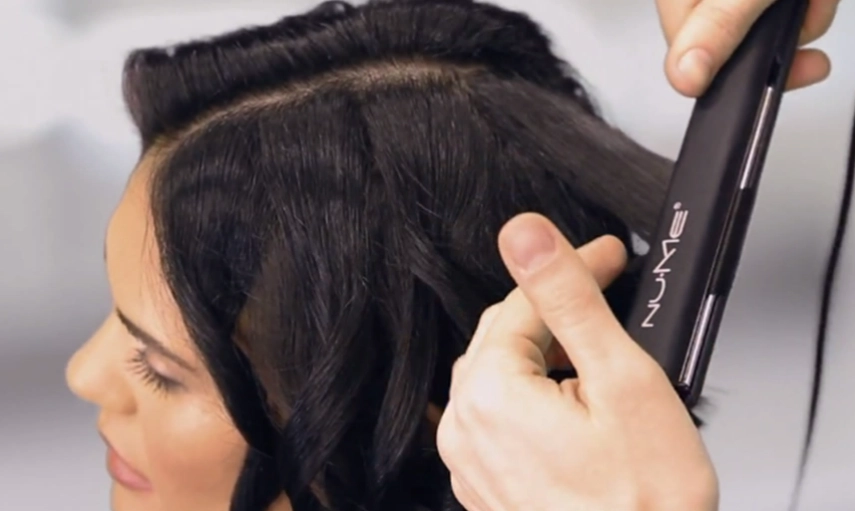
It's not magic. It's technique. And once you get it, it's a game-changer. This guide is everything I wish I knew when I first tried to curl hair with a straightener on my long hair. We're going deep—from picking the right products to fixing the wonky pieces that never seem to cooperate.
Why Even Bother? The Straightener Curl Advantage
Before we dive into the how, let's talk about the why. Why would you choose this method over a curling wand or iron?
First, it's versatile. One tool, two major styles. It saves space in your bathroom drawer and money in your wallet. Second, for long hair, a straightener gives you more control over each section. The plates grip the hair along a longer surface area, which can help create a smoother, more uniform wave from root to tip. With a curling iron, long, heavy hair can sometimes slip out or create a kink instead of a smooth curve.
I also find the curls last longer on my fine hair. Maybe it's the even heat distribution. Maybe it's psychological. But they hold.
But (and there's always a but), it's easier to get it wrong. Too slow, and you fry your ends. Too fast, and you get a weird bend. The wrong temperature? Disaster. That's why the prep work is non-negotiable.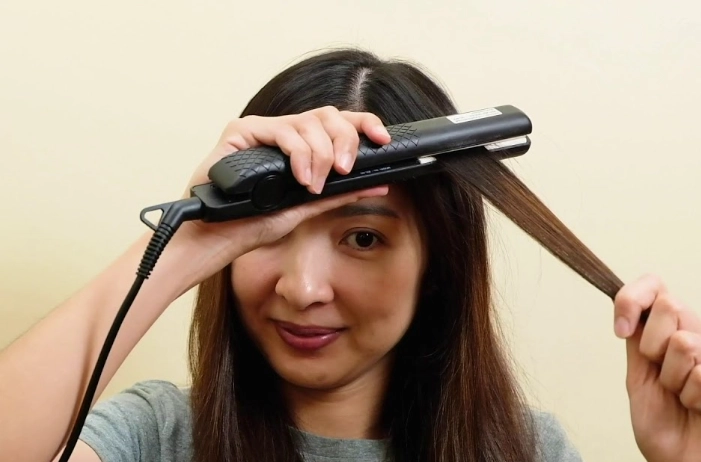
Prepping Your Long Hair: The Make-or-Break Step
You wouldn't paint a wall without priming it first. Don't heat-style your hair without protecting it. This is the single most important part of learning how to curl long hair with a flat iron safely.
Essential Products You Actually Need
Skip the 10-step routine. You need three things, max.
A heat protectant spray or cream. This isn't optional. The American Academy of Dermatology Association lists thermal styling as a common cause of hair damage. A good protectant forms a barrier. Apply it to damp or dry hair before you start. Don't just spray the top—coat mid-lengths and ends, where the heat will be applied the longest.
A light-hold styling product. For curls with a straightener, you want something that adds grip and memory without crunch. A mousse for volume at the roots or a light-hold spray for the lengths works wonders. I avoid heavy creams for this technique; they can make the plates slip and the curl fall flat.
Dry hair. Seriously. Do not attempt this on even slightly damp hair. The water turns to steam against the hot plates, causing bubble hair (yes, it's a real thing, and it's bad). Blow-dry your hair completely, smoothing it out as much as you can. The straighter it starts, the more even your curls will be.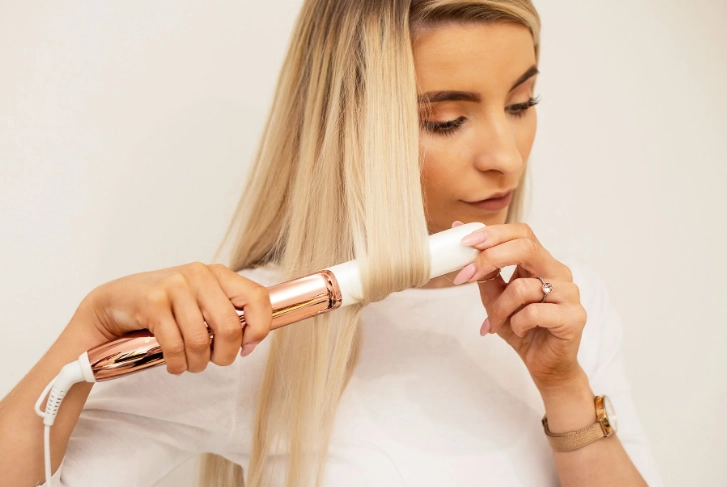
The Core Technique: A Step-by-Step Walkthrough
Okay. Hair is clean, dry, protected, and parted how you like it. Straightener is heated. Let's do this.
First, mentally divide your hair. I do four sections: bottom left, bottom right, top left, top right. Clip the top sections away. Start from the bottom. This gives you practice on the less-visible hair and ensures you don't miss the underlayers.
Take a horizontal section from your bottom layer. How thick? About the width of your straightener plates. For long hair, thinner sections (about 1-2 inches wide) work better. They heat more evenly.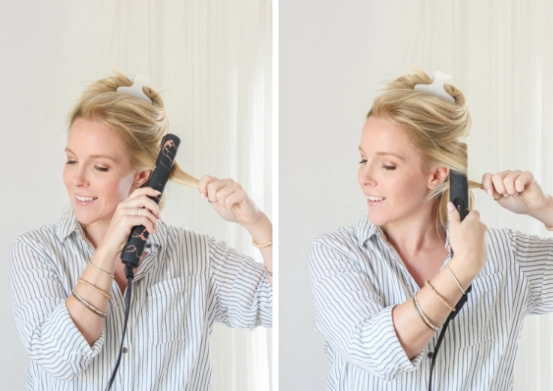
Now, the motion. This is where people panic. It's simple.
- Clamp the straightener near the root of your section, close to your scalp but not touching it.
- As you slowly glide the iron down the hair, simultaneously rotate your wrist. Turn the wrist holding the iron outward (away from your face) for a curl that falls outward. Turn it inward for a curl that coils toward your face.
- When you reach the ends, keep the rotation going as you pull the iron away. Don't just open the plates and drop the hair—this can create a straight end. The continuous motion sets the shape.
It should feel fluid, like you're drawing a spiral with the iron. The key is moving down and rotating at the same speed. If you glide too fast, you get a wave. Too slow, and you risk heat damage. Practice on a back section first.
Hold the curl for a second in your hand before letting it drop. Don't brush or touch it until it's completely cool. This sets the shape.
Repeat. Work your way around your head, section by section. For the top layers, take vertical sections for more face-framing movement. The process of how to curl hair with straightener long hair is all about consistent sectioning and consistent motion.
Pro Moves for Different Curl Types
Want loose waves? Take bigger sections and rotate your wrist just slightly (a quarter turn) as you glide down quickly.
Want defined, bouncy curls? Smaller sections, a full 180-degree wrist rotation, and a slower glide.
For that "lived-in" look, don't curl every section. Skip random pieces, especially around your face. It looks more natural.
Solving the Five Biggest Long-Hair Curling Problems
Even with perfect technique, long hair has its own set of challenges. Here’s the fix for each.
| Problem | Likely Cause | The Quick Fix |
|---|---|---|
| Flat roots, curly ends | Starting the rotation too far down the hair shaft. | Clamp and begin rotating the iron as close to the root as you safely can (about 1 inch away). |
| Frizzy, messy curls | Hair wasn't smoothly blow-dried, or sections were too thick. | Next time, use a smoothing brush while blow-drying. For now, apply a tiny drop of serum on your palms and gently scrunch from ends up. |
| Curls fall out in an hour | Hair wasn't completely cool before touching, or missing a styling product for hold. | Use a cool shot on your blow-dryer to blast sections as they cool. Next time, use a light-hold spray before curling. |
| Straight, bent ends | Releasing the hair from the iron incorrectly. | Don't just open the plates. Finish the rotation motion as you pull the iron completely away from the hair tip. |
| Unecurl, some pieces straight | Inconsistent heat application or speed. | Go back and re-curl the straight pieces, but use a slightly lower temp to avoid double-frying the rest of the strand. |
See? Most problems have a simple tweak. The straight ends one drove me crazy until I figured out the release.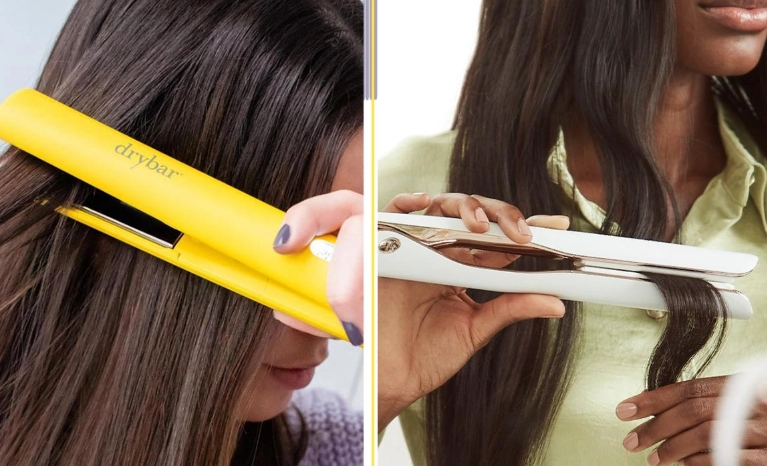
Beyond the Basics: Advanced Tips for Stunning Results
Once you've mastered the basic curl, you can play. This is where it gets fun.
For volume at the crown, after curling all your hair, take small vertical sections at the very top. Clamp the straightener at the root, flip the hair up and away from your head, and give it a slight turn before gliding down just an inch or two. Tease the root lightly with your fingers. It lifts everything.
To make curls last two, even three days, style your hair on day two hair (slightly dirty). The natural oils give it more grip. At night, loosely gather your hair at the top of your head in a silk scrunchie (a "pineapple"). In the morning, shake it out, maybe refresh a few face-framing pieces with the iron on low heat.
How Does This Method Stack Up? The Real Comparison
Is learning how to curl long hair with a flat iron worth it over other methods? Let's break it down.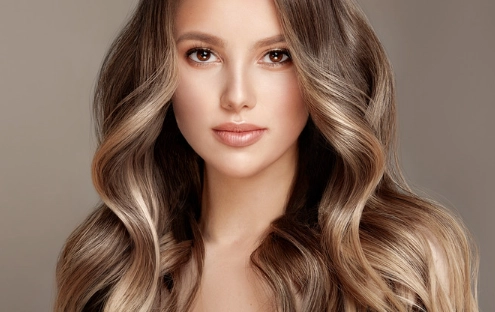
Vs. Curling Iron/Wand: A curling iron is designed for one thing, so it can feel more intuitive. It often creates a tighter, more defined curl from the get-go. But for long hair, the barrel size is critical—too small and you get tight spirals, too big and the curl might not hold. The straightener method gives you more control over the curl's width and tightness mid-strand. It's also generally faster for me, as I can smooth and curl in one pass.
Vs. Heatless Methods (Rods, Socks, Braids): Nothing beats heatless for zero damage. The waves from braiding damp hair can be gorgeous and romantic. But. They are unpredictable. On my straight hair, they can be loose and fall out quickly. They also take hours, often overnight. The straightener method is a 15-minute, guaranteed-result solution when you need a specific look.
So, it's a trade-off. Speed, control, and consistency vs. absolute hair health. I use a mix of both depending on the day.
Your Questions, Answered (The Stuff Google Doesn't Tell You)
The goal of mastering how to curl hair with straightener long hair isn't perfection.
It's having a reliable, quick tool in your styling arsenal for when you want a change. Some days my curls are amazing. Some days they're a bit wild. But I never have to worry about not being able to create them.
Start slow. Protect your hair. And don't get discouraged if the first try isn't red-carpet ready. It's just hair. It grows. And now you have a whole new way to style it.