Your Styling Roadmap
Let's be real. You bought that straightener to, well, straighten your hair. But then you saw a tutorial online—someone magically creating these bouncy, gorgeous curls with what looked like the same tool sitting in your drawer. And you thought, "I want that." But your first few attempts? Maybe the curl fell out in five minutes. Or one side looked great and the other... not so much. Maybe you even got a weird kink instead of a smooth wave.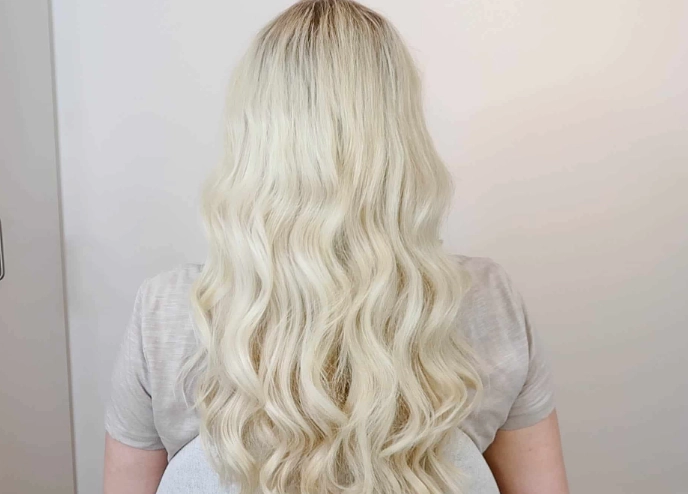
I've been there. I remember my first try, my hair was maybe a tad damp, and the curls vanished before I even left the bathroom. Super frustrating.
But here's the good news: curling long hair with a straightener is actually one of the most forgiving techniques for beginners once you know the few, crucial secrets. It gives you more control than a curling wand, and you can create everything from loose beach waves to tight, defined spirals. This guide is going to walk you through how to curl hair with a straightener long hair for beginners from absolute scratch. We'll talk about the right tools, the prep work everyone skips, and the step-by-step motions that make all the difference. No fancy jargon, just clear, actionable steps.
Why even use a straightener? Great question. A flat iron offers a larger surface area, making it easier to grip and guide long sections of hair. It also creates a different, often smoother, flatter curl compared to the rounder curl from a wand—perfect for that modern, lived-in wave look. Plus, if you only own one tool, mastering this doubles your styling options.
Getting Started: What You Absolutely Need Before You Even Turn the Iron On
Jumping right in is the biggest mistake. The foundation matters. Think of it like painting: you need the right canvas and primer.
1. The State of Your Hair
This is non-negotiable. Your hair must be completely, 100% dry. Not damp, not almost dry. Damp hair trapped in a hot iron creates steam, which can cause bubbles and severe breakage (a.k.a. "bubble hair"—it's a real thing, you can look it up on the American Academy of Dermatology site). It also sets a weak curl that will drop immediately.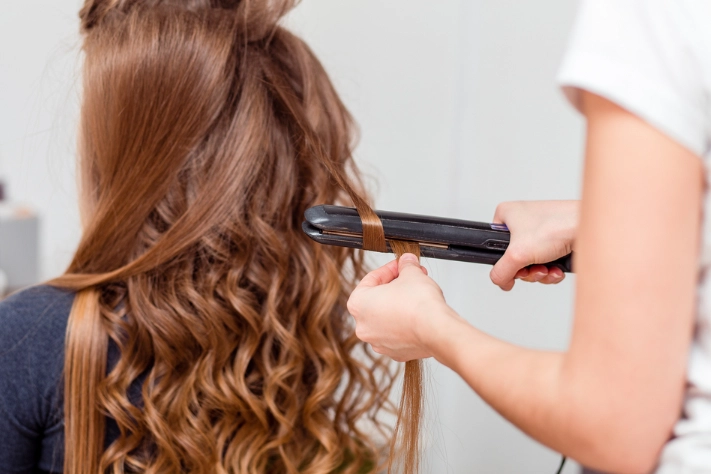
Wash your hair the night before or use dry shampoo. Day-old hair has natural oils that help grip the style better. If you must style post-wash, use a blow dryer on a cool setting to ensure zero moisture remains.
2. The Right Straightener for the Job
Not all straighteners are created equal, especially for curling long hair. The cheap one from the drugstore might struggle. Here’s what to look for:
- Plates: Ceramic or tourmaline ceramic are best for beginners. They heat evenly and are gentler. Titanium heats super fast and is great for thick hair, but can be less forgiving if you hesitate.
- Size: For long hair, a 1-inch to 1.5-inch plate width is ideal. It's wide enough to handle long sections quickly but gives you control for curving.
- Temperature Control: Dial settings are a must. Fine hair? Start at 300-330°F (150-165°C). Medium? 350-380°F (175-195°C). Thick/coarse? 400°F (200°C). Never just crank it to the max.
My first straightener had fixed, super-hot plates and no steam slots. It literally sizzled my ends. Upgrading to one with adjustable temperature was a game-changer for both health and results.
To make it easier, here's a quick comparison of features to look for:
| Feature | Why It Matters for Curling | Good for Beginner? |
|---|---|---|
| Ceramic/Tourmaline Plates | Gentle, even heat, reduces frizz. Creates smooth curls. | YES - Most forgiving. |
| Titanium Plates | Heats very fast & evenly, great for thick hair. Can be harsh on fine hair. | Maybe - If you have thick hair and move fast. |
| Floating Plates | Plates adjust to hair thickness, ensuring even grip and pressure. | YES - Prevents snagging. |
| 1-inch Width | Perfect balance of control and efficiency for long hair. | YES - The sweet spot. |
| Digital Temp Control | Precise settings to find your hair's sweet spot without damage. | YES - Takes the guesswork out. |
3. Your Styling Squad (Products)
You need two heroes: a heat protectant and a holding product.
- Heat Protectant Spray/Mist: This is your shield. Apply it to dry hair before any heat. It doesn't make your hair bulletproof, but it significantly reduces damage. Look for ones with ingredients like cyclotetrasiloxane or dimethicone. A good, affordable option is often recommended by stylists on forums referencing brands like Tresemmé or John Frieda.
- Light Hold Hairspray or Texture Spray: Not the crunchy kind from the 80s. A flexible-hold hairspray or a sea salt spray applied before curling adds grit and memory, helping the curl hold. Spray it lightly on your mid-lengths and ends after the heat protectant.
Skip the serums and oils before curling. Seriously. Applying heavy oils or silicone serums directly before using heat can sometimes cause the hair to "fry" or smoke on the plates. If you use them, apply only to the very ends after curling.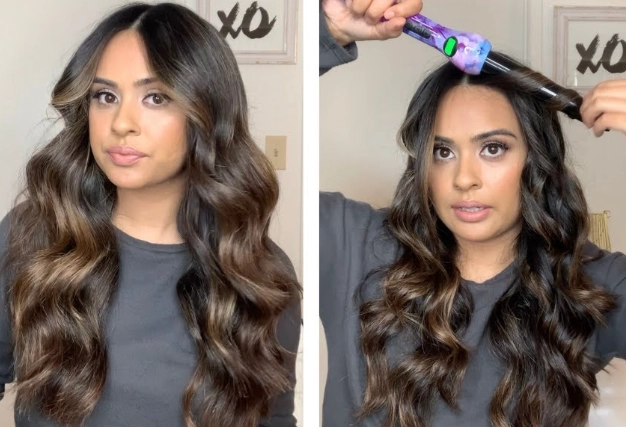
The Core Tutorial: Your Step-by-Step Guide to Perfect Straightener Curls
Okay, tools are ready, hair is dry and protected. Let's dive into the actual how-to curl hair with straightener long hair for beginners process.
Step 1: Section Like a Pro
This is the secret to even curls and not getting overwhelmed. Don't just grab random chunks.
- Clip the top half of your hair up and out of the way. Start with the bottom-most layer.
- Within that bottom layer, take horizontal sections about 1-2 inches wide. Thinner sections = tighter curls. Thicker sections = looser waves. For your first time, go with 1.5-inch sections.
- Keep the rest clipped back neatly. It feels fussy, but it makes the process ten times easier.
Step 2: The Two Main Techniques (Choose Your Adventure)
There are two primary methods. I suggest trying both on a lower temp to see which feels more natural.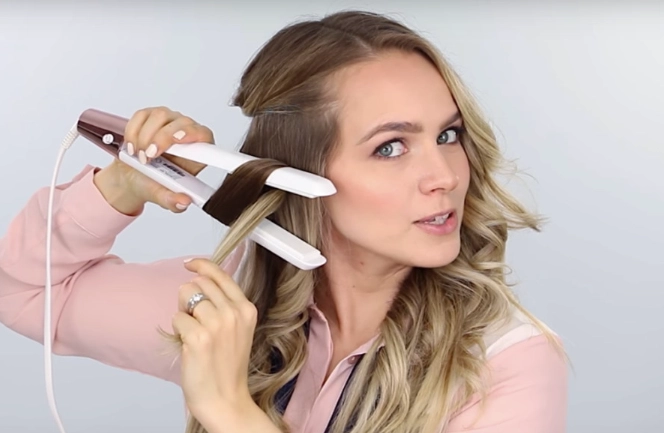
Method A: The Classic Wrap & Glide (Best for Uniform Curls)
- Take your section and clamp the straightener close to the roots (but not on the scalp!).
- Instead of pulling straight down, immediately start turning the iron away from your face (a clockwise turn for the right side of your head, counter-clockwise for the left creates face-framing curls).
- In one smooth, continuous motion, slowly glide the iron down the hair shaft while maintaining the turn. It's a glide-and-rotate move.
- When you get to the ends, keep the iron closed and rotated for a second, then release.
- DO NOT run the iron back over the curl. Just let it fall and cool. Pinching the curl while it's hot and letting it cool in your hand can help it set.
This method feels more like "drawing" a curl with the iron.
Method B: The Twist & Clamp (Best for Beach Waves & More Control)
- Take your section and lightly twist it with your fingers before applying any heat. Not a tight rope, just a loose twist.
- Clamp the straightened onto the twisted section mid-way down.
- Now, slowly pull the iron down the length of the twisted section. You can add a very slight turning motion as you go.
- Release at the ends.
Which is better? Honestly, Method B was easier for me when I was starting. It feels less awkward and gives a really nice, loose wave. Method A gives a more polished, consistent curl. Try both!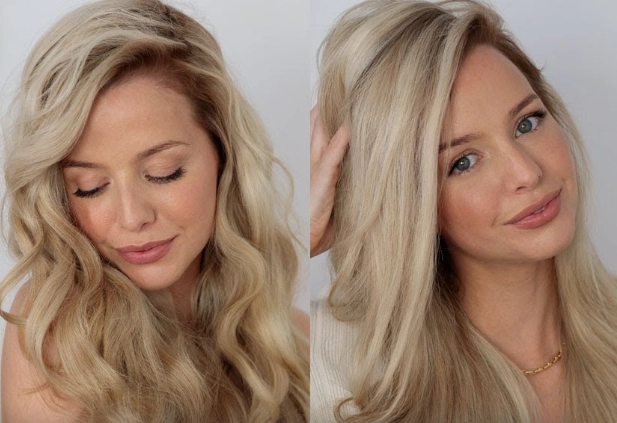
Step 3: Direction & Pattern
For a natural look, alternate the direction of your curls. Do one section curling away from your face, the next toward your face. This prevents your hair from looking like a uniform, helmet-like spiral. It adds volume and movement.
Step 4: The All-Important Cool Down
Heat sets the shape, but cooling locks it in. After curling a section, you can gently coil it in your hand and pin it to your head (with a cool clip, not a hot one!) or just let it hang. Don't touch or brush the curls until they are completely cool to the touch. This might take 10-15 minutes for all your hair.
Step 5: The Final Touch
Once all hair is cool, gently run your fingers through the curls from underneath to separate them and break up any "sausage link" uniformity. Flip your head over, give it a shake. If you need, a tiny spritz of flexible-hold hairspray all over. Avoid brushing with a hairbrush, as it will turn curls into waves (which might be what you want!).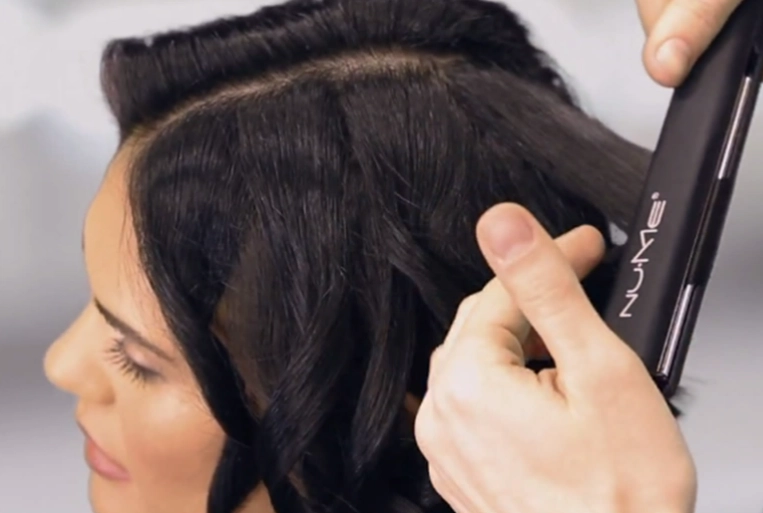
Fixing Beginner Mistakes: A Troubleshooting Guide
Something went wrong? It's okay. Here's the fix for the most common issues when learning how to curl hair with straightener long hair for beginners.
"My curls fell out in an hour!"
Likely Cause: Hair wasn't 100% dry, iron temp was too low, or you didn't let the curls cool completely before touching/moving them.
Fix: Ensure bone-dry hair. Up the temperature by 20°F increments. Pin curls up while they cool.
"I got a weird bent angle, not a smooth curl."
Likely Cause: You hesitated or stopped the gliding motion. The iron created a "dent."
Fix: Practice the smooth, continuous glide on a mid-temp. Don't stop until you're at the ends. Speed should be slow and steady—about 5 seconds per section.
"My ends look fried and frizzy."
Likely Cause: The ends are the oldest and most damaged part of your hair. You might have held the iron on them too long or didn't use enough protectant.
Fix: Apply an extra dab of heat protectant just to ends before starting. When you get to the last inch of hair, glide through quickly and release immediately. Consider a trim if ends are severely split.
"The curls at the back of my head are a mess."
Likely Cause: You can't see what you're doing, so sections get too thick or the technique gets sloppy.
Fix: Use two mirrors (or your phone camera) to see the back. Be extra diligent with sectioning. For the very back nape area, sometimes it's easier to pull those sections forward over your shoulder to curl them.
Leveling Up: Pro Tips for Long Hair Specifics
Once you've got the basics down, these tweaks make a huge difference for long locks.
- For Volume: Curl the under-layers away from your face and the top layers toward your face. When you shake it out, they'll push against each other creating lift.
- For Defined Curls: Take smaller, 1-inch sections. Use a slightly higher temperature and ensure your hair is product-free (aside from protectant) for maximum grip.
- For Loose, Bombshell Waves: Take large, 2-3 inch sections. Use the Twist & Clamp method (Method B) on a medium-low setting (around 330°F). Don't twist tightly.
- To Make Curls Last Days: After curling and cooling, loosely braid your hair before bed. In the morning, undo the braid and shake out. You'll have soft, lasting waves. This is a fantastic heatless curls alternative for second-day hair.
Your Top Questions, Answered (FAQ)
Wrapping It Up
Learning how to curl hair with straightener long hair for beginners is all about prep, patience, and practice. Don't get discouraged if your first try isn't salon-perfect. Mine definitely wasn't. Start with clean, dry, well-protected hair. Section meticulously. Choose a technique and stick with it for a full head before switching. And let those curls cool completely.
The beauty of this skill is the versatility it gives you. With one tool, you can switch between sleek straight and beautiful waves. It saves counter space, it saves money, and honestly, it's just a cool trick to know. So grab that straightener, start on a lower heat setting to practice your motion, and have fun with it. Your perfect curl is just a few glides away.
Final Pro Tip: Record yourself doing a section on your phone. Sometimes watching your own technique back you can spot where you're hesitating or rotating awkwardly. It's a weirdly effective way to improve!