In This Guide
- Why the Direction of Your Curl Actually Matters
- The Two Basic Directions: Inward vs. Outward
- Matching Curl Direction to Your Face Shape
- Step-by-Step: How to Actually Do It (Without Burning Fingers)
- Beyond Basics: Direction for Different Curl Types
- Common Mistakes (And How to Fix Them)
- Your Questions, Answered
- Final Thoughts and My Routine
Let's be honest. You bought that fancy straightener, watched a few quick videos, and thought curling would be a breeze. You clamp a section, twist the iron, glide it down... and end up with a weird, flat kink instead of a bouncy curl. Or maybe one side looks great, and the other is a complete disaster. Sound familiar? I've been there too, wasting a good half-hour before an event, frustrated and nearly giving up.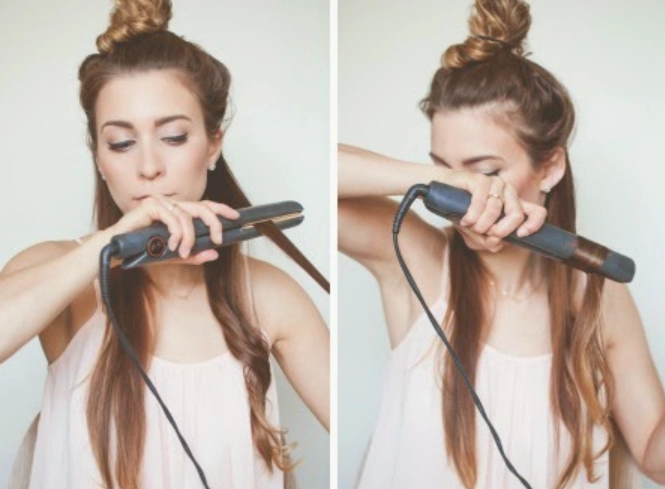
The secret I finally figured out – and the one most tutorials gloss over – isn't just about the technique. It's about the direction. Which direction to curl hair with straightener isn't a one-size-fits-all answer. It changes everything: how your hair frames your face, how long the curl lasts, and whether you achieve a soft wave or a tight ringlet. Get it wrong, and the style falls flat (literally). Get it right, and it looks like you just stepped out of a salon.
So, let's ditch the confusion. This guide isn't about vague advice. We're going deep into the why and how, covering all the angles so you can finally master this skill.
The Core Idea: The direction you rotate your straightener dictates where the curl opens and falls. Think of it like wrapping a ribbon around a stick. The direction you start wrapping sets the final shape.
Why the Direction of Your Curl Actually Matters
It might seem like a minor detail, but the curling direction is the foundation of your entire look. Here’s what it controls:
- Face Framing: This is the big one. Curls directed towards your face can make features appear softer or more closed. Curls directed away can open up your face and highlight your cheekbones and jawline. It’s a subtle but powerful contouring trick.
- Curl Definition & Pattern: The direction sets the “spine” of the curl. A consistent direction creates uniform, polished waves. Mixing directions intentionally can create a more lived-in, voluminous texture.
- Volume and Root Lift: Where you start the clamp and the initial turn can create lift at the roots or leave them flat. Want big, bouncy hair? Direction is key.
- Style Longevity: A clean, properly set curl from root to tip tends to hold its shape longer than a haphazardly created one. The direction affects how the hair's cuticle layers are smoothed and set by the heat.
I used to think it was all about the speed of the glide. Nope. I had the speed down but my curls were still limp. When I focused on which direction to curl my hair with the straightener, that's when everything clicked.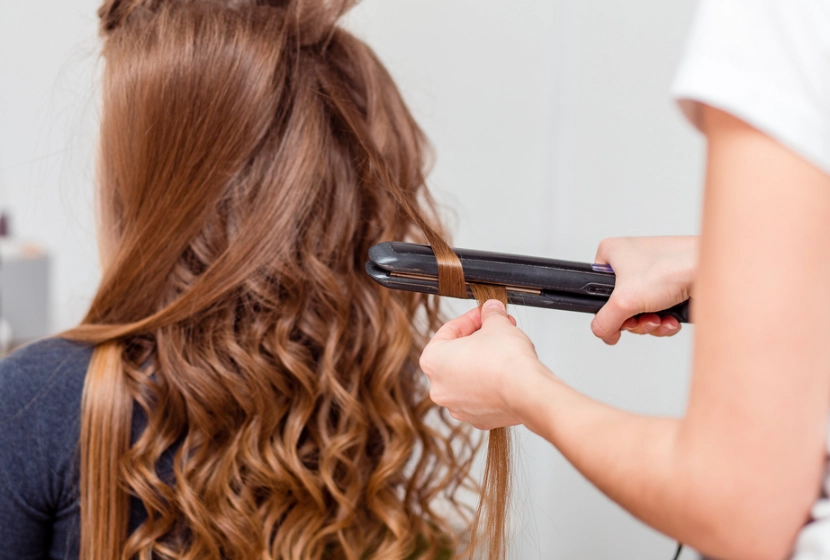
The Two Basic Directions: Inward vs. Outward
Before we get fancy, you need to know the two fundamental moves. Stand in front of a mirror, take a section of hair, and imagine.
Curl Inwards (Towards Your Face)
This is often called an “under curl” or “inward curl.” To do this, you position the straightener (clamp facing down) near the roots of a front section. You then rotate the wrist so the plates turn upwards and towards your face, then glide down.
Visual Cue: The barrel of the straightener (the bottom plate) rotates in a direction that would make the hair wrap under and towards your cheeks.
The Result: The curl cascades inwards, under itself, towards your neck and shoulders. On the sides of your face, this means the curl opens towards the back. It can create a more romantic, classic look.
Curl Outwards (Away From Your Face)
This is the “over curl” or “outward curl.” For a front section, you start similarly but rotate the wrist so the plates turn upwards and away from your face, then glide down.
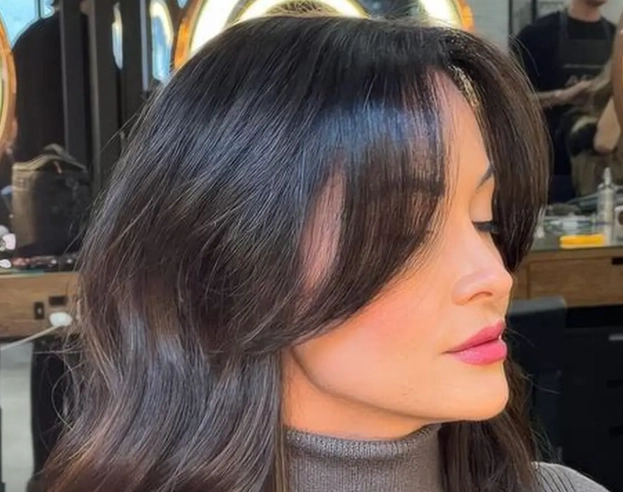
The Result: The curl rolls outwards, away from your face. On the sides, the curl opens towards the front. This is generally more modern, gives an instant face-lift effect, and creates the illusion of wider, more voluminous hair.
I have a round face, and for years I curled everything inwards because a magazine said it was “softer.” It just made my face look rounder and my style dated. Switching the front sections to an outward curl was a game-changer. My face looked more defined instantly. Don't be afraid to experiment!
So, which direction to curl hair with straightener is your first major choice. Inward or outward? The answer, frustratingly, is: it depends. Mostly on your face shape.
Matching Curl Direction to Your Face Shape
This is where we move from basic technique to strategic styling. The goal is to create balance. Here’s a breakdown. Look in the mirror and decide which shape is closest to yours.
| Face Shape | Goal | Recommended Curl Direction (Front/Side Sections) | Notes & Personal Take |
|---|---|---|---|
| Round | Add length, define angles | Outward (away from face). Avoid inward curls on sides. | Inward curls close the shape. Outward curls create width at the top/bottom, making the face appear longer. Trust me on this. |
| Square | Soften jawline | A mix. Try outward at crown/temples, inward from mid-lengths down near jaw. | The inward curl right at the jawline helps soften its angle. Outward curls on top prevent the style from looking top-heavy. |
| Oval | Maintain balance, experiment! | Any direction works. You can follow the classic “away from face” or try a uniform inward for a vintage look. | Lucky you! The oval shape is balanced. Your choice depends on the outfit or mood. I'd play with both. |
| Heart | Balance wide forehead with narrow chin | Inward at the temples/sides, outward or straight down for lower sections. | Inward curls on the wider upper third minimize width. Softer waves (not tight curls) lower down add volume near the chin. |
| Long | Add width, shorten appearance | Inward (towards face). Avoid long, vertical outward curls. | Inward curls create horizontal lines and fullness at the sides, which visually cuts the length of the face. |
See? It's not random.
But wait, there's more. What about the back? For most people, curling the back sections away from the face (i.e., for the right side of the back, curl towards the right; for the left side, curl towards the left) creates uniform volume. But some stylists swear by curling all back sections forward, towards your face, for more cohesive body. Try both on a lazy Sunday and see which you prefer.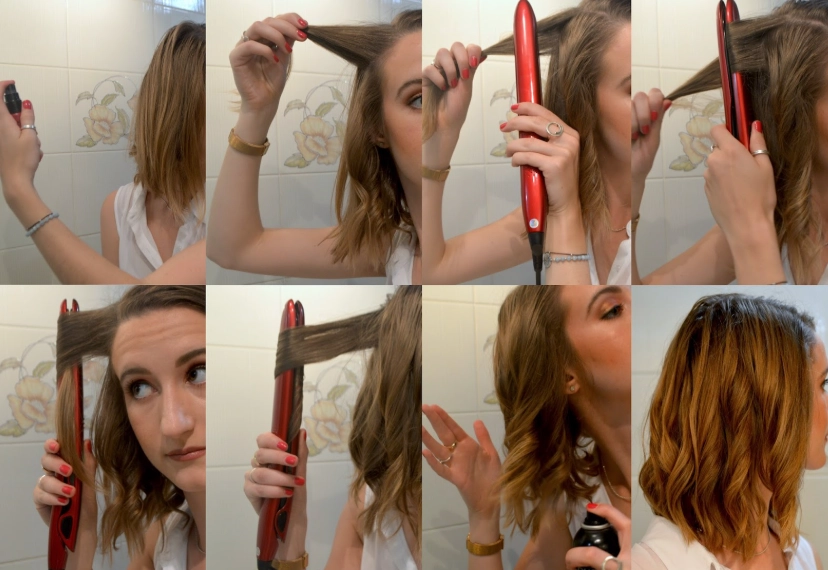
Step-by-Step: How to Actually Do It (Without Burning Fingers)
Okay, theory is done. Let's get practical. Here’s the full process, focusing on that critical directional choice.
- Prep is Non-Negotiable. Start with clean, fully dry hair. Apply a heat protectant spray – I mean it. Something like the Kenra Professional Heat Seal or Color Wow Dream Coat is fantastic. This isn't just about shine; it's about preventing the heat damage the American Academy of Dermatology warns about. Blow-dry smooth for best results.
- Section Your Hair. Clip the top half of your hair up. Work with bottom, horizontal sections about 1-2 inches wide. Thin sections = tighter curls. Thicker sections = looser waves.
- The Clamp and Turn. This is the moment. For a front section, decide: inward or outward based on your face shape?
For an Outward Curl: Clamp the straightener (turned OFF until fully in position, please!) about 1-2 inches from the root. Rotate the iron away from your face by turning your wrist. You should feel the hair wrap around the barrel. One full 360-degree rotation is a good start.
For an Inward Curl: Same start, but rotate the iron towards your face. - The Glide. With the hair wrapped and the clamp closed, slowly and smoothly glide the straightener down the length of the section. Don't rush. The heat needs time to set the shape. The slower you go, the tighter the curl.
- The Release. When you reach the ends, gently open the clamp and let the curl fall. DO NOT run your fingers through it yet! Let it cool completely. This sets the curl. Blow on it or just move to the next section.
- Work Your Way Around. Continue section by section, remembering to change the direction for front/side vs. back if needed. For the top layers, take vertical sections for better face-framing.
Hot Tip (Pun intended): Your straightener temperature matters. Fine hair? 300-330°F. Normal? 350-380°F. Thick/coarse? 380-400°F. Higher isn't always better—it's just more damaging if your hair doesn't need it.
Beyond Basics: Direction for Different Curl Types
You're not just creating a generic curl, right? Maybe you want beach waves or defined spirals. The direction and technique adapt.
For Loose Beach Waves
Use thicker sections. The direction is less about strict inward/outward and more about alternating. Curl one section away, the next towards, the next away. This creates that undone, natural texture. Don't curl all the way to the ends; leave them straighter for a relaxed vibe.
For Tight, Defined Ringlets
Use thin sections (about the width of your straightener). Choose a consistent direction (all inward OR all outward) for a uniform look. Rotate the iron 1.5 to 2 full turns before gliding, and glide very slowly.
For Voluminous “Bend” Waves (No Spiral)
This is for people who hate the “curl” look. Don't rotate the iron fully. Instead, clamp at the mid-length, give a slight 45-degree turn in your chosen direction (usually outward), and glide. It creates a soft bend, not a curl.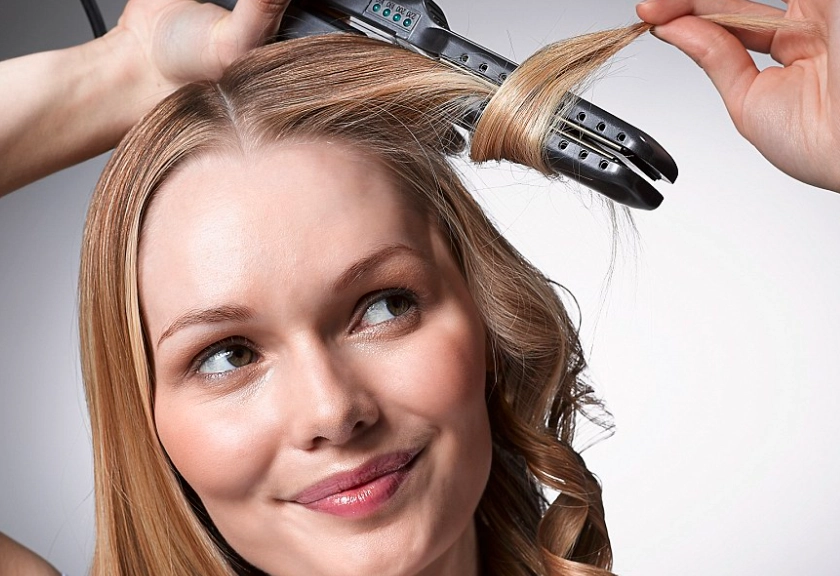
Figuring out which direction to curl hair with straightener for your desired finish is half the battle won. The other half is avoiding the common pitfalls.
Common Mistakes (And How to Fix Them)
- The “Kink” at the Top: This happens when you clamp too close to the root and don't rotate smoothly. Fix it by starting 1-2 inches down and ensuring a fluid turn-and-glide motion.
- Flat Roots: You're curling the length but ignoring the root. After releasing a curl, while it's still warm, use the tip of the straightener to gently clamp and lift the root hair away from the scalp for a second. Or, use a velcro roller at the root as the curl cools.
- Frizz, Not Shine: You skipped the heat protectant, or your iron plates are dirty/damaged. Clean your plates with rubbing alcohol on a cool iron. And use that protectant!
- Curls Falling Out Immediately: Your hair might be too clean (slippery) or damp, or you didn't let the curls cool before touching them. Try styling on day-old hair, or use a light-hold mousse before curling. And let them cool!
I made the flat roots mistake for months. My curls looked sad and heavy. Lifting the roots changed the entire silhouette of the style.
Your Questions, Answered
Let's tackle some specific things you might be wondering.
Final Thoughts and My Routine
Mastering which direction to curl hair with straightener turned it from a frustrating chore into a quick, 10-minute styling trick for me. The breakthrough was understanding it's not just a mechanical process; it's a design choice.
My personal routine now? I have a square-ish face. I section my hair. For the front and side sections framing my face, I curl them outward (away). It lifts and opens everything up. For the sections right near the back of my jaw, I might do a slight inward turn to soften the angle. The back I curl mostly away from the center for volume. I use a mid-range heat (365°F), a good protectant, and I let every curl cool before I even think about touching it.
It works. Every single time.
The best part? Once you understand the principle, you can break the rules. Feel like doing all inward curls for a retro pin-up look? Go for it. Want to alternate directions for insane volume? Do it. But you start from a place of knowledge, not guesswork.
So grab your straightener, pick a direction based on what you learned here, and give it a go. That salon-quality wave is literally in your hands.