Quick Guide
- Before You Even Touch a Hot Tool: The Prep Work Everyone Skips
- Choosing Your Weapon: A No-Nonsense Tool Guide
- The Main Event: Your First Curling Session, Step-by-Step
- Beyond the Basics: Pro Tricks for Better, Longer-Lasting Curls
- What To Do After You've Curled Everything
- No-Heat Options: Curling Your Hair Without the Iron
- Answering Your Curling Questions (The Stuff You Actually Google)
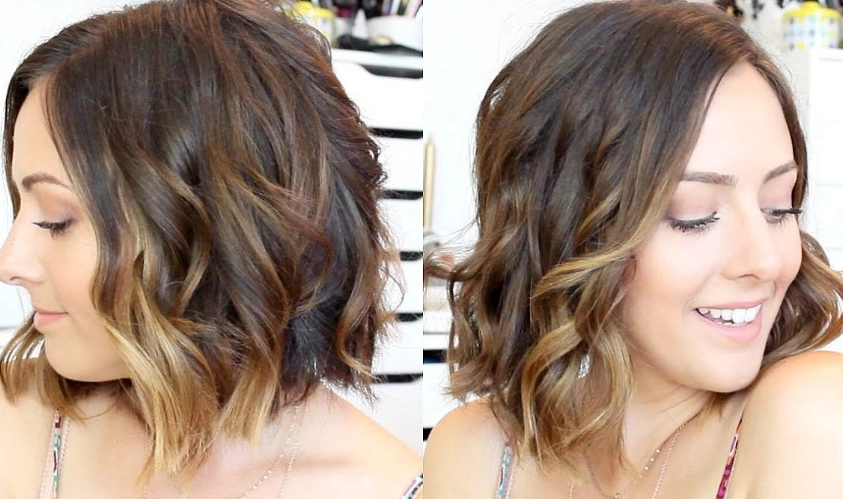
Let's be real for a second. You've probably watched a million tutorials on how to curl your hair for beginners, bought a curling iron that's now gathering dust in a drawer, and ended up with a result that looked more like a science experiment gone wrong than the sleek, bouncy curls you were after. I've been there. My first attempt left me with one perfectly curled strand and a whole head of weird, crimped-looking mess. It was not a good look.
But here's the thing—curling your hair doesn't have to be a mystery reserved for salon professionals. Once you understand a few basic principles and find the right technique for your hair, it becomes as easy as, well, brushing your teeth. This guide is the one I wish I had when I started. We're going to skip the confusing jargon and break down exactly how to curl your hair for beginners, step by simple step.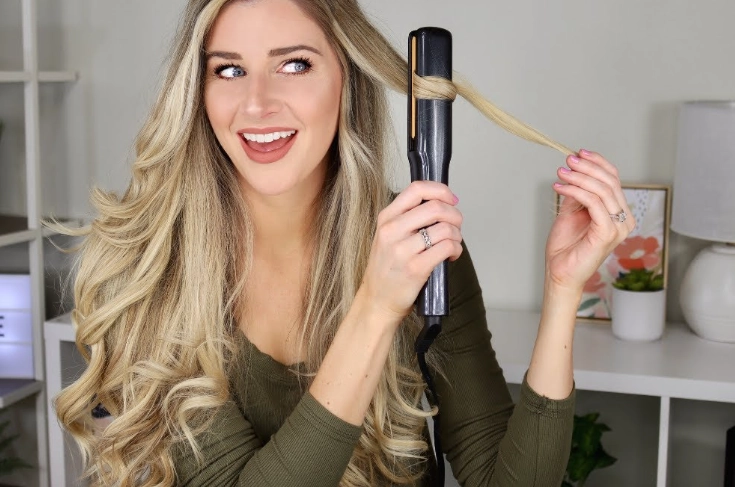
Before You Even Touch a Hot Tool: The Prep Work Everyone Skips
Most people jump straight to the curling. Big mistake. The state of your hair before you apply heat is what determines if your curls will be Instagram-worthy or a frizzy memory in thirty minutes.
Start with clean, dry hair. Not damp, not almost dry—completely dry. Applying a curling iron to damp hair is like trying to set a shape in wet clay; it steams, sizzles, and causes major damage. If you're in a rush, use your blow-dryer on a cool setting to get every last bit of moisture out.
Next up: product. This isn't optional. You need a heat protectant. I don't care if yours is a cheap drugstore spray or a fancy salon serum—just use one. It creates a barrier between your hair's delicate protein structure and the intense heat of the tool. The American Academy of Dermatology is pretty clear about the link between repeated heat styling without protection and permanent damage like dryness, breakage, and split ends. A light-hold hairspray or a texturizing spray for grip can also be a game-changer for hold, especially for silky hair types.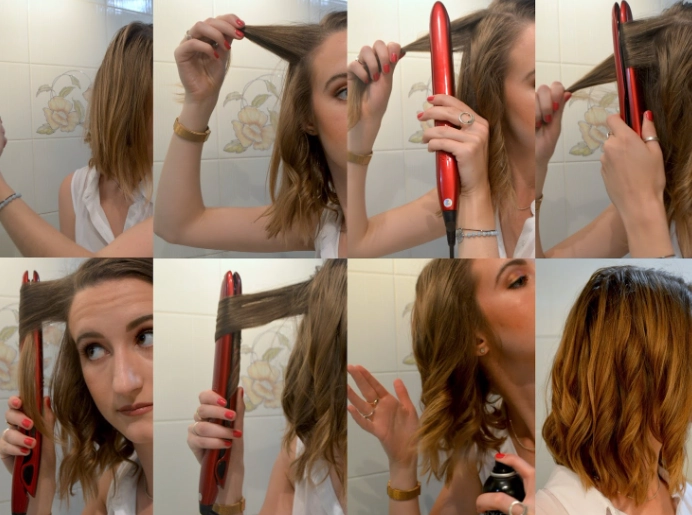
Your Pre-Curl Checklist:
- Hair is 100% dry.
- Heat protectant spray or serum applied evenly from mid-lengths to ends.
- A quick comb-through to detangle (a wide-tooth comb is gentlest).
- Hair sectioned into manageable parts with clips (more on this next).
Choosing Your Weapon: A No-Nonsense Tool Guide
Walking down the hair tool aisle is overwhelming. Wands, irons, barrels, clamps, sizes from .5 inches to 2 inches... what does it all mean? For a true beginner's guide on how to curl your hair, let's simplify.
The main players are the curling wand (no clamp) and the curling iron (with a clamp). Wands are great for a more natural, lived-in wave because you wrap the hair yourself. Irons with clamps are easier for beginners to control because the clamp holds the hair in place. Personally, I found the clamp helpful when I was just learning—it felt less like I was about to drop a section of hair.
Then there's the barrel size. This is crucial:
- Small (1/2" to 3/4"): Creates very tight, defined ringlets or spiral curls. Can look very retro or, if brushed out, create intense volume.
- Medium (1" to 1 1/4"): The goldilocks zone for most beginners. This size creates classic, bouncy curls that can easily be brushed out into soft waves. A 1-inch barrel is probably the most versatile best curling iron for beginners.
- Large (1 1/2"+): Creates loose, sweeping waves or very relaxed curls. Beautiful, but can be trickier to hold on fine hair.
My advice? Start with a medium-sized curling iron that has a clamp and adjustable heat settings. The clamp gives you control, and the adjustable heat lets you find the right temperature for your hair (fine hair needs lower heat than coarse hair).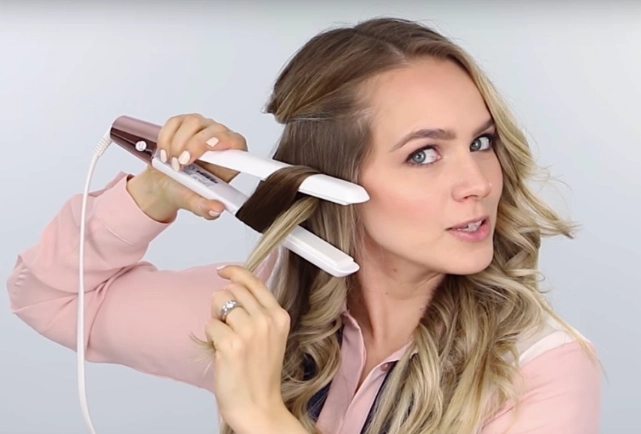
| Tool Type | Best For | Beginner Friendliness | Result |
|---|---|---|---|
| Curling Iron (with clamp) | Precise, uniform curls; learning control | High - The clamp helps hold hair | Classic, bouncy curls |
| Curling Wand (no clamp) | Messy, beachy waves; faster styling | Medium - Requires freehand wrapping | Loose, natural-looking waves |
| Flat Iron | Creating waves on very straight hair | Low - Technique is more complex | Straight-out-of-a-saloon waves |
| Heatless Methods (rods, socks) | Damage prevention, overnight styling | Very High - No heat, no burn risk | Soft, defined curls with zero heat |
The Main Event: Your First Curling Session, Step-by-Step
Okay. You're prepped. You have your tool. Let's get curling. This is the core hair curling tutorial you came for.
Step 1: Section Your Hair
This is the most important step for neat, consistent results. Don't try to curl your whole head at once. Clip the top half of your hair up and out of the way. Start with the bottom-most layer at the nape of your neck. Work in horizontal sections, about 1-2 inches thick. Thinner sections mean tighter, more defined curls; thicker sections give looser waves.
Step 2: The Actual Curling Technique
Take one of your bottom sections. The width of the section should be no wider than the barrel of your iron. Now, here's a common debate: do you curl away from your face or towards it? There's no single rule, but a good guideline is to alternate directions for a more natural, less "pageant" look. I like to curl sections framing my face away from it, and then mix it up in the back.
Open the clamp and position the iron about halfway down the hair section, not right at the root. Close the clamp to grip the hair. Now, slowly rotate the iron away from you, feeding the hair through the clamp as you go. Keep the iron moving downward as you rotate to wrap the hair around the barrel evenly. Don't rush. Hold it for about 8-10 seconds (less for fine/damaged hair, more for thick/coarse hair).
Release the clamp and gently slide the iron out, letting the curl fall into your hand. Do NOT brush it out yet! Let it cool completely. This is the magic step. Hair sets as it cools. If you mess with it while it's hot, the curl will fall right out.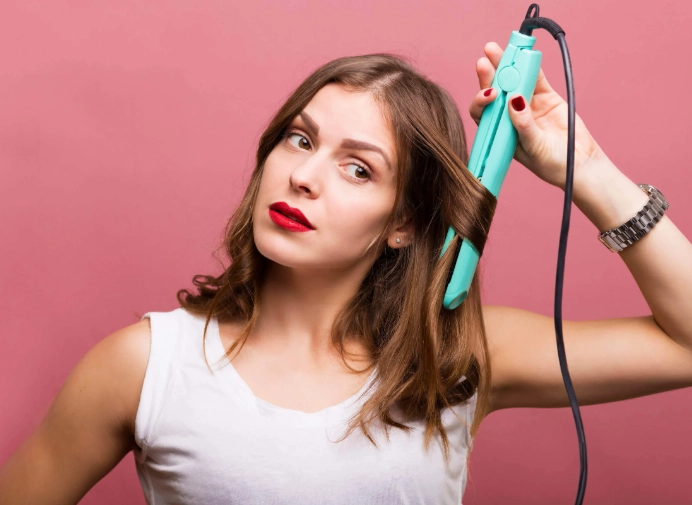
Step 3: Work Your Way Up
Finish all the sections in your bottom layer, letting each curl cool. Then, let down the next part of your hair and repeat. Always work from the back/bottom to the front/top. The hair on top is your "finishing layer" and will frame your face.
What about the pieces around your face? For shorter face-framing layers, you might need to use a smaller section of the barrel or a smaller iron. The goal is to get a curl that blends with the rest, not a tiny, springy corkscrew right by your cheek (unless that's the look you want!).
Beyond the Basics: Pro Tricks for Better, Longer-Lasting Curls
Once you've mastered the basic wrap-and-hold, these little tweaks can elevate your style from "I tried" to "I'm a pro."
- The Cool Shot: After releasing the curl from the iron, hold it in the palm of your hand and hit it with the cold shot button on your blow dryer for 5 seconds. This shocks the cuticle and really sets the shape.
- Pin Your Curls: After curling a section, roll it up into a loose coil and pin it flat against your head with a bobby pin. Do your whole head, then take all the pins out after 10-15 minutes (or after you've done your makeup). This gives the curls time to set fully and cools them in a curled position, resulting in incredibly bouncy, long-lasting curls.
- Direction Matters: For more volume at the roots, curl each section vertically (holding the iron pointing up and down instead of horizontally). This takes practice but gives amazing lift.
What To Do After You've Curled Everything
Your head is full of perfect, hot curls. Now what? First, leave them alone. Let your whole head cool down completely. I mean it. Go do something else for five minutes.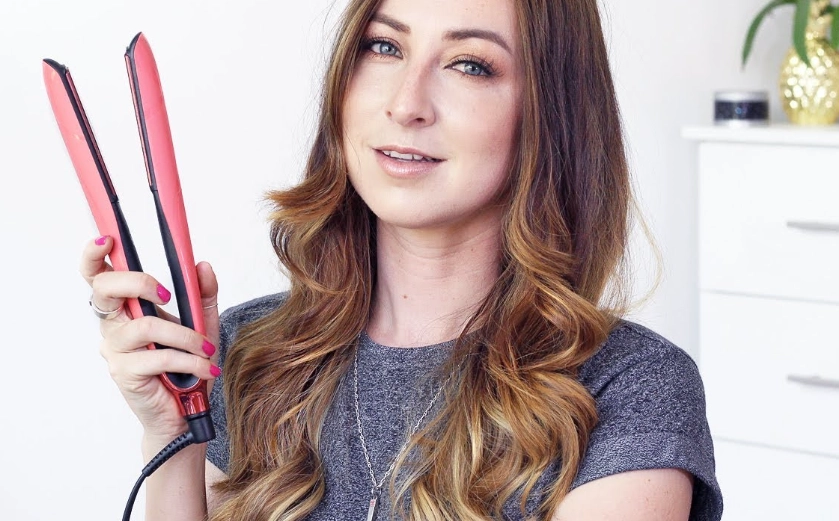
Once they're cool, it's time to finish. Do NOT use a brush. A brush will turn your defined curls into a fluffy, undefined cloud (which is sometimes a goal, but not now). Use your fingers or a wide-tooth comb to very, very gently separate the curls. Start from the bottom and work up, just loosening them.
Then, flip your head upside down and give your roots a gentle shake. Flip back. This adds volume and blends everything together. Finally, mist with a light-hold or flexible-hold hairspray from about 12 inches away. Don't drench it—just a light veil to fight humidity and hold the shape.
Quick Fix for Common Problems:
Curls too tight? Gently pull on the ends of the curl to stretch it out slightly, or wait until they've fully cooled and then run your fingers through them more vigorously.
Curls falling flat? Your hair might not be fully dry before styling, you're not holding the curl long enough, or your iron isn't hot enough for your hair type. Also, check your product—you might need a stronger pre-styler.
Frizzy ends? You might be holding the ends in the iron for too long. Try releasing the clamp a few seconds early and just letting the ends wrap around the hot barrel without being clamped.
No-Heat Options: Curling Your Hair Without the Iron
Maybe you're scared of burns (valid), or your hair is too damaged for regular heat. Good news! Learning how to curl your hair for beginners includes methods with zero heat. These are fantastic for damage prevention.
Heatless curls are having a major moment, and for good reason. You can get stunning results while you sleep. The most popular method is using a soft fabric rod, like a headband or a specially designed spiral rod. You wrap damp (not soaking) hair around it, secure it, sleep on it, and wake up with perfect waves. The key is to make sure your hair is like 90% dry before wrapping, or it won't dry by morning. Another method is braiding damp hair before bed. Several small braids give tighter waves, one or two loose braids give a softer look.
The downside? It takes time. You need to plan ahead. But the upside—zero damage, and the curls often last for days because they're set from a completely dry state—is huge.
Answering Your Curling Questions (The Stuff You Actually Google)
Look, mastering how to curl your hair for beginners is a process. Your first try might not be perfect. You might burn a finger (we've all done it—run it under cold water, don't put butter on it). You might create one amazing curl and a bunch of weird ones. That's okay. The key is to start simple, be patient, and pay attention to what your hair is telling you. Does it feel dry? Lower the heat. Are the curls not holding? Make sure you're letting them cool. With this complete guide, you have the roadmap. Now go grab that iron (or those no-heat rods) and give it another shot. You've got this.