Quick Guide
- What Does the Trinity Bracelet Actually Mean?
- Navigating the Gold: Karats, Colors, and What "Solid Gold" Really Means
- How to Choose Your Perfect Trinity Bracelet Gold Style
- The Practical Stuff: Sizing, Care, and Making It Last
- How to Wear a Trinity Bracelet Gold: Styling Ideas
- Answering Your Burning Questions (FAQ)
- Final Thoughts: Is a Gold Trinity Bracelet Right for You?
Let's talk about the Trinity bracelet gold. You've probably seen it. Maybe on a friend's wrist, definitely scrolling through luxury feeds, or perhaps you've been eyeing it for a while. It's one of those pieces that seems simple at first glance—just three intertwined rings, right? But then you start wondering. What's the big deal? Why does it cost so much? And is it actually worth it, or is it just hype?
I wondered the same things. I remember saving up for my first piece of "real" jewelry years ago, and the Cartier Trinity collection was high on my list. The problem was, all the information felt either too salesy or too vague. I wanted the real talk. What does it mean? Which gold is best? How do you even wear it?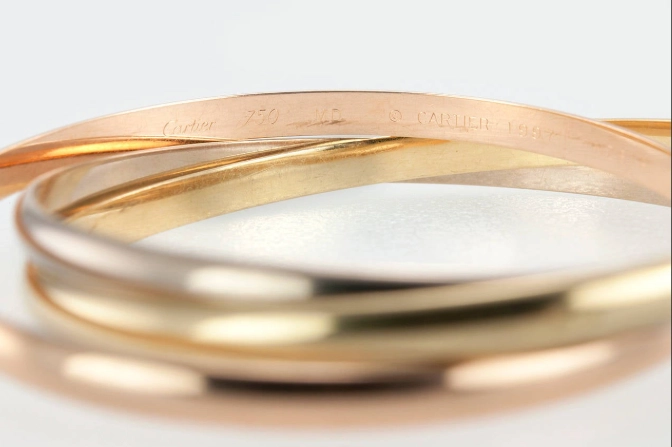
So, I dug in. This isn't just a product review. Think of it as a chat with a friend who got a bit obsessed and learned way too much about gold alloys, Cartier's archives, and how to not scratch up a precious metal bracelet while doing the dishes.
Here's the thing upfront: A gold Trinity bracelet is an icon. It's been around since 1924, designed by Louis Cartier himself. But an icon can also be confusing to buy. This guide is here to untangle those three rings for you—figuratively, of course.
What Does the Trinity Bracelet Actually Mean?
This is where most people start. You don't just buy a symbol; you want to know what you're wearing. The classic Cartier Trinity design features three interwoven bands, each made from a different colored gold: yellow, white, and rose. This isn't just an aesthetic choice.
The official symbolism, as defined by Cartier, represents a trilogy of relationships:
- Yellow Gold: Stands for fidelity. It's the warm, classic gold we all know.
- White Gold: Symbolizes friendship. Its cooler tone offers a different kind of beauty.
- Rose Gold: Embodies love. The pinkish hue gives it a romantic feel.
But here's my personal take after wearing one for years—the meaning evolves. For some, it's about the balance between different aspects of life (love, career, self). For others, it's a marker of a personal milestone. The beauty is that the three interlocked, never-ending circles invite your own story. It's a conversation starter that goes deeper than "nice bracelet."
You might find variations, like a bracelet made entirely in one color, like a solid Trinity bracelet gold in just rose or yellow. These still carry the core idea of unity and interconnectedness, just with a more monochromatic look.
Fun fact I stumbled upon: The interlocking design is technically a "Borromean ring" configuration. If you remove one ring, the other two fall apart. That's a pretty powerful metaphor for the connections it represents, don't you think?
Navigating the Gold: Karats, Colors, and What "Solid Gold" Really Means
Alright, let's get into the nitty-gritty. This is where eyes can glaze over, but stick with me—it's crucial for making a smart buy.
When we say "gold" in jewelry, we're almost always talking about an alloy. Pure 24-karat gold is too soft for a bracelet meant for daily wear. It would dent and scratch if you just looked at it wrong. So, other metals are mixed in to create strength and, in the case of Trinity bracelets, those signature colors.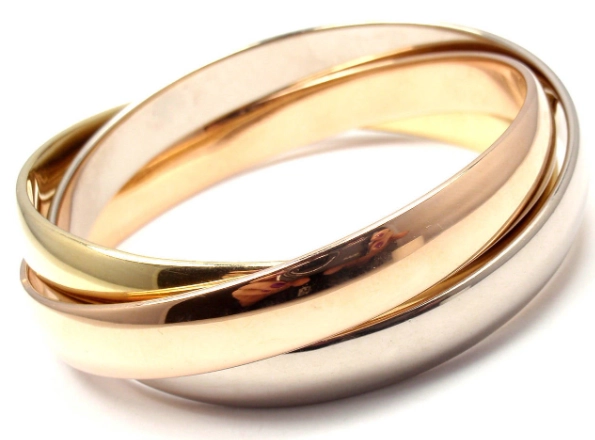
Understanding Gold Karats for Your Trinity
Cartier primarily uses 18-karat gold (750/1000 parts pure gold) for its Trinity collections. This is the sweet spot for luxury jewelry: rich in color, valuable, but durable enough for everyday life. You might see some older or different versions in 14k or 9k, especially from other brands making gold Trinity bracelet inspired pieces.
| Gold Karat | Pure Gold Content | Key Characteristics | Best For... |
|---|---|---|---|
| 18K (750) | 75% | Rich color, excellent durability, high value. The Cartier standard. | The ideal balance of luxury and wearability. What you're likely buying. |
| 14K (585) | 58.5% | Very durable, slightly paler color, more affordable. | Everyday pieces where budget and hardiness are top concerns. |
| 9K (375) | 37.5% | Extremely hard, color can be less vibrant. | Entry-level or highly durable fashion jewelry. Less common in high-end Trinity styles. |
So, when you see "solid gold," it means the entire piece is made from that gold alloy, not just plated. A solid Trinity bracelet gold will last generations. Gold-plated or gold-filled versions exist (often marketed as "Trinity-style"), but the gold layer will wear off over time, revealing the base metal beneath.
The Trinity Color Palette: Yellow, White, and Rose Gold
The magic of the classic design is the mix. But what makes each color?
- Yellow Gold (18k): Gold mixed with silver and copper. It's the warmest, most traditional look.
- White Gold (18k): Gold alloyed with nickel or palladium (more common now due to nickel allergies) and plated with a very hard element called rhodium. This rhodium plating gives it that bright, silvery shine. Important note: This plating will wear off with time (think 1-2 years with daily wear), and the bracelet will need to be re-rhodiumed to restore its bright white look. Underneath, it's a warm yellowish-grey. This isn't a defect; it's just maintenance.
- Rose Gold (18k): Gold with a high copper content. The more copper, the redder the hue. Cartier's rose gold has a particularly lovely, subtle pink tone.
A word on allergies: If you have sensitive skin, be mindful of white gold alloys. While Cartier uses high-quality materials, some people react to the nickel sometimes used in white gold alloys (though palladium is increasingly standard). Always check the composition if you have known metal allergies.
Maybe you love the symbolism but prefer a single tone? A Trinity bracelet crafted entirely in gold of one color is a stunning and modern option. A full rose gold Trinity is incredibly romantic, while an all-yellow gold version makes a bold, classic statement.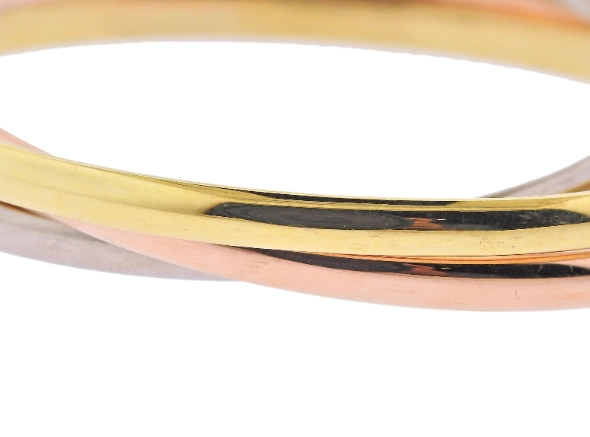
How to Choose Your Perfect Trinity Bracelet Gold Style
This is the fun part. Cartier has expanded the original design into a whole family. It's not one-size-fits-all.
The Classic Trinity Bracelet
The original. Three interlocking bands, each a different color. It's substantial, has great movement on the wrist, and is undeniably the icon. It makes a statement. For some, it's the only version that feels like the "real" Trinity.
The Trinity Small Model
A more delicate, scaled-down version. The rings are thinner and tighter together. This is the one I ended up getting. It's subtler, perfect for stacking with other bracelets or for wearing 24/7 without feeling too "loud." It still has all the meaning, just in a whisper rather than a shout.
Trinity with Diamonds
Some models feature brilliant-cut diamonds set into the rings, usually on the white gold band. It adds serious sparkle and formality. Beautiful, but it changes the vibe from everyday philosophical to more glamorous evening wear (in my opinion).
Other Variations: Cuffs, Chains, and Leather
You'll also find cuff versions where the Trinity motif is a fixed charm on a leather strap or a chain. These are more casual and often at a different price point. They're great if you love the symbol but want a different look.
When I was choosing, I tried on both the classic and the small. The classic felt amazing in the store—so iconic and weighty. But after wearing the small model home for a day, I realized it just fit my daily life better. It snagged less on sweaters and I forgot it was there (in a good way). Try them on if you can. The feel is as important as the look.
The Practical Stuff: Sizing, Care, and Making It Last
Okay, let's say you've fallen in love. Now what? How do you make sure it fits and stays beautiful?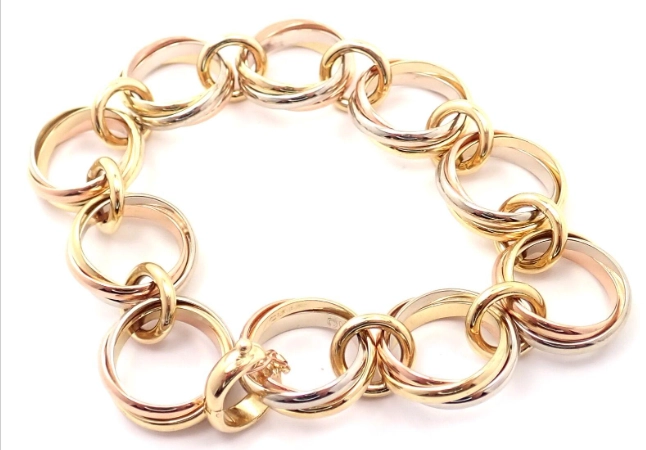
Getting the Right Size
Trinity bracelets (the classic bangle styles) are not adjustable. You need the correct size. Cartier sizes are often specific. The best way is to get sized professionally at a boutique. If that's not possible, use a printable ring sizer chart carefully, measuring the widest part of your hand you need to slip the bracelet over.
A common question: Should it be snug or loose?
It's personal. A snug fit minimizes spinning and movement. A slightly looser fit (where it can slide over your wrist bone with a little push) is easier to get on and off and allows for the pleasing "roll" of the rings. I prefer the latter for comfort.
Caring for Your Gold Trinity Bracelet
18k gold is tough, but it's not indestructible. Here's my real-world maintenance routine:
- Daily: I put it on last when getting dressed and take it off first. Avoid chemicals: perfume, hairspray, lotion, chlorine, and household cleaners are the enemy. They can dull the gold and damage rhodium plating.
- Cleaning: A soft, lint-free cloth is your best friend. For a deeper clean, a drop of mild dish soap in lukewarm water, a gentle scrub with a soft baby toothbrush, rinse, and pat dry. Do not use ultrasonic cleaners for the classic model—the vigorous shaking can, in rare cases, stress the solder points where the rings join.
- Storage: Keep it in its soft pouch, alone. Gold can scratch gold! Don't just toss it in a jumbled jewelry box.
Scratches will happen. It's a fact of life with any fine jewelry worn daily. I used to panic over every tiny line. Now, I see them as a patina, a record of my life with the piece. A professional jeweler can always polish it back to a high shine if it bothers you.
How to Wear a Trinity Bracelet Gold: Styling Ideas
Is it a solo act or a team player? Both.
Solo: It's a complete statement on its own. The intertwining rings provide enough visual interest.
Stacked: This is hugely popular. The Trinity plays incredibly well with others. Try it with a slim gold bangle, a leather wrap, or even a smartwatch (yes, really). The mix of textures and shapes is modern and personal. A gold Trinity bracelet stacked with a diamond tennis bracelet? Chef's kiss.
With a Watch: Wearing it on the opposite wrist to your watch balances your look. Wearing it on the same wrist, next to a classic leather-strap watch, creates a curated, elegant vibe.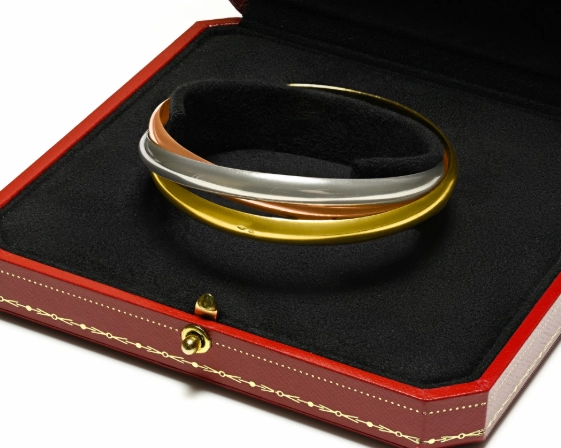
Answering Your Burning Questions (FAQ)
Let's tackle the things people secretly Google.
Is the Cartier Trinity bracelet a good investment?
As a financial instrument? No, don't buy jewelry solely to make money. As an investment in style, heritage, and a piece you'll cherish for decades? Absolutely. Cartier pieces hold their value remarkably well on the secondary market compared to many other brands. A pre-owned Trinity bracelet gold in good condition often retains a significant portion of its original price. But buy it because you love it.
Trinity Bracelet vs. Love Bracelet: What's the difference?
They're siblings from the same house, with totally different personalities. The Love bracelet is about locked-in commitment (it screws on), with a bold, uniform design. The Trinity is about fluid, interconnected relationships, with its moving parts and symbolic colors. One is a statement of unity with another person; the other is often a statement about the facets of one's own life.
Can men wear a Trinity bracelet?
Absolutely. The design is unisex in its essence. The classic model, in particular, has a substantial, architectural quality that looks fantastic on men. Many styles are marketed explicitly to men. It's all about the scale and the wearer's confidence.
How can I tell if a pre-owned Trinity bracelet is authentic?
This is critical. Always buy from a reputable seller. Key authenticity points include: crisp, deep hallmarks (the "750" or "Cartier" stamp), perfect symmetry and finish on the screw motifs (if present), smooth, fluid movement of the rings, and the quality of the gold's color and weight. When in doubt, have it authenticated by a professional. The Cartier official website also has information on their hallmarks and serial numbers, which is a useful reference.
Are there affordable alternatives to the Cartier Trinity?
Yes, but manage expectations. Many brands make "Trinity-style" bracelets. Some in solid gold at a lower price point than Cartier, many in gold-plated silver or other metals. They can be beautiful for the cost. But they are not a Cartier. The craftsmanship, weight, prestige, and resale value are different. It's the difference between a great print and the original painting.
Final Thoughts: Is a Gold Trinity Bracelet Right for You?
Look, it's not a trivial purchase. But if you're drawn to it, it's usually for a reason. Maybe you love the story. Maybe you've hit a milestone and want a tangible marker. Maybe you just think it's darn beautiful.
My advice? Don't rush. Learn the lingo (you've done that here!). Try styles on if possible. Think about how it fits with your life—are you rough with your hands? Do you never take jewelry off? Your lifestyle should guide the model and size you choose.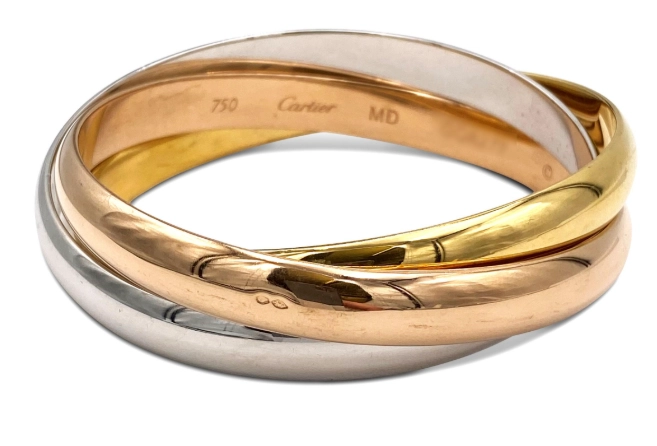
The true value of a Trinity bracelet gold isn't just in the grams of 18k metal. It's in the decades of design history you're wearing. It's in the personal meaning you attach to those three endless circles. It's a piece that, if you choose well, you'll never tire of. It becomes a part of you.
And honestly, years later, I still catch the light on the rings and smile. It was worth every bit of the research and the save. I hope this guide helps you find yours.