Quick Guide
- Where Did This Design Even Come From? A Bit of History
- Breaking Down the Look: What Makes a Trinity Bracelet?
- How to Actually Wear the Thing (Without Overthinking It)
- Navigating the Purchase: What You Need to Know Before You Buy
- Caring for Your Bracelet: Keep It Looking New
- Final Thoughts: Is It Right For You?
You've probably seen it everywhere. On wrists in coffee shops, in polished jewelry store displays, maybe even on a friend. The Trinity bracelet, especially the version on a delicate chain, has this quiet way of catching your eye. It's not loud, but it's impossible to ignore. What is it about this simple design of three intertwined bands that feels so special? Is it just a trend, or is there something deeper going on?
I remember the first time I really looked at one. It was on my aunt's wrist, a vintage piece she never took off. The gold was warm, the links tiny and perfect. She told me it was a gift for her graduation, a symbol of her past, present, and future all woven together. I was hooked. That's the thing about a Trinity bracelet on a chain – it often comes with a story.
But let's be real. When you're thinking about getting one, you're not just buying a story. You have practical questions. Is it comfortable for everyday wear? Will the chain snag on things? How do you even tell a well-made one from a cheap copy? And what's the deal with all the different metals and prices out there?
This guide is here to untangle all of that. We're going to look past the marketing and into the details. We'll talk about what makes a Trinity bracelet on a chain work, how to wear it without overthinking, and how to choose one that actually fits your life, not just your Pinterest board.
Quick Takeaway
At its core, the Trinity bracelet design represents an interconnection – most commonly love, friendship, and fidelity, or past, present, and future. Putting it on a chain transforms it from a rigid bangle into a flexible, versatile accessory you can layer, stack, and forget you're wearing (in a good way).
Where Did This Design Even Come From? A Bit of History
Okay, we have to talk about the elephant in the room: Cartier. No discussion about the Trinity is complete without mentioning them. The design was created by Louis Cartier himself in 1924. The story goes that it was a gift for his friend, the French poet and artist Jean Cocteau. The original was a ring, not a bracelet, but the concept of three interlocked bands was born there.
The genius was in the symbolism. Three bands of different colored gold – yellow for fidelity, pink for love, and white for friendship – moving freely yet permanently linked. It was a physical poem. You can read more about this official history on the Cartier Trinity collection page. It's worth a look to see the original aesthetic.
But here's the interesting part. The design was so powerfully simple that it transcended its origin. It became a template. Today, when people search for a Trinity bracelet on chain, they might be looking for the specific Cartier piece (which is a premium investment), or they might be looking for the *idea* of it – that three-strand, interconnected look that carries meaning.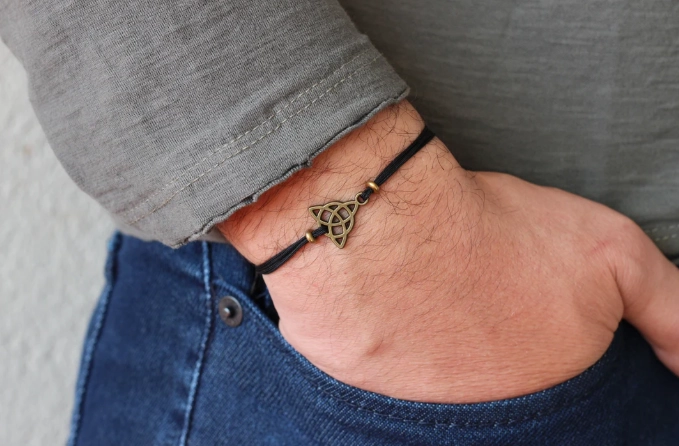
And that's perfectly valid. Jewelry design evolves. The move from a rigid ring or bangle to a bracelet on a chain is a modern adaptation. It speaks to how we wear jewelry now: more casually, more mixed, more personal. The chain adds a layer of delicacy and flexibility that the original solid form didn't have.
Breaking Down the Look: What Makes a Trinity Bracelet?
So, what are we actually looking at? Let's break it down into its parts, because the devil (and the quality) is in the details.
The Three Strands
This is the heart of it. Three individual bands or ropes, almost always of equal width, that are twisted or woven together along their entire length. They aren't just soldered together at the ends; they interact. The best ones have a fluid, almost braided movement. The materials matter immensely:
- Classic Tri-Gold: This is the Cartier signature. Yellow gold, rose gold, and white gold. It's timeless and adds visual warmth and coolness simultaneously.
- Single Metal: All sterling silver, all yellow gold, or all platinum. This creates a more subtle, tonal look where the texture of the weave is the star.
- Mixed Materials: I've seen some with ceramic strands, or gold combined with polished stainless steel. This is where it gets more fashion-forward.
The finish can be high-polish (shiny and elegant), matte (modern and understated), or a mix (like brushed centers with polished edges). A matte finish, honestly, is great for hiding everyday microscratches.
The Chain Connection
This is what transforms it. The Trinity motif becomes a pendant or a central charm on a chain. This changes everything about how it wears.
The chain isn't just a carrier; it's part of the design. A poorly chosen chain can ruin the proportion. You need balance. A delicate, small Trinity knot looks lost on a thick, heavy chain. A large, statement knot needs a chain with enough substance to support it visually.
My personal rule of thumb? The chain links should be roughly the same visual weight as one of the individual strands in the Trinity knot. It creates harmony.
Chain styles matter too. A classic cable link is secure and timeless. A Franco chain adds a bit more texture and strength. A very delicate box chain can look beautiful but might be more prone to kinking if you're not careful. I'd avoid snake chains for this – they can be a pain to repair.
The Clasp
Don't you dare overlook the clasp! This is the workhorse. A flimsy clasp on a piece you plan to wear daily is a heartbreak waiting to happen. Lobster clasps are the standard for a reason – they're secure and relatively easy to manage with one hand. Spring ring clasps are okay for very light pieces, but I'm always a bit nervous with them. For a higher-end piece, a jewelry safety chain or a box clasp with a safety latch is pure luxury and peace of mind.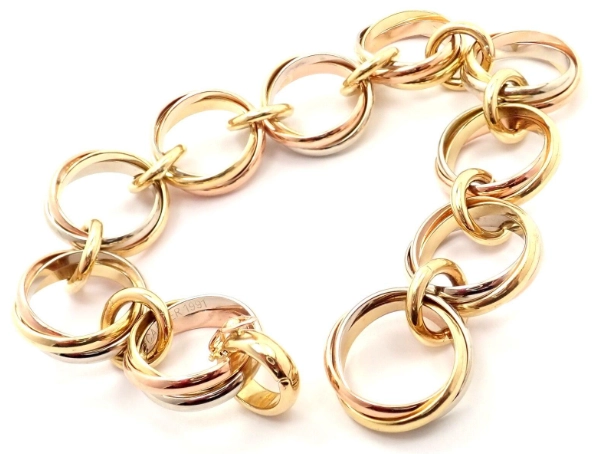
Let's compare the two main ways you'll find this design:
| Feature | Trinity Bracelet (Solid Bangle/Rigid) | Trinity Bracelet on a Chain |
|---|---|---|
| Fit & Comfort | Must be sized accurately. Can feel restrictive or slide/roll on the wrist. | Infinitely adjustable via chain length. Conforms to wrist shape, more comfortable for all-day wear. |
| Style & Versatility | A single, distinct statement. Harder to layer with other bracelets. | Extremely versatile. Can be worn alone, layered with other chains or bracelets. Looks different at different lengths. |
| Perceived Value | Often feels more substantial due to solid metal weight. | Can feel more delicate. Value is in the craftsmanship of the knot and chain. |
| Risk of Damage | Can get bent out of shape if knocked hard. | Chain can snag or break if too fine; the knot pendant is generally sturdy. |
| Best For | Those who love a classic, defined look and don't change jewelry often. | Those with active lifestyles, who love to stack jewelry, or prefer a fluid, adaptable accessory. |
See the difference? The on-chain version is the adaptable, easy-going sibling. It fits into your life, rather than asking your life to fit around it.
How to Actually Wear the Thing (Without Overthinking It)
This is where people get stuck. They buy a beautiful piece and then it lives in the box because they're not sure how to wear it. Nonsense. Let's fix that.
The Solo Act
Worn by itself, a Trinity bracelet on a chain is a minimalist's statement. Let it sit snugly on your wrist bone. The key here is length. You want just enough slack so it doesn't feel tight, but not so much that it's sliding halfway down your hand. For most women, a 7 to 7.5 inch chain is the sweet spot. For men, or for a looser look, 8 inches and up. It's a clean, meaningful look that goes with absolutely everything from a t-shirt to a blazer.
The Art of the Stack
This is its superpower. The linear, textural look of the Trinity knot is a perfect foil for other pieces.
The Classic Stack: Pair your Trinity chain bracelet with a simple, thin bangle (like a plain gold or silver one) and maybe a leather cord. The mix of materials and forms is eye-catching.
The Chain Gang: Layer it with other chain bracelets of different link styles. Maybe a paperclip chain and a Figaro chain. Keep the metals consistent (all gold-toned or all silver-toned) for cohesion, or mix them intentionally for a eclectic vibe. The Trinity bracelet on chain often becomes the focal point in this mix.
With a Watch: It looks fantastic next to a classic leather-strap watch. I'd avoid stacking it right against a metal watch bracelet—they can scratch each other and the clinking sound drives some people (me) crazy.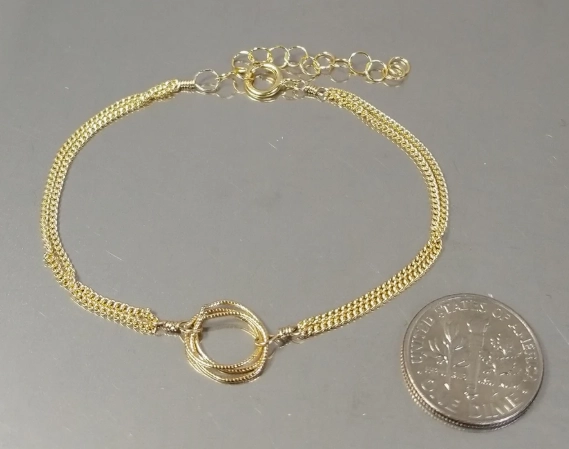
A word of caution on stacking: More is not always more. Two to three pieces total on one wrist usually looks curated. Beyond that, it can start to look cluttered and, practically speaking, can get annoying. Also, be mindful of hardness. Softer metals like pure gold will get scratched by harder metals like stainless steel or tungsten.
For Guys? Absolutely.
This isn't just a women's design. A thicker, more substantial chain with a larger, perhaps single-metal (like all black ceramic or sterling silver) Trinity knot looks incredibly sharp on a man's wrist. It's a subtle alternative to a chunky chain or a watch. Worn alone on the opposite wrist from a watch, it balances the look perfectly.
Navigating the Purchase: What You Need to Know Before You Buy
Alright, you're sold on the idea. Now, how do you navigate the minefield of options from $50 to $5,000? Let's talk brass tacks (or gold, or silver).
Material Truths
- Gold (Karat): 14k or 18k is the standard for fine jewelry. It's durable, has a rich color, and holds value. Gold-plated or gold-filled versions are much more affordable but the layer of gold will wear away over time, revealing the base metal (usually brass or copper) underneath. This is fine for a trend piece, but not for a "forever" item.
- Sterling Silver: A fantastic, affordable entry point for real solid metal. It's .925 pure silver. It will tarnish (turn darker) but is easily polished back. It has a cooler, brighter look than white gold.
- Stainless Steel: Highly durable, hypoallergenic, and affordable. It won't tarnish. Great for an active lifestyle. The downside? It can't be resized or easily repaired by a local jeweler, and it lacks the intrinsic value of precious metals.
- Platinum: The luxury option. Dense, heavy, naturally white, and hypoallergenic. It develops a beautiful patina over time. This is a serious investment.
You can verify standard precious metal markings through resources like the Jewelers of America website, which has consumer guides on metal quality.
Authentic vs. Inspired
This is a big one. A genuine Cartier Trinity bracelet on a chain will cost several thousand dollars. You are paying for the brand heritage, exceptional craftsmanship, and high-karat gold. It will come in iconic packaging, have a certificate, and be engraved with the Cartier logo and metal marks.
An "inspired" or "alternative" piece uses the same design concept but is made by another brand or jeweler. This is where 99% of the market lives. There is a huge range in quality here, from beautiful, well-made solid gold pieces from independent jewelers to cheap, flimsy fashion jewelry.
My take? There's no shame in either path. Just know what you're buying. If you want the status and specific Cartier design, save up for the real deal. If you love the symbolism and look, a well-crafted piece from a reputable silversmith or brand can be just as meaningful and beautiful. The key is transparency from the seller.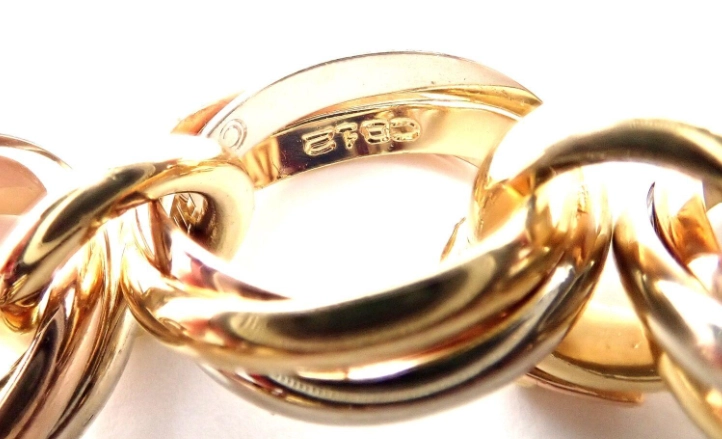
Key Quality Checks (Even Online)
- Clasp Security: Read product descriptions and reviews specifically about the clasp. "Feels cheap" or "broke quickly" are major red flags.
- Chain Link Integrity: Look for close-up photos. Links should be evenly soldered (if required) with no gaps or rough spots.
- Weave/Interlock Detail: The three strands should look neatly braided, not just stuck together. There should be a sense of dimension.
- Return Policy: Always, always buy from a seller with a reasonable return policy. You need to feel the weight and see the color in person.
Caring for Your Bracelet: Keep It Looking New
A piece you wear every day needs a little love. Here’s a simple, no-fuss care routine.
| Material | Daily Care | Cleaning | What to Avoid |
|---|---|---|---|
| Gold (10k-18k) | Wipe with a soft cloth after wear to remove oils. | Mild soap, warm water, soft toothbrush. Rinse & dry thoroughly. | Chlorine pools, harsh chemicals (bleach, cleaners). |
| Sterling Silver | Store in an anti-tarnish bag or cloth when not worn. | Silver polish cloth for tarnish. Soap/water for dirt. | Exposure to sulfur (eggs, rubber bands), salt water, lotions. |
| Stainless Steel | Very low maintenance. Wipe clean. | Mild soap and water. Can handle more vigorous cleaning. | Extreme abrasives (steel wool). |
| Gold-Plated | Be gentle. Put on after makeup/perfume. | Damp cloth only. Do not scrub. | Water, chemicals, abrasion. This coating WILL wear. |
The universal rule? Take it off last, put it on first. Perfume, hairspray, and lotions can build up and damage metals and finishes. Do the dishes, hit the gym, and garden without it. A little precaution goes a long way in keeping your Trinity bracelet on its chain looking perfect.
Final Thoughts: Is It Right For You?
Look, not every trend is for everyone. But the Trinity bracelet on a chain has stuck around for a reason—it's not really a trend. It's a design classic that got an upgrade. It bridges the gap between meaningful symbolism and wearable, everyday style.
If you're looking for a piece that can be both a personal talisman and a workhorse accessory, that you can dress up or down, and that has a design intelligence deeper than just being pretty, then this might be your perfect match.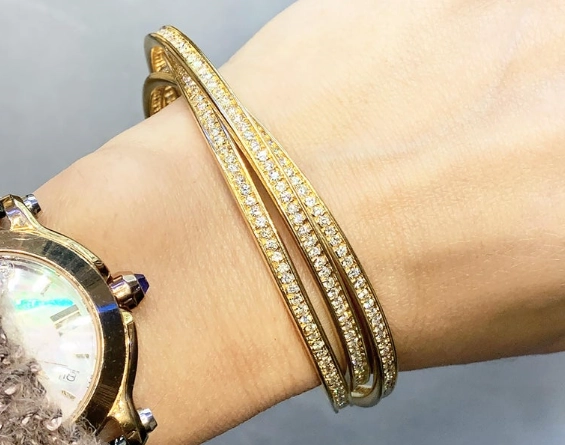
Start by deciding your budget and material preference. Look for quality in the clasp and the weave. And then, just wear it. Let it become part of your story, your past, present, and future, one day at a time.
The best jewelry doesn't just sit on you; it becomes part of you. A well-chosen Trinity bracelet on a delicate chain has a funny way of doing exactly that.