In This Article
- Why the "Is It Still Stylish?" Question Even Exists
- The Core Reasons It Never Really Left
- How the Style Has Actually Evolved (The Good and The Meh)
- Your Practical Guide to Wearing It Now
- The Investment Angle: Is It *Actually* Worth It?
- Trinity vs. The World: How It Stacks Up Against Other Icons
- Care and Keeping of an Heirloom
- Addressing Your Burning Questions (FAQs)
- Final, Unvarnished Thoughts
You're probably asking because you've seen it everywhere, then nowhere, then on someone's wrist again and thought... wait, is that still cool? I get it. Fashion moves fast, and what was "it" five years ago can feel dated faster than you can say "algorithm." But jewelry, especially the kind with a serious history, plays by different rules. The short, honest answer is yes, absolutely. The Cartier Trinity bracelet is not just "in style"—it's cemented itself as a permanent fixture, a classic that outlives trends. But the real question isn't a simple yes or no. It's how it's in style now, who's wearing it, and whether it makes sense for your own wardrobe and wallet today.
I remember first really noticing it on a friend who's not a flashy dresser. She had it stacked with a simple leather band, and it looked effortless, not like she was trying to show off a luxury logo. That's when it clicked for me. The style hadn't disappeared; it had just evolved, shed its earlier "status symbol" sheen for something more integrated and personal.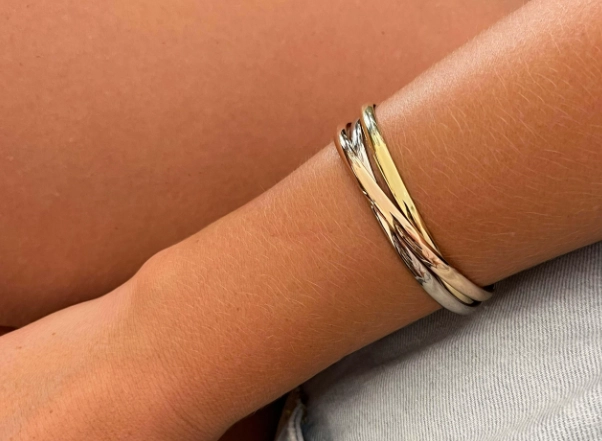
Why the "Is It Still Stylish?" Question Even Exists
Every iconic piece goes through cycles of saturation. The Trinity bracelet, particularly the classic model with the three interlinked bands, had a massive moment in the 2010s. It was the "it" gift, the graduation present, the self-purchase milestone. That kind of visibility naturally leads to a backlash. People start to think, "Ugh, everyone has one." But "everyone having one" is often what transitions an item from a trend to a staple. Think Levi's 501s or a trench coat. The challenge for any piece reaching this stage is avoiding feeling stale.
The bracelet faced this. Some critics called it boring. Others said it was too common. But here's the thing about commonality—it often breeds versatility. Because so many people have it and have worn it in so many ways, its style language has expanded.
The Core Reasons It Never Really Left
That Design is Just... Smart
Louis Cartier was onto something in 1924. Three interwoven rings, three colors of gold (yellow, white, rose), symbolizing love, fidelity, and friendship. It's a neat story, but beyond the symbolism, the design is mechanically elegant. It moves. It catches light from every angle. It has weight but isn't clunky. This isn't a flat, static charm on a chain. The three-dimensional, rotating form means it always looks a bit different. That inherent kinetic quality keeps it from being static or boring on the wrist, which is a huge plus for something you might wear every day.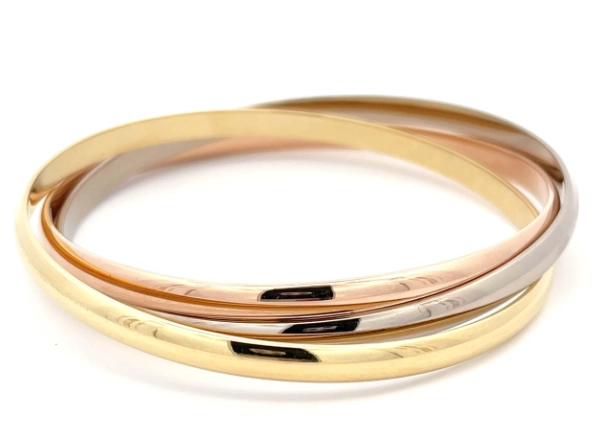
It Became a Canvas, Not Just a Statement
This is the biggest shift in its style status. Initially, it was often worn solo—a singular, elegant statement on a bare wrist. Today, the most modern way to wear it is stacked. It's become the ultimate mixing piece. Its tri-color gold design means it literally goes with any other metal. Silver-toned bracelet? The white gold band ties it in. Yellow gold bangle? The yellow gold band connects. It's the diplomatic ambassador of your jewelry box. This functionality has given it a new lease on life. People aren't just asking, "Is the Trinity bracelet still in style?" They're asking, "Which beads and bangles can I stack it with?"
The Rise of "Quiet Luxury" and Permanent Collections
The fashion conversation has (thankfully) swung away from loud logos and obvious flexes towards quieter, well-made pieces. They call it quiet luxury, stealth wealth, all that. The Trinity bracelet fits this mood perfectly. To the untrained eye, it's a lovely tri-color bangle. To those who know, it's a Cartier icon. That subtlety is deeply in vogue. Furthermore, as people invest more thoughtfully in their wardrobes, they're buying fewer, better things meant to last decades. The Trinity is the poster child for this. It's not a seasonal item; it's a permanent part of Cartier's core collection, which itself signals timelessness.
How the Style Has Actually Evolved (The Good and The Meh)
It's not frozen in time. Cartier has played with the formula, and how people wear it has changed dramatically.
| Era / Style | How It Was Worn | Vibe & Notes |
|---|---|---|
| The Classic (80s-00s) | Solo, on the wrist. Often a gift for milestones. | Elegant, formal, a clear symbol of luxury and romance. Could feel a bit stuffy or "ladies who lunch." |
| The Peak Trend (2010s) | Still often solo, but becoming a must-have accessory. Paired with watches. | The "it" bracelet. Started to feel ubiquitous. Risked losing its specialness through overexposure. |
| The Modern Iteration (2020s - Present) | Almost exclusively stacked. Mixed with beads, leather, other gold, even smart watches. | Casual, personalized, integrated. Less about the bracelet itself, more about its role in an ecosystem. This is what keeps it feeling fresh. |
| Cartier's New Takes | Trinity bracelets with diamonds, hammered finishes, or smaller, more delicate chains integrated. | Appeals to those who find the classic too plain or want more sparkle. The hammered finish, in particular, feels more modern and tactile. |
I have to be honest, some of the super diamond-paved versions feel like they're trying too hard. They lose the simple, geometric purity that made the original so strong. But that's just my take—if bling is your thing, they've got you covered.
So, is the Trinity bracelet still fashionable? The evidence is in how it's adapted.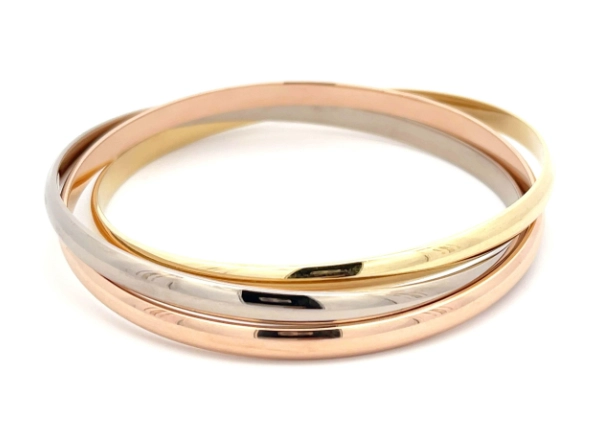
Your Practical Guide to Wearing It Now
Let's move from theory to your wrist. If you're considering one or pulling an old one out of the box, here’s how to make it look and feel current.
The Stacking Strategy (This is Key)
Forget the solitary display. The goal is curation, not coordination.
- Mix Textures: Pair the smooth, polished Trinity with a rope chain bracelet, a hammered gold bangle, or a bracelet with braided details. Contrast is your friend.
- Incorporate Non-Metals: A black or brown leather band, a single black onyx bead, or even a simple woven thread bracelet immediately ground the Trinity and make the look feel less precious.
- Play with Scale: If you have the classic larger model, add thinner pieces. If you have the smaller, more delicate Trinity, let it sit next to a chunkier (but not overpowering) bangle.
- The Watch Combo: It works brilliantly with both delicate dress watches and sportier models like a Cartier Tank or even an Apple Watch with a classic leather band. The tri-color gold acts as a bridge.
Dress It Up, Dress It Down
Casual: With a crisp white t-shirt, jeans, and a blazer. Stack it as described above.
Office: Solo or with one other thin bangle under a sweater or shirt cuff. It's a subtle peek of sophistication.
Evening: You can go back to wearing it solo for a cleaner look with a little black dress. Or, pair a diamond-paved Trinity version with other diamond tennis bracelets for serious sparkle.
The Investment Angle: Is It *Actually* Worth It?
Beyond style, people buy Cartier for longevity and value. Let's talk brass tacks.
Unlike many fashion items, a Cartier Trinity bracelet from the core collection retains its value remarkably well. It's not an "investment" like a stock that will skyrocket, but it's an asset that holds. You can often resell it for a significant percentage of its retail price, especially if you have the original box and papers. This is documented by pre-owned luxury platforms and industry analyses on iconic Cartier pieces. The key drivers are the brand's timeless reputation, the permanent collection status, and the high-quality materials (18k gold).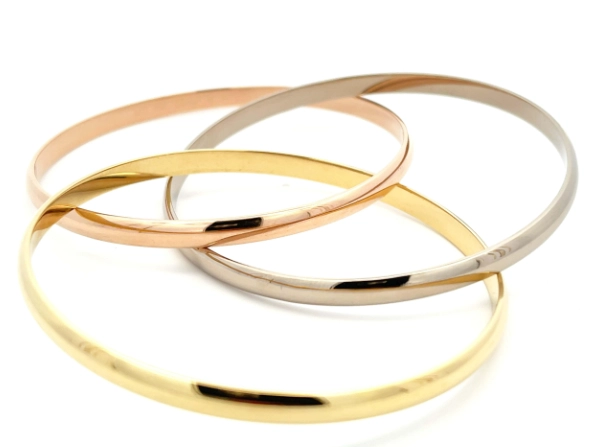
However, and this is crucial, its value is emotional and stylistic as much as financial. If you don't love the style and won't wear it, it's a terrible "investment," no matter what the resale forums say. Buy it because it brings you joy and complements your life, not because you think it's a gold bar (though, it partly is).
Trinity vs. The World: How It Stacks Up Against Other Icons
It's often compared to the Cartier Love bracelet. The Love is more iconic and recognizable—and more expensive. It's also a louder statement (literally, with its screw motif). The Trinity is softer, more fluid, and frankly, more comfortable for daily wear as it's not a rigid cuff. The Love can feel like armor; the Trinity feels like jewelry.
Against other classic bracelets like a Van Cleef & Arpels Sweet Alhambra or a simple gold bangle, the Trinity's unique selling point remains its movement and tri-metal design. It's more dynamic than a static motif or a plain band.
Care and Keeping of an Heirloom
If you're going to wear it daily, it will get scratches. This is not a flaw; it's a patina. The high-polish gold is a scratch magnet. Some people hate this. I think it adds character—it becomes yours. If you're a perfectionist, this will drive you nuts. Cartier offers polishing services, but know that each polish removes a tiny layer of gold.
For cleaning, a soft toothbrush with a drop of mild dish soap in warm water works wonders. Dry thoroughly. Store it separately in its pouch to avoid scratches from other pieces. Simple.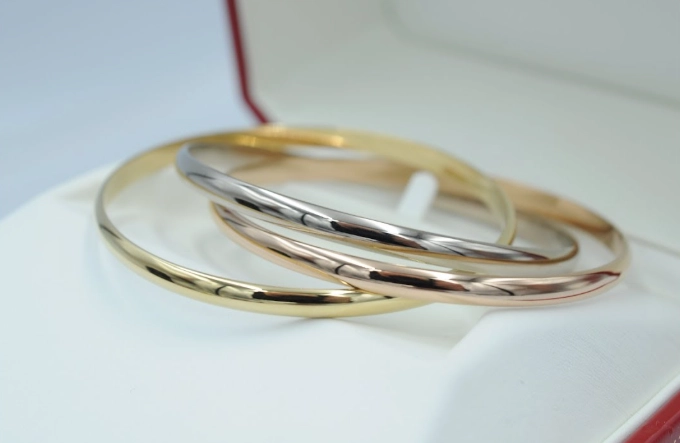
Addressing Your Burning Questions (FAQs)
Final, Unvarnished Thoughts
Look, no piece of jewelry is for everyone. If you find the Trinity boring or overdone, that's a valid feeling. Don't buy it because some article (even this one) says it's a classic. But if you're drawn to its symbolism, its clever design, and you see it as a workhorse for your accessory wardrobe, then its style status is the least of your concerns.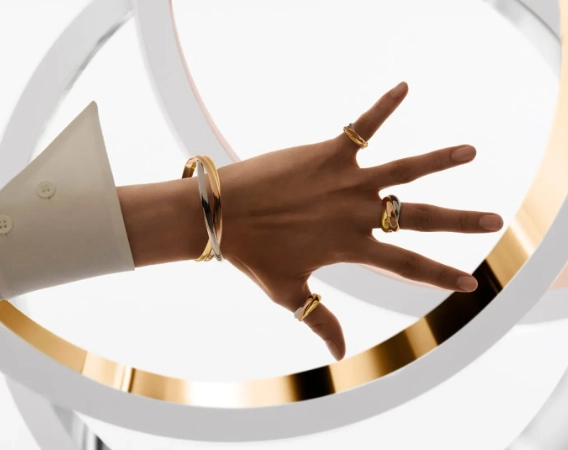
It has done the hard work of moving from a passing fancy to a permanent resident in the world of style. It's graduated. The conversation around the Trinity bracelet is no longer "is it stylish?" but rather "how are you wearing yours?" And that's the sign of a true style icon.
So, go ahead. Pull yours out, or start planning that try-on at the boutique. Just remember to bring along your most casual bracelet to see how they stack up. That's where the real magic—and the answer to your style question—happens.