Quick Guide
- Why Small Real Gold Hoops Are a Wardrobe Game-Changer
- Decoding "Real Gold": Karats, Colors, and What You're Actually Buying
- Defining "Small": A Size Guide That Actually Makes Sense
- The Nuts and Bolts: Clasps, Closures, and Construction
- Where to Buy & How to Spot the Real Deal
- Caring for Your Little Gold Treasures
- Answering Your Real Questions (The FAQ Section)
- Final Thoughts: Making the Choice That's Right for You
Let's talk about small real gold hoop earrings. You know the ones. They're not the giant, statement-making hoops your aunt might wear. I'm talking about the subtle, elegant circles that catch the light just right when you turn your head. The kind you can wear to a board meeting and then straight to dinner without feeling overdone. If you're here, you're probably past the costume jewelry phase. You want something real, something that lasts, something that feels like you. And you've landed on the idea of small gold hoops. Smart move.
But then the questions start. Is 14K gold good enough? What size is actually "small"? How do I know I'm not getting ripped off? I remember staring at online listings for hours, zooming in on pictures trying to gauge the thickness of the wire, wondering if "gold-toned" was just a fancy way of saying "will turn your ears green in a month." It's frustrating. Jewelry shopping should be fun, not a research project.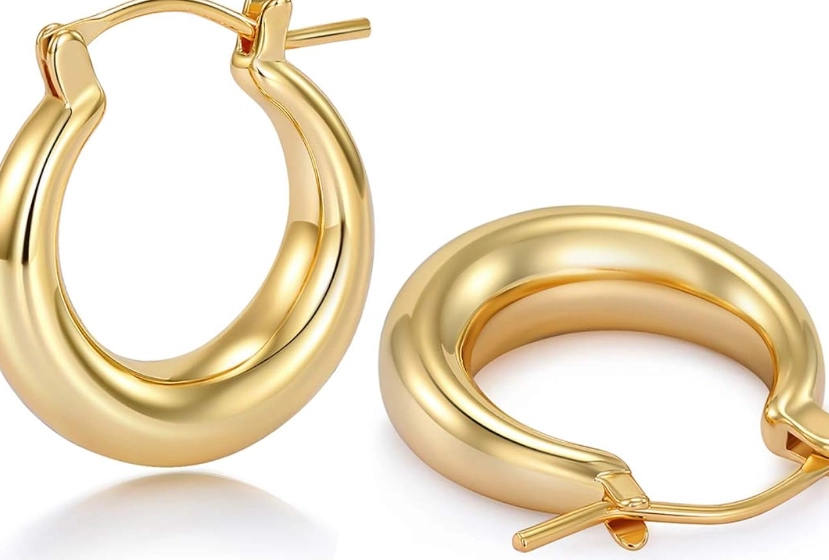
Well, I've done a lot of that research for you. This isn't about pushing a particular brand. It's about giving you the straight talk so you can walk into any store (or browse any site) and know exactly what you're looking at. We're going to break down everything—from the science of gold karats to the art of styling—so you can find your perfect pair of real gold hoop earrings small in size but huge in impact.
Why Small Real Gold Hoops Are a Wardrobe Game-Changer
First off, let's address the elephant in the room. Why spend money on real gold when there are so many cheap alternatives? I used to think that way too. I had a drawer full of $20 earrings that looked great... for about three wears. Then the plating wore off, the clasps broke, or my ears got irritated. It was a cycle of waste and disappointment.
Investing in a pair of small real gold hoop earrings breaks that cycle. Gold is hypoallergenic for most people (more on that later), it doesn't tarnish, and it holds its value. But beyond the practical stuff, there's the feel. Real gold has a weight and a warmth that fake stuff just can't replicate. It's the difference between a polyester blouse and pure silk. Both cover you up, but one feels like an experience.
They're the ultimate "wear-everywhere" earring.
Think about your daily routine. You need something that goes with a sweatshirt for school drop-off, a blouse for work, and a little black dress for last-minute plans. A small, classic hoop does that. It's not competing with your outfit; it's complementing it. It adds polish without effort. That's the magic of a well-chosen pair of small gold hoop earrings. They're quiet confidence, metal edition.
My first "real" jewelry purchase was a pair of 14K gold hoops, about 12mm in diameter. I was so nervous spending that much money on something so small. That was five years ago. I've worn them probably 90% of days since—through showers, workouts, travel, you name it. They look exactly the same as the day I bought them. The cost-per-wear is now fractions of a cent. That drawer of broken, discolored earrings? Long gone. That single purchase changed how I viewed accessories entirely.
Decoding "Real Gold": Karats, Colors, and What You're Actually Buying
This is where many people get tripped up. "Gold" on a tag doesn't tell the whole story. Pure gold is 24 karats (24K), but it's too soft for everyday jewelry like hoop earrings. It would bend and scratch easily. So, it's mixed with other metals to create an alloy that's more durable. That's where the karat number comes in—it tells you the proportion of pure gold in the piece.
| Gold Karat | % Pure Gold | Key Characteristics | Best For... |
|---|---|---|---|
| 24K | 99.9% | Rich yellow color, very soft, easily scratched. Rarely used for hoops. | Investment pieces, ceremonial jewelry. |
| 18K | 75% | Excellent balance of rich color, value, and durability. Slightly softer than 14K. | Those who prioritize color and luxury and are moderately careful with jewelry. |
| 14K | 58.3% | The most popular choice in the US. Great durability, good color, more affordable than 18K. | Everyday small gold hoop earrings. Perfect balance of practicality and beauty. |
| 10K | 41.7% | The most durable and affordable legal "gold" alloy in the US. Color can be paler. | Very active lifestyles, tight budgets, or for kids' jewelry. |
For real gold hoop earrings small meant for daily wear, 14K is the sweet spot for most people. It's durable enough to handle life, maintains a beautiful gold color, and is more affordable than 18K. I personally find 10K can sometimes look a bit lackluster—the lower gold content means more alloy metals, which can mute the classic gold shine. 18K is gorgeous, but if you're rough with your hands or tend to snag earrings, you might see more dings over time.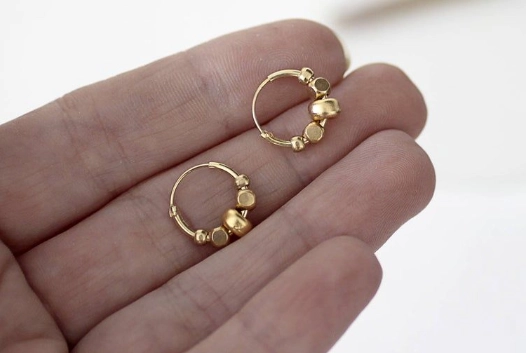
Yellow, White, or Rose Gold?
The color of your gold is determined by the metals it's alloyed with. It's not just a surface plating; the color goes all the way through.
- Yellow Gold: The classic. Mixed with copper and silver. Timeless and warm. It complements most skin tones beautifully.
- White Gold: Alloyed with metals like palladium or nickel (caution for nickel allergies!) and usually plated with rhodium for a bright, silvery finish. The rhodium can wear off over years, requiring re-plating to maintain the bright white look.
- Rose Gold: Contains a higher copper content, giving it a pinkish hue. Romantic and vintage-looking. It's become incredibly popular and is often very flattering.
My two cents? For your first pair of essential small hoops, go with yellow or rose gold. White gold's need for re-plating adds a hidden long-term cost and hassle. The warmth of yellow or rose gold also tends to look more "real" and luxurious in the small, subtle form of a little hoop.
Defining "Small": A Size Guide That Actually Makes Sense
"Small" is relative. What a jeweler calls small and what feels small dangling from your earlobe can be different. Sizing is usually given in millimeters (mm) for diameter—the distance across the circle.
Here's a practical breakdown of what to expect from different sizes of real gold hoop earrings small in scale:
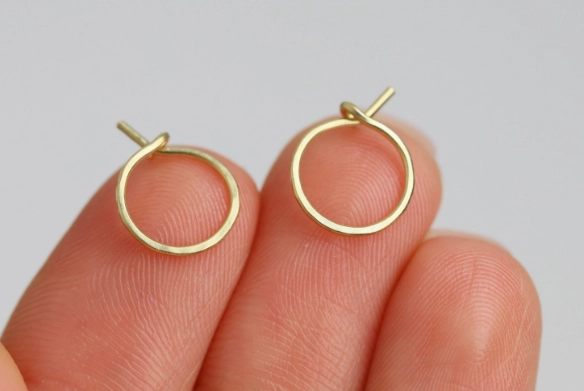
- 8mm - 12mm (approx. 1/3" - 1/2"): The true "small" hoops. Ultra-discreet, perfect for a minimalist look, second/third ear piercings, or if you just want a tiny glint. These are the "I woke up like this" earrings.
- 13mm - 20mm (approx. 1/2" - 3/4"): The classic, versatile range. This is the most popular size for everyday wear. They're noticeable and elegant without being loud. A 16mm or 18mm hoop is what most people picture.
- 21mm - 30mm (approx. 3/4" - 1.2"): Entering medium/statement territory. Great for when you want your earrings to be a focal point.
Don't just guess.
Grab a ruler or a measuring tape. Hold it up to your ear in the mirror. Cut a little circle out of paper at the diameter you're considering and hold it up. It sounds silly, but it works. I thought I wanted 20mm hoops until I did this and realized they looked huge on my small earlobes. I ended up with 14mm, and they were perfect.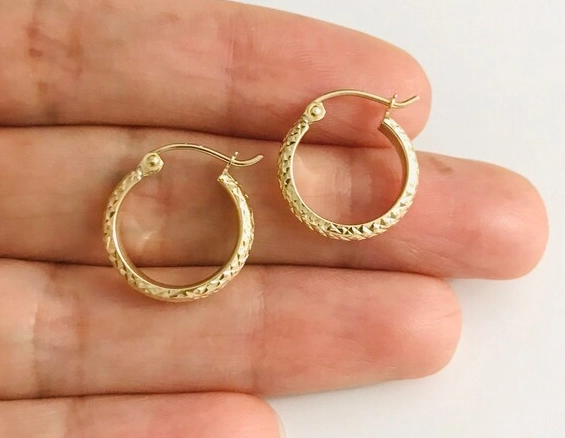
Wire Thickness Matters Too
A small hoop can be made with a dainty, almost thread-like wire or a thicker, more substantial one. Thinner wire (like 1mm) is ultra-feminine and delicate. Thicker wire (1.5mm or more) feels more modern, architectural, and durable. A thicker wire on a small hoop is a really cool look—it gives presence without size.
The Nuts and Bolts: Clasps, Closures, and Construction
This is the boring-but-critical stuff. The closure is what keeps your precious investment securely in your ear. For small hoops, you typically see a few types:
The Seamless/Tube Hoop (Huggie): This is a continuous circle that slips through your ear piercing. It usually has a small, built-in hinge or a very subtle opening that clicks shut. Huggies are incredibly secure and comfortable because there's no clasp poking the back of your neck or head. They "hug" the earlobe. For true small gold hoop earrings meant for sleeping in or ultimate low-profile wear, huggies are king.
The Lobster Clasp: A classic. The hoop has a hook that closes into a spring-loaded clasp. Very secure, easy to put on and take off. The clasp itself can be a small decorative element or very simple. The potential downside is that the clasp can sometimes catch on hair or clothing.
The Leverback: Similar to a latch on a gate. You open the lever, put it through your ear, and snap it closed. Extremely secure—almost impossible to lose accidentally. They often have a dangling element or a more decorative back. They can be less comfortable for side-sleepers as the lever mechanism sits behind the earlobe.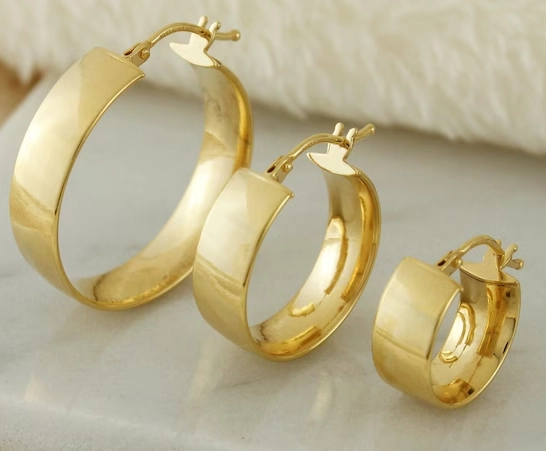
Watch out for "clickers" or cheap hinge closures on supposedly real gold pieces. If the hinge feels gritty, loose, or is made from a different-colored metal, it's a red flag. The closure should be made from the same solid gold as the hoop and operate smoothly. A poorly made clasp is the first thing to break.
Where to Buy & How to Spot the Real Deal
This is the part that causes the most anxiety. The market is flooded with listings for "real gold hoop earrings small." How do you navigate it?
Trusted Hallmarks and Stamps
Legitimate real gold jewelry will be stamped with its karat weight. Look for tiny markings like "14K," "585" (which means 14K), "18K," "750" (18K), etc. This stamp should be on the clasp or on the inside of the hoop itself. You might need a magnifying glass. No stamp? Be very, very skeptical. It's a basic requirement. Reputable institutions like the American Gem Society (AGS) and the JCK industry magazine emphasize the importance of proper hallmarking for consumer protection.
Reputable Sellers
- Local Independent Jewelers: My top recommendation if you have a good one nearby. You can see and feel the weight, test the clasp, get expert advice, and often get sizing adjusted on the spot. You're supporting a small business, and they rely on reputation.
- Established Online Retailers: Brands with a long-standing physical and online presence (think Blue Nile, James Allen, or even the fine jewelry sections of department stores). They have clear return policies and customer service.
- Direct-to-Consumer Brands: Many modern brands (like Mejuri, Catbird, etc.) specialize in this kind of everyday fine jewelry. They often offer clean designs and good value. Do your homework on their reviews and policies.
I bought my hoops from a local jeweler who has been in business for 40 years. He spent 20 minutes with me explaining the differences in wire gauge, let me try on four different sizes, and showed me how to properly open and close the clasp. That service was worth any potential small price difference from an online discounter. Plus, I know where to go if I ever need them cleaned or repaired.
Be extra cautious on massive online marketplaces. While there are legitimate sellers, there are also many selling gold-plated or gold-filled pieces as "solid gold." Gold-filled has a thicker layer of gold than plating but is still a layer over a base metal, not solid through and through. It's not a bad product for its price, but it's not what you're looking for if you want lifelong real gold hoop earrings small.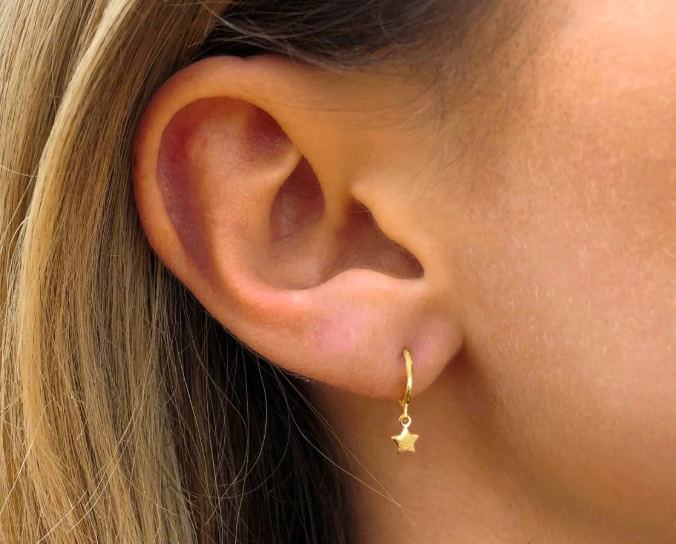
Caring for Your Little Gold Treasures
The good news? Real gold is low-maintenance. It won't rust or corrode. But to keep your small hoops shining, a little care goes a long way.
- Last On, First Off: Put your earrings on after hairspray, perfume, and makeup. These products can contain chemicals that create a dull film on gold over time.
- Simple Cleaning: A soft soak in a bowl of warm water with a few drops of mild dish soap. Gently scrub with a super-soft baby toothbrush, rinse, and pat dry with a lint-free cloth. Do this every month or two if you wear them daily.
- Storage: Don't just toss them on your dresser. Keep them in a soft pouch or a jewelry box with separate compartments to prevent scratches. Those little boxes they come in are perfect.
You really can sleep and shower in them.
But should you? If they're secure huggies, technically yes. Gold is fine with water. However, I take mine out to sleep. Not because of the gold, but because I'm a side-sleeper and any pressure on my ear cartilage is uncomfortable. It also minimizes any tiny risk of the earring getting caught on bedding. It's a personal call.
Answering Your Real Questions (The FAQ Section)
Final Thoughts: Making the Choice That's Right for You
Choosing your pair of real gold hoop earrings small is a personal journey. It's about finding the circle that fits your life, your style, and your budget. Don't get paralyzed by the options. Start with the non-negotiables: solid gold (14K is a safe bet), a size that feels right on your ear, and a secure closure from a seller you trust.
Everything else—yellow vs. rose, a slightly thicker wire, a seamless vs. clasped back—is just flavor. These are the details that make them uniquely yours.
The goal isn't to buy a piece of jewelry. It's to buy a future heirloom that you get to enjoy every single day, right now. It's the small, silent luxury of knowing what you're wearing is real, is lasting, and is effortlessly you. That's a feeling no fast-fashion accessory can ever provide.
So take a breath, use this guide as your roadmap, and go find your hoops. You've got this. And when you put them on for the first time and catch your reflection, you'll know it was worth the search.