Quick Guide
Let's talk about real gold hoop earrings 14k. You see them everywhere, right? From that friend who never takes hers off to the classic look in every jewelry ad. There's a reason they're a staple. But the moment you start looking to buy a pair for yourself, the questions pile up. Is 14k good enough? How do I know it's real? Why does the price swing so wildly? Is "solid" gold the same as "real" gold?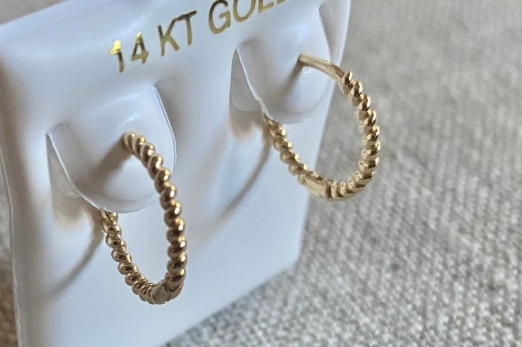
I remember shopping for my first pair. I was overwhelmed. The salesperson threw terms like "karat," "alloy," and "post thickness" at me, and I just nodded, completely lost. I ended up with a pair that was too heavy for my lobes, and I hardly wore them. A costly lesson.
This guide is here to make sure that doesn't happen to you. We're going to strip away the jargon and the sales fluff. We'll dig into what makes real 14k gold hoop earrings a fantastic choice (and when they might not be), how to spot the good stuff from the bad, and how to pick a pair you'll actually want to wear for decades.
Why 14k Gold? The Sweet Spot Explained
Pure gold is 24 karats. It's also incredibly soft—you could practically bend a pure gold ring with your hands. That's no good for hoop earrings that need to hold their shape. So, we mix it with other metals like silver, copper, zinc, or nickel to make it stronger. That's what the "k" stands for.
14k gold means 14 out of 24 parts are pure gold. That's about 58.3% gold. The rest is those strengthening metals. It's the most popular choice in the US for a few solid reasons.
First, it hits the perfect balance. It has a rich, warm color that's unmistakably gold, but it's durable enough for daily wear. You can sleep in them, run errands, live your life. A higher karat like 18k (75% gold) is softer and can scratch and dent more easily. 10k gold (41.7% gold) is tougher but has a noticeably paler color—some people think it looks a bit washed out.
Second, it's more affordable than higher karats. You're getting a significant amount of real gold, but the price isn't as eye-watering as 18k or 22k. For a piece you plan to wear all the time, this balance of value, durability, and beauty is hard to beat. That's why when people search for real gold hoop earrings 14k, they're usually looking for this practical luxury.
You might ask, "What about the alloy metals?" This is important. The mix of metals used (the alloy) determines the final color. Yellow gold uses alloys like copper and silver. White gold is usually alloyed with nickel or palladium and then plated with rhodium for that bright white shine (which may need re-plating over years). Rose gold gets its pink hue from a higher copper content.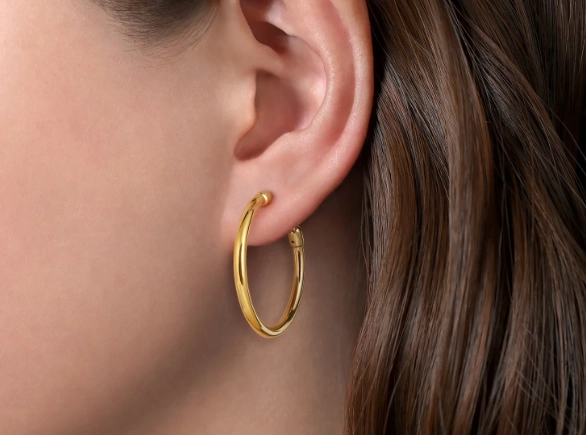
Solid, Hollow, or Plated? Understanding Construction
This is where many shoppers get tripped up. The word "gold" on a tag doesn't tell the whole story. The construction is everything for feel, price, and longevity.
Solid Gold Hoops
These are what most of us mean when we say "real gold hoop earrings 14k." The entire piece is made from a uniform sheet or wire of 14k gold alloy. They're substantial, have a satisfying weight, and will last a lifetime (or three). If they get scratched, you can polish them, and the color is consistent throughout. This is the investment option.
The downside? Cost and weight. Larger hoop styles in solid gold can be pricey and surprisingly heavy, which some people find uncomfortable for all-day wear.
Hollow Gold Hoops
These are made from a thin sheet of gold formed into a hollow shape. They look just as large as solid hoops but weigh a fraction of the amount and cost significantly less. They're great for big, statement hoops where solid gold would be prohibitively expensive and heavy.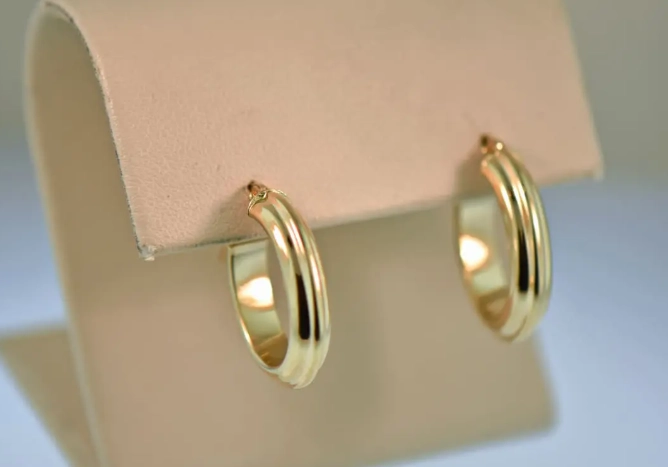
But here's the catch: they are delicate. If you sit on them or crush them in a travel case, they can dent permanently and are very difficult to repair. I'd be cautious with hollow hoops as an everyday workhorse pair.
Gold-Filled or Gold-Plated
These are not real gold hoop earrings in the sense we're discussing. Gold-filled items have a thicker layer of gold bonded to a base metal (like brass), much more substantial than plating. They can last for years with care. Gold-plated items have a microscopic layer of gold over base metal and will tarnish and wear off relatively quickly.
For a lifelong piece, solid is the way. For trendy, large styles you might not wear forever, hollow or gold-filled can be smart budget choices. Just know what you're buying.
| Construction Type | What It Is | Best For | Major Drawback |
|---|---|---|---|
| Solid 14k Gold | Entire piece is 14k gold alloy. | Lifetime investment, daily wear, heirlooms. | Highest cost, can be heavy. |
| Hollow 14k Gold | Thin gold sheet formed into hollow shape. | Large, lightweight statement styles on a budget. | Very delicate, easily dented, hard to repair. |
| Gold-Filled | Thick layer of gold bonded to base metal. | Affordable, durable medium-term option. | Not a lifetime piece, value doesn't appreciate. |
| Gold-Plated | Thin layer of gold electroplated over base metal. | Fast fashion, trying a trend. | Wears off quickly, can cause skin irritation. |
Picking Your Perfect Pair: Diameter, Thickness, and Closure
Style isn't just about looks. It's about how they feel on *your* ears.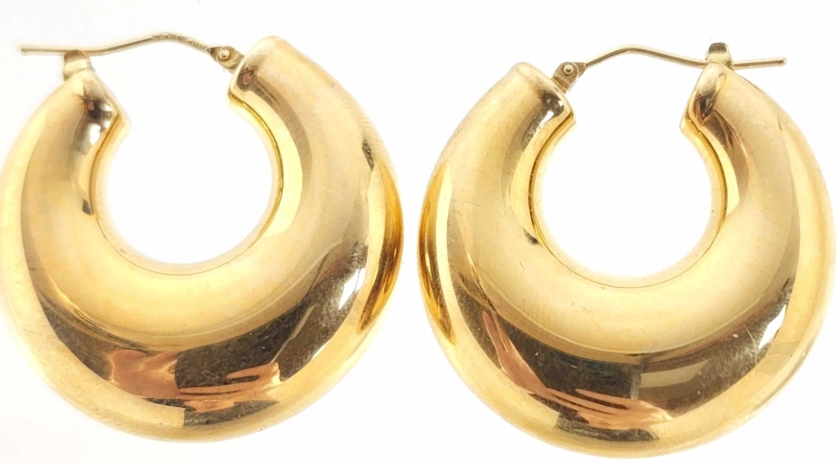
Diameter: How Big Should They Be?
Hoop sizes are usually measured by their outer diameter in millimeters (mm).
- Small (10-16mm): The "huggie." Sits close to the earlobe. Ultra-comfortable, perfect for sleeping, stacking, or a minimalist look.
- Medium (18-25mm): The classic. Sits just below the earlobe. This is the go-to size for most people—noticeable but not overwhelming. A pair of 20mm real gold hoop earrings in 14k is arguably the most versatile piece of jewelry you can own.
- Large (30mm+): Statement makers. These demand attention and can feel very different when you wear them. They catch more on hair and collars. Try before you buy if you can.
Cut a piece of string or paper to the diameter you're considering and hold it up to your ear in the mirror. It helps.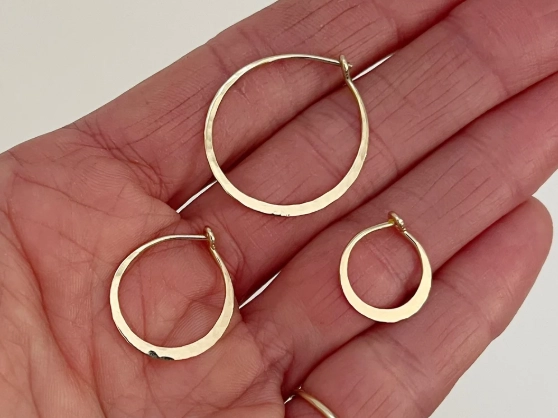
Wire Gauge: The Thickness Matters
This is the thickness of the actual hoop wire. It's measured in millimeters or sometimes by gauge (a lower gauge number means thicker wire).
- Thin Wire (0.8mm - 1.2mm): Delicate and feminine. Great for smaller hoops. Can feel a bit sharp or cut into the ear if the hoop is too tight.
- Medium Wire (1.5mm - 2.0mm): The standard. Offers a good presence, feels substantial, and is durable. This is what you'll find on most quality hoops.
- Thick Wire (2.5mm+): Chunky and modern. Makes a bold style statement. Can be heavy, especially in larger diameters.
Closure Types: Security vs. Ease
This is a huge factor in daily usability.
- Latch-back or Leverback: A hinged post that clicks securely into a latch. Very secure, great for active wear. Can be fiddly to put on until you get the hang of it.
- Hinged Snap Closure: The hoop has a hinged segment that snaps snugly into the other end. Clean look, relatively secure. My personal favorite for everyday.
- Open Hoop with Fishhook: No closure. You simply slide the pointed end through your piercing. Easy on/off, but the least secure. One wrong move and it's on the floor. I've lost one this way—never again for daily wear.
- Threaded or Screw-back: The post screws into the back. Maximum security, often used for diamond studs. Overkill for simple hoops and annoying to put on.
Allergies and Nickel Content
This is a major pain point for many. While pure gold is hypoallergenic, the alloy metals in 14k gold can cause reactions. Nickel is a common culprit. If you have sensitive ears, look specifically for "nickel-free" 14k gold. Many jewelers now use alloys with palladium or other metals for white gold to avoid this. Reputable sellers should be able to confirm the alloy composition. The ASTM International sets standards for metal alloys, which can be a useful reference point for understanding material safety.
How to Spot Fakes and Get What You Pay For
The market is flooded with convincing fakes. Here’s how to protect yourself.
- The Stamp is Your First Clue: Look for "14k," "585," or "14kt" stamped in an inconspicuous spot (inside the post or on the closure). No stamp? Walk away. A stamp that looks fuzzy, uneven, or scratched on is a red flag.
- Magnetism Test: Real gold is not magnetic. Get a strong magnet (a rare-earth neodymium magnet works best). If the earring is attracted to it, it contains significant ferrous (iron-based) metals and is not solid gold. Note: This isn't foolproof, as some fake alloys are also non-magnetic.
- Check for Discoloration: Look closely at areas of wear, like the post or where the closure rubs. On plated fakes, you'll often see a different, brassy-colored metal peeking through. Solid gold is the same color all the way through.
- Weight and Feel: Real gold is dense. A solid 14k gold hoop will have a satisfying, substantial heft for its size. A fake or hollow one will feel surprisingly light and sometimes "tinny." Compare it to a known piece if you can.
- Buy from Reputable Sources: This is the best defense. Established jewelers, reputable online specialists, and brands with clear return policies and certifications are safer bets than random marketplace sellers with prices that seem too good to be true (they usually are).
For authoritative information on gold testing and standards, the World Gold Council provides extensive resources on gold purity, hallmarks, and properties.
Caring for Your 14k Gold Hoops
Think of them as a fine watch, not a pair of socks. A little care goes a long way.
Daily: Put them on last, after hairspray, perfume, and makeup. Take them off first when you get home. This minimizes exposure to chemicals that can dull the finish.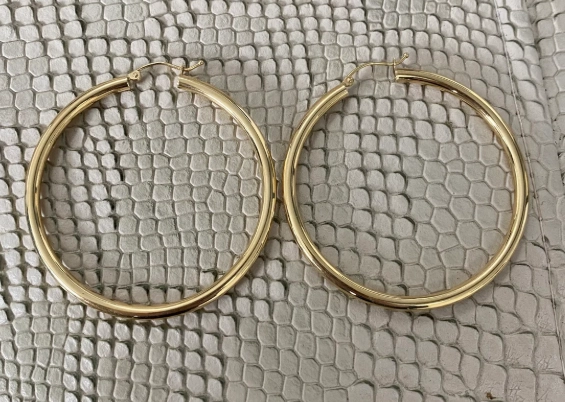
Cleaning: A simple soak in a bowl of warm water with a few drops of mild dish soap for 10-15 minutes does wonders. Gently scrub with a super-soft baby toothbrush, especially in the clasp area. Rinse and pat dry with a lint-free cloth. Avoid harsh chemicals, bleach, or ammonia.
Storage: Please, don't throw them loose in a jewelry box. They'll get scratched. Keep them in a soft pouch, or better yet, on a dedicated earring holder or in a compartmentalized box where they won't touch other pieces.
Answering Your Burning Questions (FAQ)
Let's tackle the common stuff that keeps people up at night.
Are 14k gold hoop earrings good for sensitive ears?
Generally, yes, especially compared to costume jewelry. However, "14k" doesn't guarantee a nickel-free alloy. If you have a known nickel allergy, you must seek out explicitly nickel-free 14k gold. Many jewelers offer this. Titanium or surgical steel posts on gold earrings are another option, but ensure the gold part touching your skin is also safe.
Can I shower or sleep in my real gold hoop earrings 14k?
You *can*, but I don't recommend making it a habit. Soap scum can build up, and you risk catching them on towels or pillows, which can warp the shape or damage the closure over time. For longevity and to keep them shining, it's best to take them out.
How much should I expect to pay?
This is the big one. Price is based on weight (in grams) of gold + craftsmanship. As of [Note: Do not insert a volatile, time-sensitive price. Use a relative explanation], you can expect a simple, medium-sized pair of solid 14k gold hoop earrings to start around $200-$400. Larger, thicker, or designer styles can easily run $600-$1500+. If a price seems drastically lower, question the construction (is it hollow?) or authenticity.
Do they hold their value?
Solid gold jewelry holds value based on its gold content (melt value). It's not like a stock, but it's an asset. You won't get retail price if you sell, but you'll recoup a good portion of the intrinsic material value, unlike plated or fashion jewelry which becomes worthless. This is a key part of the "investment" argument for solid pieces.
What's the difference between "real" and "solid" gold?
In casual talk, they're often used interchangeably. But technically, "real" gold can refer to any piece containing gold (including filled or plated). "Solid" gold means the entire piece is made from a gold alloy, with no hollow core or base metal underneath. When shopping, always aim for clarity: you want "solid 14k gold."
Where is the best place to buy them?
There's no single answer. Local jewelers offer personal service and you can try them on. Reputable online jewelers often have wider style selections and competitive pricing. Major department stores carry trusted brands. The key is the seller's reputation, return policy, and transparency about materials. Look for clear photos, detailed specs (diameter, gauge, weight in grams), and customer reviews. For understanding diamond accents (if you're considering those), resources from the Gemological Institute of America (GIA) are considered the industry benchmark.
Final Thoughts: Making Your Choice
Buying a pair of real 14k gold hoop earrings isn't a rushed decision. It's choosing a companion for your daily life. Forget the hype and the Instagram trends for a second. Think about your lifestyle, your earlobes, and what you truly love.
My advice? Start classic. A medium-sized (18-22mm), medium-weight (1.5-2mm) pair of solid 14k yellow or white gold hoops with a secure snap closure is the workhorse. It goes with absolutely everything, from t-shirts to evening wear. Once you have that foundation, then explore the trendy huggies, the giant statement makers, or the diamond-embellished versions.
And remember, the best pair is the one you wear. The one that becomes a part of you. A truly great pair of real gold hoop earrings 14k doesn't just sit in a box. It tells your story, one day at a time, and hopefully, one day, becomes a story for someone else.
Take your time. Ask questions. Feel the weight. And choose something that makes you feel fantastic when you catch your reflection. That's the real value.