In This Guide
- Why Does Your Gold Bracelet Stack Tarnish in the First Place?
- The Ultimate Metal Guide: What "Non-Tarnish" Really Means for Each Type
- Your Daily Defense: Habits for a Pristine Stack
- Styling Your Stack: Making it Look Intentional, Not Indestructible
- Answering Your Burning Questions (FAQs)
- Putting It All Together: Building Your Dream Stack
Let's be honest. You've seen those perfect, layered gold bracelet stacks on Instagram or your friend's wrist – all shiny, elegant, and seemingly untouched by time. You get inspired, buy a few pieces, layer them up... and a few months later, that beautiful rose gold has a weird greenish tint, or your yellow gold bangles look dull and reddish. It's frustrating, isn't it? I've been there. I once had a supposedly "high-quality" gold-plated piece that turned my wrist black after a sweaty summer day. Not a good look.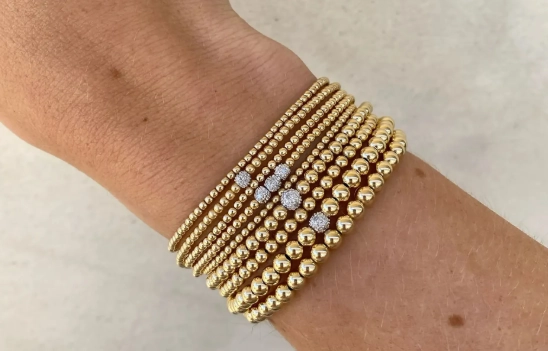
That's why the dream of a non tarnish gold bracelet stack is so powerful. It's about having that effortless, put-together style without the constant worry and maintenance. But here's the thing a lot of articles don't tell you: no metal is 100% immune to change. The goal isn't finding a mythical unicorn metal, but understanding what "non-tarnish" really means in the jewelry world and how to make your stack last. This guide is the deep dive I wish I had when I started building my collection.
The best jewelry stack isn't the most expensive one; it's the one you can wear every day without a second thought.
Why Does Your Gold Bracelet Stack Tarnish in the First Place?
Before we get to the solutions, let's talk about the enemy. Tarnish (and its cousin, corrosion) is a chemical reaction on the metal's surface. For gold jewelry, especially pieces in a gold bracelet stack, the issue is rarely the gold itself if it's high karat. The problem usually lies in the other metals it's mixed with or plated over.
- The Karat Confusion: Pure 24K gold is too soft for everyday bracelets. So it's alloyed with metals like copper, zinc, nickel, or silver. Copper gives rose gold its hue but also makes it prone to oxidation (that darkening). Silver in white gold alloys can sometimes cause a slight yellowish tinge over time.
- It's Probably Not "Gold" Tarnishing: If your bracelet is gold-plated, gold-filled, or vermeil, the base metal underneath (often brass, copper, or sterling silver) can react with elements and seep through microscopic pores or scratches. That green stain on your skin? That's usually copper reacting with your skin's acids and sweat.
- The Environmental Assault: Your non tarnish gold bracelet stack faces a daily gauntlet. Perfume, hairspray, lotions (especially those with sunscreen), chlorine in pools, salt from the ocean, and even the sulfur compounds in the air (from pollution or eggs!) can accelerate tarnishing.
- Your Body Chemistry: This is a huge one that's often overlooked. The pH level of your sweat varies from person to person. Some people have more acidic sweat, which can react fiercely with certain metals. I have a friend who can tarnish sterling silver in hours, while her sister's pieces stay bright for years.
The Ultimate Metal Guide: What "Non-Tarnish" Really Means for Each Type
This is the core of building a lasting stack. You need to know what you're buying. I've made the mistake of buying "gold" bracelets without checking the metal composition, and the results were disappointing. Let's break it down, from the most resilient to the ones requiring a bit more TLC.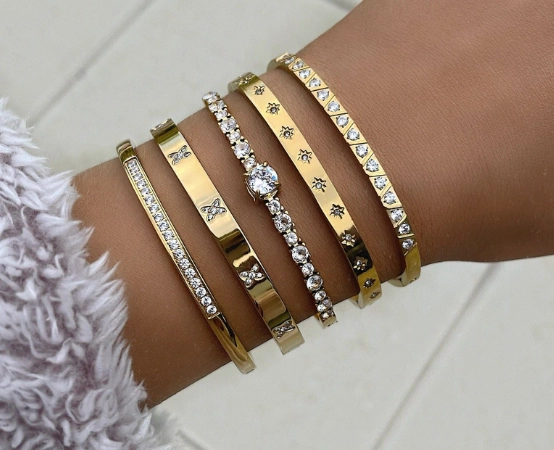
Solid Gold (14K, 18K, 22K)
This is the gold standard, pun intended. A solid gold bracelet stack, non tarnish worries are at their absolute minimum here. The gold content is high, so the alloying metals are a smaller percentage. It will not tarnish in the traditional sense (turn green or black). However, it can develop a patina—a gentle softening of the shine and color over decades of wear. Many people, myself included, actually love this look; it adds character. The downside? Cost. A substantial solid gold bracelet stack is a serious investment.
Gold Vermeil (Pronounced ver-MAY)
This is a fantastic middle ground. By definition (and enforced by standards in places like the US), vermeil is sterling silver coated with a thick layer of gold (usually 10k, 14k, or 18k) that is at least 2.5 microns thick. The thick gold layer over the stable sterling silver base makes it highly tarnish-resistant for a plated option. It's more durable than standard gold plating but more affordable than solid gold. For a non tarnish gold bracelet stack on a budget, high-quality vermeil is a top contender. Just ensure you're buying from a reputable seller who states the thickness.
Stainless Steel with Gold PVD Coating
Don't scoff at this option. The technology here is impressive. PVD (Physical Vapor Deposition) bonds a layer of gold to the stainless steel at a molecular level. It's incredibly hard, scratch-resistant, and won't tarnish or fade easily. The stainless steel core itself is inert and hypoallergenic. The gold color is consistent and bright. The feel is different—it's heavier and cooler to the touch than traditional gold. It's a modern, ultra-low-maintenance choice for a daily wear gold bracelet stack non tarnish focused stack, especially for active lifestyles.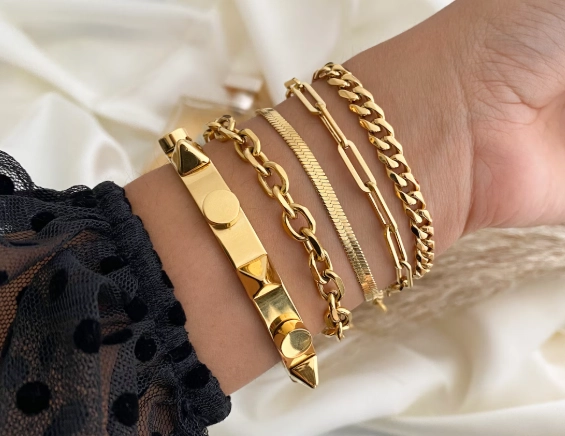
Gold-Filled
Think of this as a cousin to vermeil, but with a brass core instead of silver. A layer of solid gold is mechanically bonded to the base metal, making it much more durable than plating. By US standards, the gold layer must constitute at least 5% of the total weight. It's very tarnish-resistant because that gold layer is substantial. It's more affordable than vermeil or solid gold and can last for decades with proper care. A great workhorse for a stack.
Gold Plating
This is where you need to be careful. Standard gold plating involves a very thin layer of gold (often less than 1 micron) electroplated onto a base metal (like brass or copper). It's the most affordable and can look beautiful initially, but it's the most prone to tarnishing and wearing off. The thin layer is no match for daily friction and environmental attacks. I generally don't recommend standard plating for pieces you want to wear every day in a stack, as the constant rubbing between bracelets will accelerate wear. Save it for occasional, statement pieces.
| Metal Type | Core Composition | Tarnish Resistance | Durability for Stacking | Price Point | Best For... |
|---|---|---|---|---|---|
| Solid Gold (14K+) | Gold alloy (58.5%+ gold) | Excellent (develops patina) | Excellent | $$$$$ | Heirloom investment, low-maintenance luxury. |
| Gold Vermeil | Sterling Silver + thick gold layer | Very Good | Good to Very Good | $$$ | Budget-conscious quality, classic gold look. |
| Stainless Steel w/ PVD | Stainless Steel + bonded gold | Excellent | Excellent (scratch-resistant) | $$ | Active lifestyles, modern aesthetics, zero worry. |
| Gold-Filled | Brass + thick bonded gold layer | Very Good | Very Good | $$ | Durable everyday wear, vintage-style pieces. |
| Gold Plated | Brass/Copper + thin gold layer | Fair to Poor | Poor (wears quickly) | $ | Trendy pieces, occasional wear only. |
See the difference? Choosing the right metal is 80% of the battle for a non tarnish gold bracelet stack.
Your Daily Defense: Habits for a Pristine Stack
Okay, you've chosen your bracelets wisely. Now, how do you keep them that way? This isn't about babying your jewelry; it's about smart, simple habits that become second nature. A gold bracelet stack non tarnish life is possible.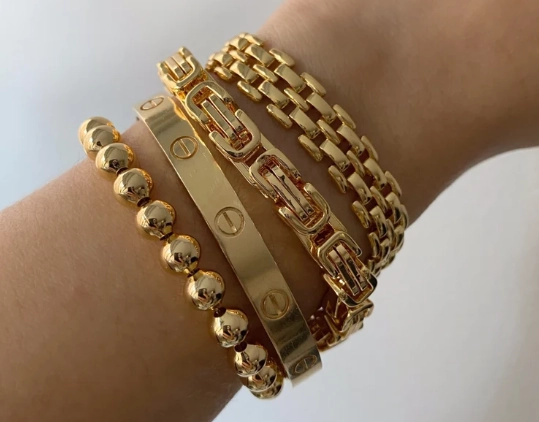
- The Last On, First Off Rule: This is non-negotiable. Your bracelet stack should be the very last thing you put on after getting dressed, doing your hair, and applying makeup/perfume. And it should be the first thing you take off when you get home. Chemicals are the arch-nemesis.
- Nightly Ritual: Take them off before bed. Even if you have a solid gold bracelet stack, non tarnish properties can be tested by sweat and friction against sheets. I keep a soft dish on my nightstand specifically for this.
- Swim, Shower, Sweat = Take it Off. Chlorine is brutally corrosive. Soap scum builds up in links and clasps. Sweat, especially during a workout, accelerates tarnishing. Just take them off. It takes 10 seconds.
- Gentle Cleaning: Don't wait for them to look dirty. Once a month (or more if you wear them daily), give them a gentle clean. Warm water, a drop of mild dish soap, and a super soft toothbrush are your best friends. Gently scrub, rinse thoroughly with distilled water if you have hard water (to prevent spots), and pat completely dry with a soft, lint-free cloth. For vermeil or gold-filled, you can also use a dedicated jewelry cleaning cloth recommended for plated metals (the Jewelers Vigilance Committee is a great resource for care standards).
What about ultrasonic cleaners? I'm hesitant. For solid gold, they're usually fine. For anything plated, filled, or with delicate gemstones, I'd avoid them. The vibrations can loosen settings and the chemicals can be too harsh. Stick to the gentle hand-cleaning method.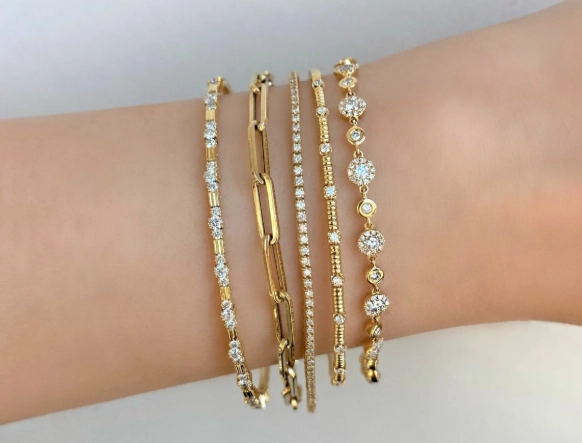
Styling Your Stack: Making it Look Intentional, Not Indestructible
A non tarnish gold bracelet stack isn't just about durability; it's about aesthetics. The goal is a cohesive look that seems effortless. Here's what I've learned from trial and error.
Start with 2-3 bracelets. You can always add more. Mix textures: a sleek bangle, a delicate chain, a charm bracelet. Vary the widths. If all your pieces are the same width, it can look stiff. Play with different shades of gold—mixing yellow, rose, and even white gold in the same stack is incredibly chic and modern. The key is that they should all have a similar "level" of shine or patina. A brand-new, mirror-polished PVD bracelet might look odd next to a 10-year-old matte solid gold bangle.
Think about balance, not symmetry.
Consider your watch. Is your stack going on the same wrist? If so, make sure the styles complement each other. A delicate stack pairs well with a slim leather-strap watch. A chunkier stack might need its own wrist.
And finally, the clasp side. Try to orient most clasps to the underside of your wrist for a cleaner look from the top. It's a tiny detail that makes a big difference.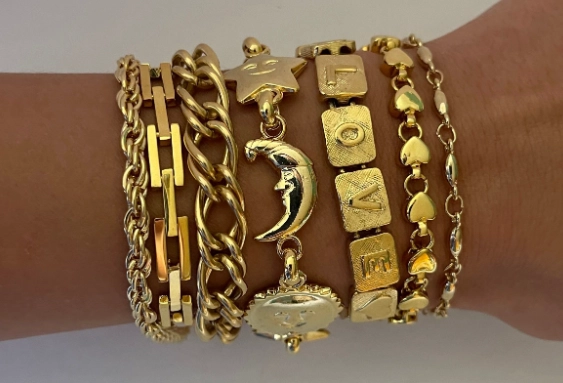
Answering Your Burning Questions (FAQs)

Putting It All Together: Building Your Dream Stack
So, where do you start? Don't go out and buy six bracelets at once. Start with one or two foundational pieces in the best metal you can afford. A simple, medium-width solid gold or high-quality vermeil bangle is perfect. Wear it for a month. See how it holds up with your lifestyle.
Then, add a chain bracelet. Then maybe a textured cuff. Build slowly. This way, you learn what you really love to wear, and you spread out the cost. Remember, the goal of a non tarnish gold bracelet stack is longevity. It's better to have three bracelets you wear for a decade than ten you throw away after a season.
Pay attention to trends reported by sources like Vogue's jewelry section, but buy for your personal style. The current trend might be chunky links, but if you have a petite frame and a desk job, delicate chains might be your forever look.
Your stack should tell your story, not just follow a trend. Let it evolve with you.
At the end of the day, jewelry is meant to be worn and enjoyed. The quest for a perfect gold bracelet stack non tarnish is really about minimizing hassle so you can focus on the joy it brings. Choose wisely, care for them simply, and wear them with confidence. That's the real secret to a stack that always looks good.