Quick Navigation: What I Cover
I’ll cut right to the chase: modal fabric is semi-synthetic. It comes from beech tree pulp, so it starts natural, but the manufacturing process involves heavy chemical processing. That’s why people constantly ask, “Is modal fabric synthetic?” The answer isn’t a clean yes or no. After ten years in textile development, I’ve seen consumers get burned by misleading labels and even more misleading marketing. In this guide, I’ll walk you through what modal really is, how it stacks up against other fabrics, and how to keep it looking great for years.
What Exactly Is Modal Fabric?
Modal is a regenerated cellulose fiber, part of the rayon family. If you’ve ever felt a t-shirt that drapes like silk but costs like cotton, you’ve probably touched modal. It’s made from beechwood pulp, not cotton linters like standard viscose. That wood source gives it a microfibril structure that’s stronger and more stable than viscose, which I think is why brands love it for semi-dressy casual wear.
I remember my first real encounter with modal. It was a secondhand dress from H&M, and the tag said “modal.” I spent the next few weeks obsessing over how it wrinkled — or rather, how it barely wrinkled. That’s not something you see with pure cotton. Over the years, I’ve test-worn modal shirts, modal pants, even modal underwear from different mills. Some feel incredibly luxurious, while others feel like a cheap knockoff. The difference usually comes down to fiber quality and finishing.
When you hear the term “TENCEL™ Modal,” that’s the premium version produced by Lenzing AG in Austria. Lenzing has industrialized a closed-loop process that captures most of the chemicals. But there are also generic modals from China, India, and other manufacturing hubs. They’re not all equal.
Is Modal Fabric Synthetic or Natural?
Here’s the part that confuses everyone: synthetic fibers (polyester, nylon, spandex) are entirely petroleum-based. Natural fibers (cotton, wool, linen) come from plants or animals. Modal is somewhere in between. It originates as wood, but that wood must be pulped and chemically extruded to form fiber. That places it in a category called “semi-synthetic” or “man-made cellulosic fiber.”
Some marketing teams call it “natural” because it comes from trees. Others call it “synthetic” because it’s processed. Both are oversimplifications.
I’ve seen apparel brands use “natural style” on a modal tag, which is technically misleading but not illegal in many countries. From a consumer standpoint, the label “semi-synthetic” is more accurate and gives you a better mental model for how the fabric will behave. Modal doesn’t have the same breathability as cotton, but it also doesn’t have the plastic feel of polyester.
One nuance that rarely gets mentioned: the term “synthetic” in consumer surveys often implies “low quality.” I get it. But semi-synthetics like modal or lyocell are actually used in premium athleisure and sustainable fashion. So don’t assume that processed = cheap.
How Is Modal Fabric Made?
Modal production starts with beechwood trees, which are chipped and dissolved into cellulose pulp. The pulp is then chemically activated with carbon disulfide (in the classic viscose method) or an alternative solvent. The resulting liquid is pushed through spinnerets, which are like tiny showerheads, to create filaments. Those filaments are stretched and solidified in a chemical bath, washed, bleached, and cut into short staple fibers.
Here’s where quality varies: the stretching and washing steps are critical. If the fiber is stretched too slowly or too fast, you end up with weaker spots. I’ve tested modal samples from three different suppliers, and the breaking force varied by about 30%. That’s why a $5 modal t-shirt from a fast-fashion site can feel shredded after two washes, while a $40 modal shirt from a reputable brand lasts years.
The biggest difference between cheap and premium modal is often the supplier's environmental controls. Lenzing, for instance, runs a closed-loop system that reuses 99% of the process chemicals. Their TENCEL™ Modal is also FSC-certified, linking the wood source to sustainably managed forests. But this level of stewardship isn’t universal. If a brand doesn’t publicly share its supplier list, you have no idea how the fiber was made.
The Pros and Cons of Modal Fabric
Now let’s talk about what modal actually does well and where it falls apart. I’ve drafted a table to keep it clean, but I’ll add some unsolicited commentary afterward.
| Pros | Cons |
|---|---|
| Silky smooth to the touch | Can stretch out permanently if you machine dry it |
| Breathable and absorbent | More prone to fading in direct sunlight |
| Drapes well for dresses and skirts | Some low-quality modal will pill quickly |
| Resists shrinking better than cotton | Needs gentle handling when wet |
| Doesn’t create static cling | Not as insulating as cotton or wool |
The biggest hidden drawback is wet strength. Modal fibers become dramatically weaker when saturated. I learned this the hard way when I pulled a soaking-wet modal top out of the washer and stretched the shoulder seams beyond repair. It felt like a wet rubber band. That’s why the washing instructions are not optional.
On the plus side, modal’s softness is the closest thing I’ve found to silk without the price tag. I wear a modal blend hoodie at home, and it’s the first thing I grab on chilly evenings. Some brands blend modal with spandex or polyester to improve durability, but that shifts its eco profile.
Modal vs Cotton vs Polyester: A Quick Comparison
To make the “synthetic or not” debate tangible, let’s place modal against its two most common rivals: cotton and polyester. Use this table as a cheat sheet, but remember that actual results depend on fabric quality and weave.
| Property | Modal | Cotton | Polyester |
|---|---|---|---|
| Base material | Beech tree pulp | Cotton bolls | Petroleum |
| Softness | High | Medium | Low |
| Breathability | Medium-high | High | Low |
| Moisture absorption | High | Very high | Low |
| Dry time | Medium | Slow | Fast |
| Shrink risk | Low | High | Very low |
| Biodegradable | Yes (industrial) | Yes | No |
| Wrinkling | Low-medium | High | Very low |
From my closet, I own a cotton oxford shirt, a modal jogger, and a polyester running jacket. They serve completely different purposes. For anything that involves sweating rivers, polyester wins. For a sunny day sitting outside, cotton feels nicer. But for a long car ride where I want to stay comfortable and not look like a wrinkled mess, modal is my pick. It also feels more natural against the skin than polyester, which is why many activewear brands are ditching pure synthetics for modal-based blends.
How to Care for Modal Fabric
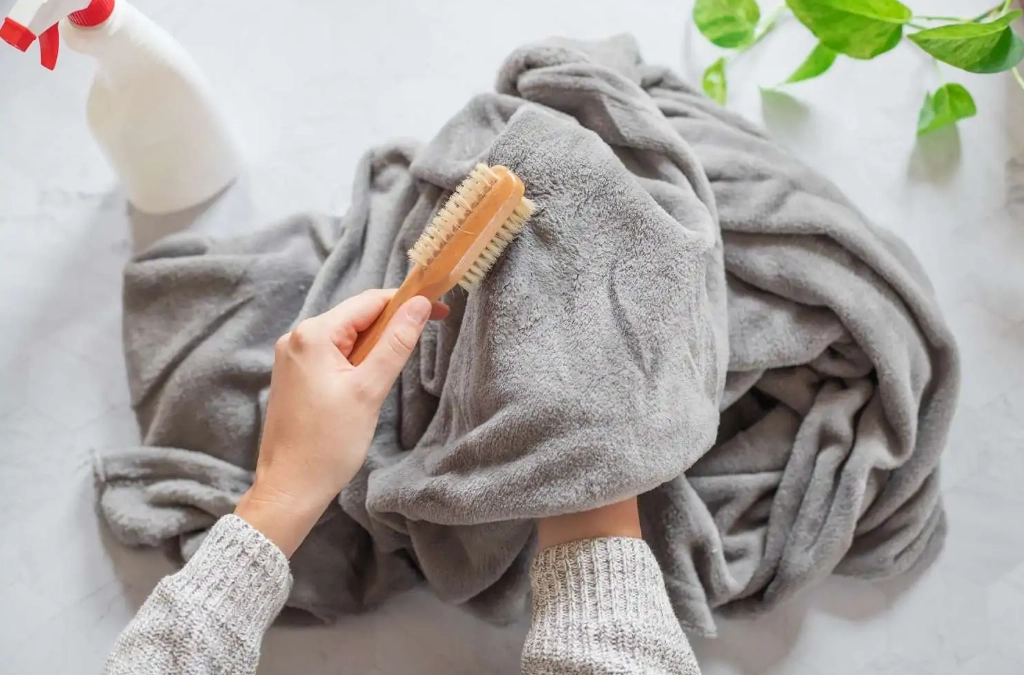
If you’ve read this far, you know modal demands a bit of TLC. Here’s a practical list I’ve refined from years of washing my own clothes:
- Wash in cold water (below 30°C). Hot water destabilizes the fibers and triggers micro-shrinkage.
- Use the gentle cycle or a mesh bag. The less tugging, the better.
- Never put modal in the dryer. Even low heat can stretch and deform the garment.
- Lay flat to dry. Hanging wet modal with gravity can create shoulder lumps.
- Iron on low heat. High heat will dull the sheen.
- Skip bleach. Chlorine eats away at the cellulosic structure.
I’ve seen countless people on Reddit complain that their modal shirt stretched out after 3 wears. Nine times out of ten, they’d washed it in warm water and tumble-dried it on high heat. That’s not a fabric defect; it’s a care routine that doesn’t match the material.
Is Modal Fabric Sustainable?
Now the money question: is modal eco-friendly? The short answer is: it can be, but only if the factory does things correctly. Because modal is made from wood, it has a renewable starting point. But the chemical process can be harmful if not managed.
Let’s look at data from Textile Exchange, a respected non-profit that analyzes fiber sustainability. Their latest Preferred Fiber & Materials Report shows that man-made cellulosic fibers like modal have a lower carbon footprint than cotton and polyester when produced in closed-loop facilities. But the report also warns that the majority of global viscose production does not use closed-loop techniques.
What to Look for in Sustainable Modal
Lenzing is the poster child for good practice. They publish environmental product declarations and their TENCEL™ Modal carries the EU Ecolabel. If you want to buy sustainable modal, look for the TENCEL™ brand or a certification like OEKO-TEX Standard 100 that ensures no harmful residues.
Another overlooked angle: longevity. A modal shirt that lasts 5 years is greener than a cotton shirt that falls apart in 6 months. The fibers may be somewhat biodegradable, but the energy used in production is significant. So the greenest garment is the one you can maintain and wear for a long time.